
 EN
EN
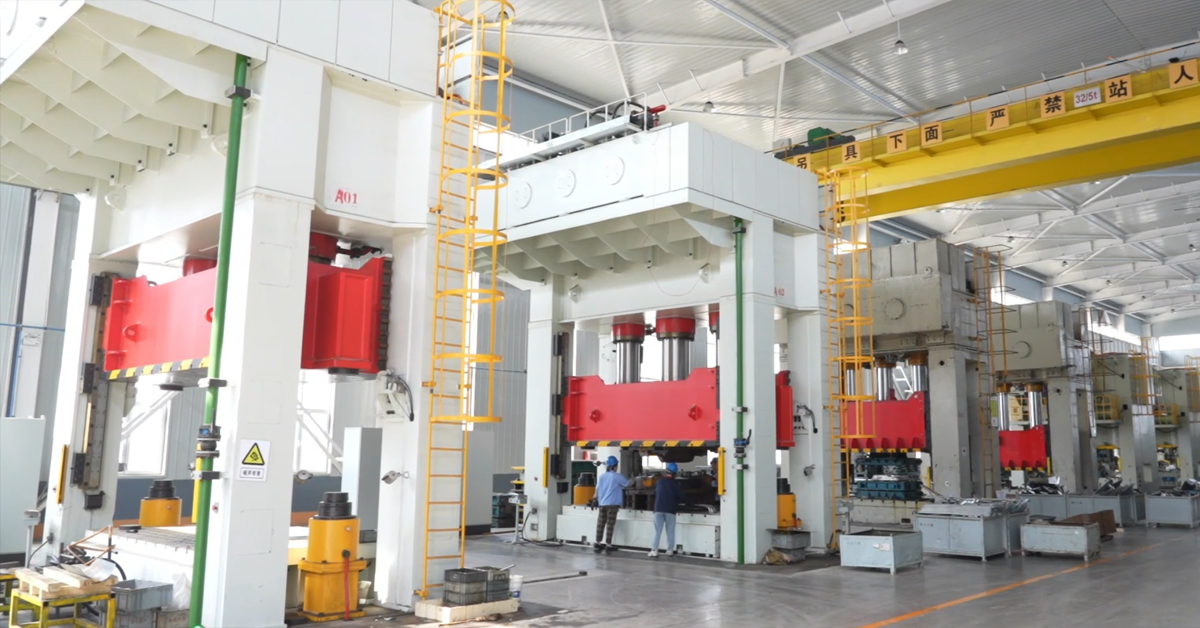
Superior Strength and Durability Through Cold Forming
Deep drawn parts achieve exceptional structural performance through cold forming processes that enhance material properties without heat treatment. This manufacturing approach creates components with superior strength-to-weight ratios critical for demanding applications in aerospace, medical devices, and automotive systems.
Work Hardening and Enhanced Durability in Deep Drawn Parts
The cold drawing process induces controlled plastic deformation, causing work hardening that increases yield strength by up to 20% compared to raw materials. This strain hardening effect creates dense grain structures that improve fatigue resistance—a key advantage for components like hydraulic cylinder bodies subjected to repeated stress cycles.
How Cold Forming Improves Tensile Strength and Fatigue Resistance
Analyses of cold-formed steel components show tensile strength improvements reaching 80 ksi due to grain refinement during forming. The absence of thermal stress prevents microcrack formation, while compressive residual stresses enhance corrosion resistance in medical sterilization equipment and marine hardware.
High Strength-to-Weight Ratio for Automotive and Medical Applications
Cold drawn aluminum enclosures achieve 340 MPa tensile strength at 30% reduced mass compared to cast alternatives—enabling lighter, more efficient designs for portable MRI components and electric vehicle battery housings. Thinner material gauges can be used without sacrificing impact resistance.
Case Study: Deep Drawn Stainless Steel Components in Aerospace Systems
A 2023 evaluation of rocket fuel valve bodies showed cold drawn 316L stainless steel withstanding 650°C temperatures and 450 bar pressures—outperforming CNC-machined equivalents by 40% in vibration fatigue tests. Seamless construction eliminated failure-prone weld joints common in traditional manufacturing.
Dent Resistance and Structural Integrity of Deep-Drawn Aluminum Parts
Automotive hood reinforcement panels made through deep drawing demonstrate 60% greater dent resistance than stamped alternatives in crash simulations. The strain-hardened 5000-series aluminum alloy maintains structural integrity while reducing component weight by 22% compared to steel.
Automated Deep Drawing for High Precision and Repeatability
Modern deep drawn parts production leverages computer-controlled presses with positional accuracy up to ±0.005". Automated lubrication systems and servo-electric actuators maintain force consistency within 1.2% variance across 10,000+ cycles, enabling repeatable forming of complex geometries such as stepped cylinders and flanged enclosures.
Maintaining Tight Tolerances Across Thousands of Identical Deep Drawn Parts
Progressive die systems achieve diameter tolerances of ±0.0001" on brass connector shells over 500,000 cycles. This precision stems from CNC-machined tungsten carbide tooling that resists deflection under 300-ton forming pressures, ensuring wall thickness uniformity ≤±2% in high-volume medical cannula production.
Case Study: Micron-Level Accuracy in Medical Device Housings
A recent medical device housing study demonstrated deep drawn titanium components maintaining ±3µm dimensional accuracy across 50,000 units. This precision enabled direct press-fit assembly of miniaturized insulin pump components without secondary machining, reducing per-unit costs by 18% versus CNC-machined alternatives.
Reduced Variability Compared to Welded or Assembled Components
Single-piece deep drawn construction eliminates tolerance stacking from multi-part assemblies, improving dimensional consistency by 40—60% compared to welded enclosures. Manufacturers report 72% fewer leaks in deep drawn coolant manifolds due to seamless sidewalls and uniform material properties.
Cost Efficiency at Scale with Minimal Material Waste
The production of deep drawn parts gets much cheaper when manufacturers automate their processes. These systems cut down on manual labor costs while making better use of raw materials overall. Modern progressive dies have really changed things, bringing scrap rates down below 3%. That's way better than the old school machining approaches which typically left behind 15 to 20% waste. And it turns out this efficient use of materials isn't just good for the bottom line either. Studies indicate that companies using nested blanking techniques can slash sheet metal waste by half in their forming operations. For shops trying to stay competitive, these kinds of improvements make all the difference between profitability and losing money.
Cold forming gets rid of those extra steps like grinding and polishing, which cuts down on what each part costs to make somewhere around 18 to 22 percent for things used in cars and electronic gadgets. When using single stage tooling, quality stays pretty much the same even when making hundreds of thousands of parts, something that just doesn't happen with those multi step welding processes where costs tend to balloon by about 34%. Industry reports show that these deep drawn parts need roughly 40% less work after the initial forming process than their stamped and welded counterparts do.
The economic benefits really kick in when dealing with complex shapes. Deep drawing can create sealed enclosures and those multi-wall structures all in one go, which cuts out that extra 12 to 15 percent cost bump usually seen with welded joints on pressure vessels. Take medical device makers for instance, they've found their lifecycle costs drop by about 30% because there's just so much less inspection needed for these seamless housings compared to traditional setups where parts have to be connected at multiple points. This makes sense when thinking about quality control issues down the road too.
Complex Geometries Achieved Without Welds or Assembly
Single-Operation Formation of Complex Shapes in Deep Drawn Parts
The deep drawing process allows manufacturers to produce complex shapes from flat metal sheets in just one step. What starts as a simple metal blank gets transformed into all sorts of three dimensional forms with exact measurements across diameters and curves, yet keeps the same thickness throughout the piece. Getting rid of those multiple manufacturing stages means engineers can design really complicated shapes that work great for things like air tight seals or containers that need to withstand high pressure, and still maintain the strength and integrity of the whole part without any weak spots.
Eliminating Joints and Weld Lines to Reduce Failure Risks
The absence of welds removes up to 72% of stress concentration points compared to assembled alternatives. Continuous grain flow enhances impact resistance, particularly in safety-critical applications like pharmaceutical canisters and automotive braking systems. Monolithic construction prevents leaks and fatigue failures common in welded joints exposed to thermal cycling.
Case Study: Seamless Fuel Injector Bodies in Automotive Engines
A major engine manufacturer reduced fuel injector failures by 58% after transitioning from welded assemblies to deep drawn nickel alloy bodies. The single-piece design withstood 15,000+ PSI fuel pressures while eliminating porosity issues at traditional weld seams. This transition also accelerated production cycle times by 34% through reduced post-processing requirements.
Design Flexibility for Cups, Enclosures, and Multi-Stage Profiles
Deep drawing accommodates:
- Cylindrical cups with depth-to-diameter ratios exceeding 3:1
- Rectangular enclosures with integrated mounting flanges
- Tapered profiles for optical device housings
- Multi-diameter configurations in medical syringe components
This versatility supports lightweighting initiatives across industries while maintaining leak-proof performance through geometric complexity rather than assembly-intensive solutions.
Excellent Surface Finish and Broad Material Compatibility
As-formed surface quality reduces secondary finishing needs
Deep drawn parts achieve surface roughness values (Ra) between 0.4—1.6 µm directly from forming dies, comparable to machined finishes. This eliminates 85% of polishing operations in medical device manufacturing. The process preserves original material texture while maintaining ±0.05 mm dimensional consistency, crucial for semiconductor components where post-processing contamination risks must be minimized.
Preservation of coatings and inherent corrosion resistance
Cold forming actually helps avoid those coating issues that typically happen during welding, keeping around 98.6% of those precious PVD coatings intact. Take aluminum alloys for instance – when we use deep drawing instead of regular stamping, they end up retaining about 30% more of their natural oxide layer. Pretty impressive stuff really. And get this – if manufacturers pair these methods with today's advanced sealing tech, the resulting components can withstand over 5,000 hours of salt spray testing according to ASTM B117 standards. That kind of durability makes them ideal for tough spots like car underbodies where corrosion is always a concern.
Corrosion performance of deep drawn aluminum in harsh environments
Deep drawn 5052 aluminum housings show only 0.003 mm/year corrosion rates in marine environments. The seamless structure eliminates crevice corrosion points common in multi-part assemblies. A comparative study of offshore sensor housings revealed deep drawn components lasted 2.8 longer than welded equivalents in 3.5% NaCl solutions at 60°C.
Material versatility: steel, aluminum, and copper alloys across industries
The process accommodates materials from 0.1 mm thick copper foil to 6 mm stainless steel plates. Industry data shows 78% of deep drawn applications use these three material groups:
- Stainless steels (316L/304): 42% market share (medical, food processing)
- Aluminum alloys (5052/6061): 29% (automotive, aerospace)
- Copper alloys (C11000/C26000): 7% (electrical components)
This flexibility enables single-process manufacturing of components ranging from micro fuel cell plates to commercial refrigerator evaporator coils.
FAQ
What is cold forming in manufacturing?
Cold forming is a manufacturing process that enhances material properties without heat treatment to achieve superior strength-to-weight ratios.
How does cold forming improve material properties?
Cold forming induces work hardening and strain hardening through controlled plastic deformation, which increases yield strength and enhances fatigue resistance.
Why is deep drawing considered more efficient?
Deep drawing is considered efficient due to minimal material waste, reduced secondary finishing needs, and the ability to produce complex shapes in a single operation.
What industries benefit most from deep drawn parts?
Industries such as aerospace, automotive, medical devices, and electronics benefit greatly due to the high strength-to-weight ratios and precision offered by deep drawn parts.
What materials are typically used in deep drawing?
Commonly used materials include stainless steels (316L/304), aluminum alloys (5052/6061), and copper alloys (C11000/C26000).
Table of Contents
-
Superior Strength and Durability Through Cold Forming
- Work Hardening and Enhanced Durability in Deep Drawn Parts
- How Cold Forming Improves Tensile Strength and Fatigue Resistance
- High Strength-to-Weight Ratio for Automotive and Medical Applications
- Case Study: Deep Drawn Stainless Steel Components in Aerospace Systems
- Dent Resistance and Structural Integrity of Deep-Drawn Aluminum Parts
- Automated Deep Drawing for High Precision and Repeatability
- Maintaining Tight Tolerances Across Thousands of Identical Deep Drawn Parts
- Case Study: Micron-Level Accuracy in Medical Device Housings
- Reduced Variability Compared to Welded or Assembled Components
- Cost Efficiency at Scale with Minimal Material Waste
- Complex Geometries Achieved Without Welds or Assembly
- Excellent Surface Finish and Broad Material Compatibility
- FAQ