
 EN
EN
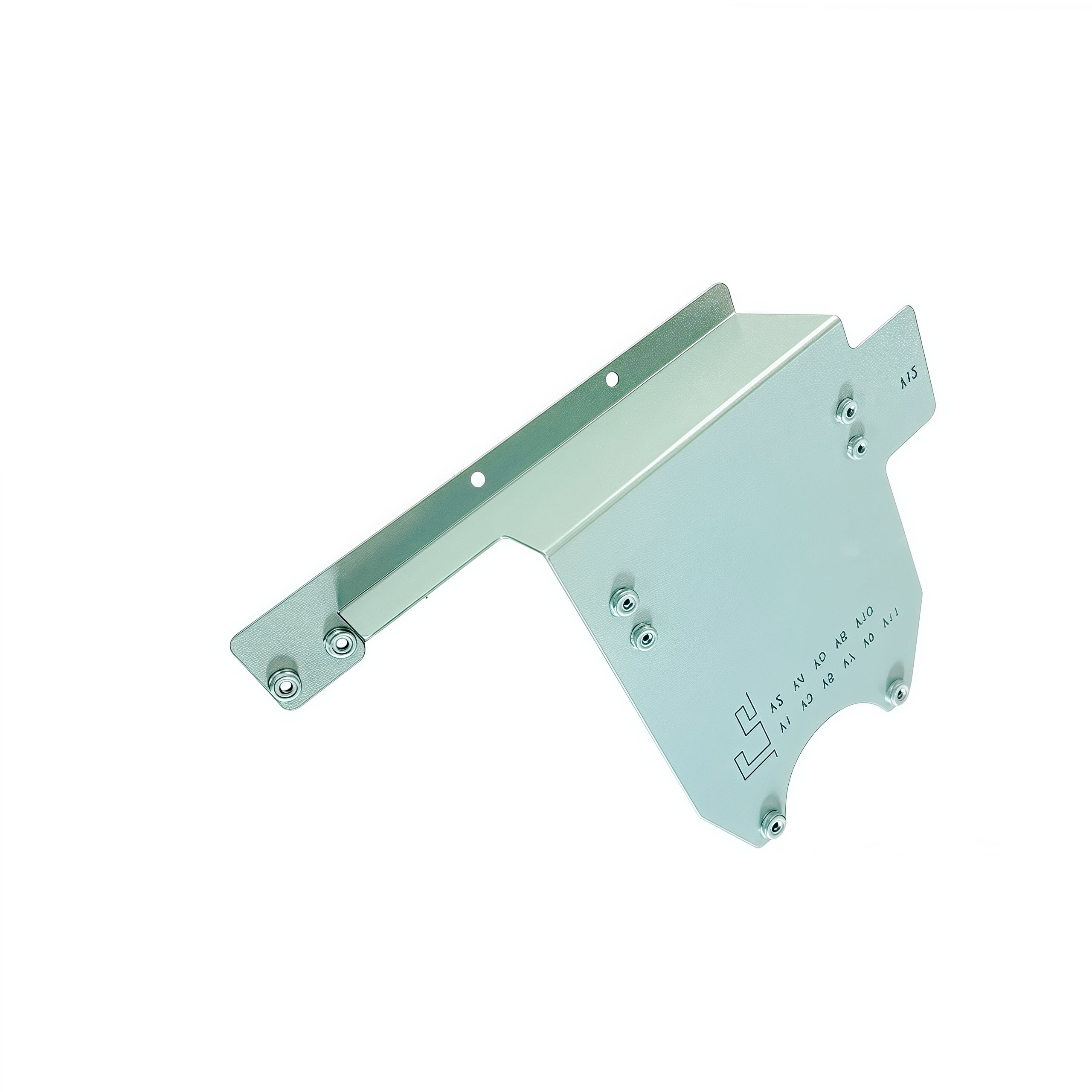
Understanding Material Behavior and Springback in Metal Bending Parts
Quantifying and compensating springback for ±0.5° angular tolerance
When metal springs back after being bent, it creates those pesky angular deviations that really mess with tight ±0.5° tolerances needed for precision parts. The amount of this springback depends on how strong the material is. Stiffer metals basically hold onto more elastic energy during bending, so they tend to snap back more when the pressure lets go. Take 304 stainless steel for example. Industry data from 2023 shows this stuff usually bounces back around 3 to 5 degrees. Compare that to 6061 aluminum which only gives about 1 to 3 degrees of springback. And then there's Titanium Grade 5. With its impressive strength to weight ratio, this alloy can actually rebound anywhere from 5 to 8 degrees, making it one of the worst offenders among commonly used engineering materials when it comes to springback issues.
Effective compensation relies on three proven strategies:
- Controlled overbending, calibrated to material-specific rebound data
- Pressure holding during the dwell phase to suppress immediate elastic recovery
- Tooling geometry optimization, such as cambered dies or active backgauges that counteract predicted deformation
Advanced finite element analysis (FEA) simulations—validated against empirical test data—model stress distribution and neutral axis shift during bending. This enables predictive compensation in tool design before physical prototyping begins, significantly reducing trial-and-error iterations.
K-factor and bend allowance variations across stainless steel, aluminum, titanium, and copper alloys
The K-factor, representing the ratio of neutral axis offset to material thickness, governs bend allowance calculations and varies meaningfully across alloys due to differences in ductility, yield behavior, and strain hardening. Though often approximated as 0.44, its true range spans 0.32–0.48 depending on material and process conditions.
| Material | Typical K-factor Range | Springback Tendency |
|---|---|---|
| Stainless Steel | 0.35–0.45 | High (3–5°) |
| Aluminum | 0.42–0.48 | Moderate (1–3°) |
| Titanium | 0.32–0.38 | Extreme (5–8°) |
| Copper | 0.40–0.46 | Low (0.5–2°) |
The K factor for stainless steel is on the lower side because it resists plastic flow and shows pretty significant springback after bending. Titanium takes this further with an even smaller K factor number, which means manufacturers need to apply much more force during forming processes and expect substantial elastic recovery afterward. Copper tells a different story altogether. Its K factor sits higher due to lower yield strength and better ductility characteristics. But there's a catch here too since copper's soft nature requires extra care during handling operations to prevent unwanted dimensional changes from occurring under clamping pressures. When creating accurate bend deductions for metalworking projects, engineers really need to take all these specific K factors into account along with their respective springback behaviors. This becomes particularly important in applications where bent parts have to fit together perfectly within tightly controlled assembly tolerances.
Designing for Precision: DFMA-Driven Geometry Rules for Metal Bending Parts
Minimum flange length, inside bend radius, and grain-direction alignment for tight-tolerance hardware
When it comes to making sure bent metal parts come out consistently every time, Design for Manufacturing and Assembly (DFMA) principles form the backbone of good practice. For flanges, we generally want them to measure around three to four times the material thickness. This gives enough structural integrity so they don't twist or buckle when being formed on the press brake. The inside bend radius is another critical factor. As a rule of thumb, this needs to be greater than the material thickness itself. Aluminum usually works best with radii between one to one and a half times thickness, while stainless steel requires something closer to one and a half to two times. Titanium is even more demanding, typically needing radii in the range of two to three times material thickness. Getting these dimensions right prevents those frustrating cracks or thin spots that develop right at the bend apex during production runs.
The direction of the grain matters a lot in metal forming. When we align the bend line with the rolling direction, it helps reduce those annoying stress concentrations and cuts down on springback issues by around 25% compared to when bends go across the grain. Getting this right makes for better surface finishes too, which is especially important when working with tough alloys that tend to crack under pressure. Sometimes though, like with cut blanks where we can't control the grain orientation, we need to compensate. That means bigger bend radii and taking things slower during forming operations to stay within that tight ±0.5° tolerance range manufacturers require. Most shops have learned this through trial and error over years of production runs.
Strategic hole/slot placement relative to bend lines to avoid deformation zones
When holes, slots or those other cutout features get situated too near to bend lines, they tend to warp because of the concentrated stress in that area. What happens? Oval shapes instead of round ones, tears forming, or just plain old misalignment issues. If we want these features to stay intact after bending, there's actually a rule of thumb here. Keep them at least 2.5 times the material thickness away from the bend itself, plus whatever the inside bend radius happens to be. And speaking of slots, don't put long narrow ones running alongside the bend direction either. Those create hot spots for stress buildup when the metal starts deforming during the bending process.
In situations where there simply isn't enough space to follow all the rules strictly, relief notches offer a great solution. These cuts are made at right angles to the bend line where two parts meet. They help take away some of the stress that builds up in those areas without breaking the overall structure. Relief notches really shine in small spaces like enclosures or brackets, especially when designers need to fit mounting points alongside bends that have very tight radii. The design for manufacturing and assembly (DFMA) method behind this technique has been shown to cut down on waste materials by about 30 to 50 percent. Plus, it helps keep products consistent from one batch to another during mass production runs.
Selecting the Optimal Bending Method for Precision Metal Bending Parts
Accuracy comparison: Air bending vs. bottom bending vs. coining for ±0.1 mm linear and ±0.3° angular tolerances
The choice of bending method makes a big difference when it comes to how accurate parts are dimensionally and whether they can actually be produced efficiently. Air bending works by having the punch touch the material without seating completely into the die. This approach is quick and adaptable for different jobs, but it has issues with consistency because materials vary so much and there's always some springback happening. The angular repeatability ends up around plus or minus half a degree even though linear measurements might be within 0.1 mm. Bottom bending gets better results at about plus or minus 0.3 degrees since the part gets pressed firmly against the sides of the die. This helps lock in the bend angle and minimizes the amount of elastic recovery after forming. Of course, this method needs significantly more force compared to air bending typically somewhere between three to five times the tonnage required.
The coining process delivers exceptional accuracy around ±0.05 mm and ±0.1 degrees because it pushes beyond the material's yield point throughout the whole bending area. This approach basically removes springback since the metal undergoes complete plastic deformation during shaping. But there are tradeoffs worth noting. Tool wear tends to accelerate quite a bit when using coining methods. Production cycles generally take between 40% to 60% longer compared to other techniques. And the acceptable parameters for successful forming become much tighter, particularly when working with stronger materials or those that have been heat treated. These factors make coining suitable only for certain applications where extreme precision outweighs these operational challenges.
| Method | Linear Tolerance | Angular Tolerance | Springback Control | Relative Force Required |
|---|---|---|---|---|
| Air Bending | ±0.1 mm | ±0.5° | Low | 1� (baseline) |
| Bottom Bending | ±0.08 mm | ±0.3° | Moderate | 3–5� |
| Coining | ±0.05 mm | ±0.1° | High | 8–10� |
When working with parts that need tight tolerances around 0.1 mm and 0.3 degrees angle, like those found in medical devices or sensor mounting brackets, bottom bending tends to offer just what manufacturers want: good accuracy without breaking the bank. The old coining technique still makes sense for certain high stakes situations though, particularly in aerospace or defense manufacturing where even tiny angular shifts can't be tolerated at all. Whatever approach gets chosen, don't forget to test how materials react during springback compensation. Use real production materials for these tests instead of whatever generic stuff happens to be lying around the shop floor. Early prototypes made this way catch problems before they become expensive headaches later on down the line.
Verifying and Validating Metal Bending Parts for Production Readiness
Ensuring production readiness demands a tiered verification strategy built on objective measurement, real-time feedback, and material traceability—targeting consistent achievement of ±0.1 mm linear and ±0.5° angular tolerances.
- Pre-bend virtual validation uses FEA-based simulation software to model springback behavior across alloy types and thicknesses. When calibrated with empirical rebound data, these models reduce physical prototype iterations by up to 40% and inform robust tooling design upfront.
- In-process optical scanning, integrated into press brakes via laser trackers or structured-light CMMs, captures bend angles and radii mid-production. Deviations trigger automatic parameter adjustments—such as dynamic punch depth correction—ensuring closed-loop process control.
- Final inspection combines non-destructive metrology (e.g., 3D optical profilers) with targeted destructive testing on statistically valid sample batches. Cross-section analysis confirms grain structure integrity, absence of micro-cracking, and uniform work-hardening distribution—particularly vital for titanium and hardened stainless grades.
Additional testing methods involve XRF for checking metal composition and hardness tests across different sections to spot any unexpected changes in material properties. Companies that keep detailed records of these quality control steps while meeting standards like ISO 9001 and AS9100 typically hit first pass yields over 98 percent, which is way better than the standard 83% seen throughout the industry. Such strict attention to detail turns what was once a skill based bending process into something that can be reliably measured and controlled through actual data instead of guesswork.
FAQ
What is springback in metal bending?
Springback is the elastic recovery of metal after the bending pressure is released, causing deviations in angles. It is influenced by the material's stiffness.
How can springback be compensated in metal bending?
Springback can be compensated through controlled overbending, pressure holding during the dwell phase, and tooling geometry optimization.
What role does the K-factor play in metal bending?
The K-factor determines bend allowance calculations, representing the ratio of neutral axis offset to material thickness, and varies across different alloys.
How does grain direction affect metal bending?
Aligning the bend line with the metal's grain direction reduces stress concentrations and springback issues, resulting in better surface finishes.
What is DFMA and its importance in metal bending parts?
Design for Manufacturing and Assembly (DFMA) principles guide the structural integrity and precision of metal bending parts, ensuring consistency and efficiency.