
 EN
EN
In the field of industrial manufacturing, aluminum alloy and stainless steel have become core materials for aerospace, automotive manufacturing, medical devices, electronic equipment and other industries by virtue of their unique physical and chemical properties. The material differences of different metals lead to distinct technical difficulties in the machining process, putting forward personalized requirements for machining processes, equipment precision and operating techniques.
Deep Link International Supply Chain Co., Ltd., Cangzhou, has deep expertise in the metal machining field, boasting full-process machining capabilities including laser cutting, CNC machining, stamping forming, bending and welding. We can realize customized machining of various materials such as aluminum alloy,stainless steel, forming a full-chain closed loop from raw material selection to finished product delivery. Meanwhile, relying on authoritative SGS inspection and a service standard of 100% on-time delivery, we provide highly adaptable metal machining solutions for various industries. Combining practical machining experience, this paper analyzes the machining challenges of two mainstream metal materials and puts forward targeted coping strategies.
Aluminum Alloy: Lightweight and Easy to Machine, with Key Challenges in Thermal Deformation and Tool Adhesion
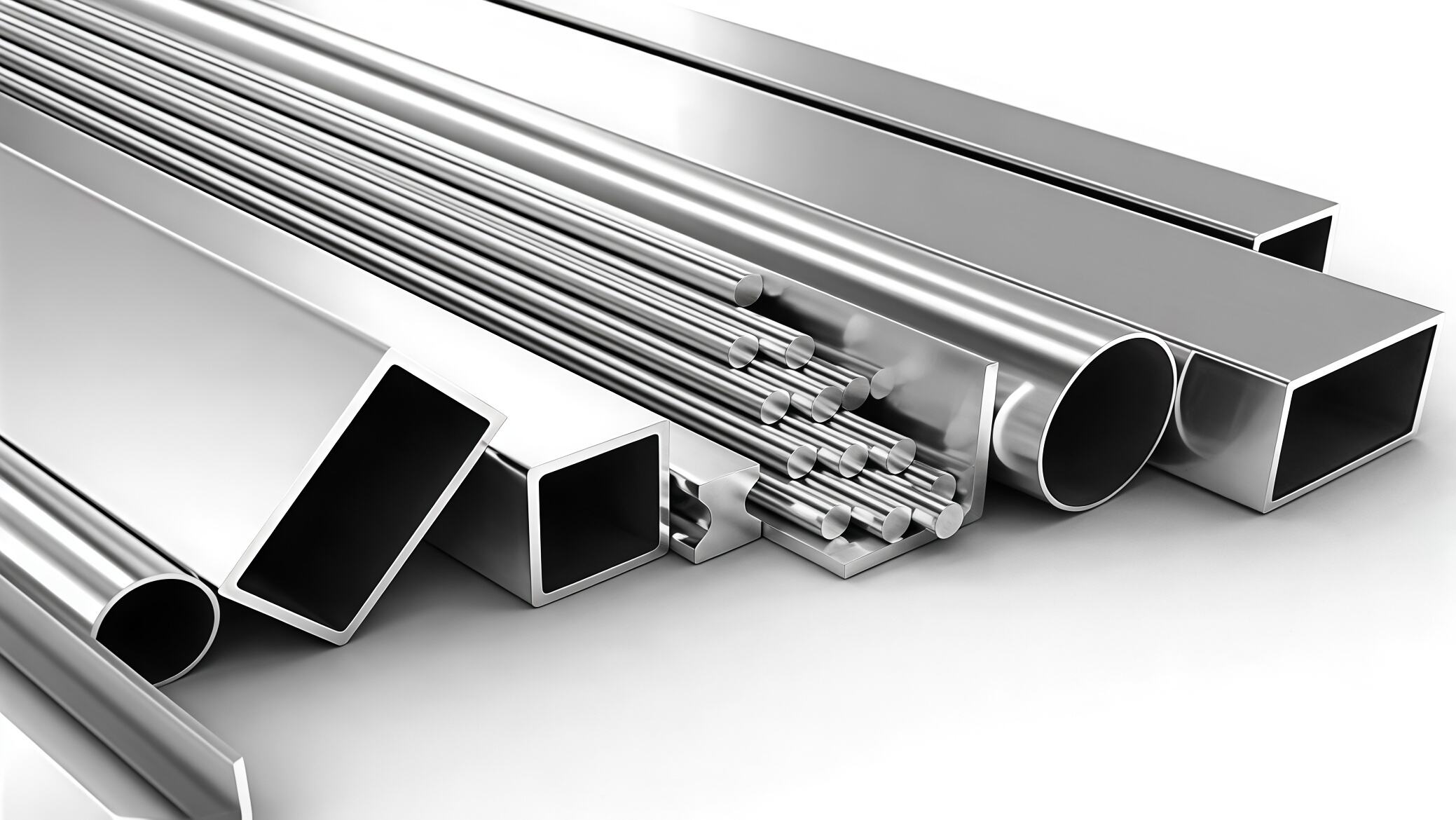
As a preferred material for lightweight manufacturing due to its low density (about 1/3 of steel), corrosion resistance, good thermal conductivity and excellent plasticity, aluminum alloy is widely used in aerospace parts, electronic device housings, automotive lightweight structural components and other scenarios. Although aluminum alloy seems easy to machine, it still has obvious technical pain points in precision machining, whose machining difficulties mainly stem from its own material characteristics.
Core Machining Challenges
- Machining tool adhesion and built-up edge: Aluminum alloy features low hardness and high plasticity. During CNC turning, milling and drilling, chips are easy to adhere to the tool cutting edge to form a built-up edge, which leads to an increase in the roughness of the machined surface, affects part precision and even accelerates tool wear.
- Prominent thermal deformation problem: Aluminum alloy has high thermal conductivity, so the heat generated during machining diffuses quickly. At the same time, its thermal expansion coefficient is large, making the workpiece prone to deformation at high temperatures. This deformation problem is more significant especially in the machining of thin-walled and slender parts.
- Welding oxidation risk: A dense oxide film (Al₂O₃) is easily formed on the surface of aluminum alloy. The oxide film will reduce the weld bonding force during welding, and the concentrated heat in the welding process is likely to cause weld deformation, blowholes and other defects.
Targeted Solutions
- Customized tools and optimized machining parameters: Select cemented carbide coated tools (such as diamond coating and TiN coating) to reduce the adhesion between the tool and aluminum alloy; adopt machining parameters of high rotational speed and low feed rate, combined with high-pressure cooling of cutting fluid to take away chips and heat in time and avoid the formation of built-up edges. For the machining of small and precision parts, we support a minimum order of 1 piece and can optimize the tool path individually according to the part structure.
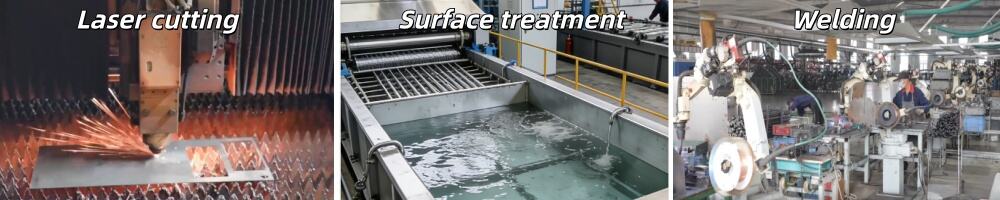
- Cold working processes to reduce thermal deformation: Replace traditional thermal cutting with laser cutting, which uses high-energy laser beams to achieve cold precision cutting with smooth, burr-free cutting edges and a minimal heat-affected zone, effectively controlling workpiece deformation; use high-precision CNC bending machines with special bending dies for bending processing to reduce stress deformation during the bending process.
- Pre-welding pretreatment + special welding processes: Remove the oxide film on the aluminum alloy surface by sandblasting and pickling before welding, and adopt TIG/MIG inert gas shielded welding to isolate air and prevent secondary oxidation; for batch parts, use laser welding technology to achieve low heat input and high-precision welding, reducing the weld deformation rate.
- Surface treatment to improve performance: After machining, surface treatment processes such as anodization, powder coating and electroplating are adopted, which not only enhance the corrosion resistance and wear resistance of aluminum alloy, but also make up for minor surface defects during machining. We can provide one-stop surface treatment services according to customer needs.
Stainless Steel: High Strength and Corrosion Resistance, with Machining Difficulties Centered on Work Hardening and Cutting Resistance
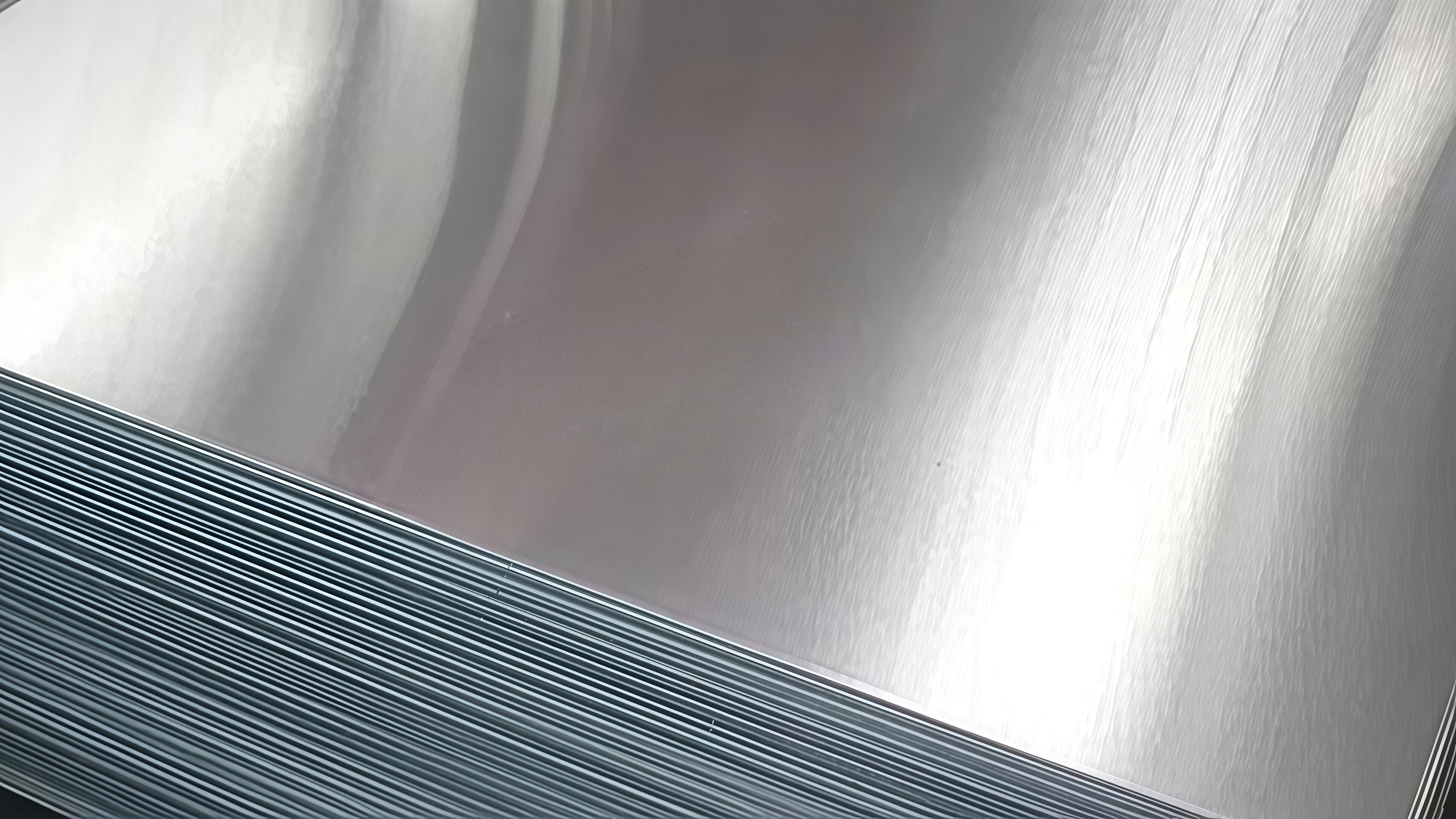
As a core material for food processing equipment, medical devices, building structures and chemical equipment due to its excellent corrosion resistance, high temperature resistance and mechanical strength, stainless steel, especially the mainstream models such as 304 and 316, is widely used in industrial machining. The high-strength characteristic of stainless steel makes it face the dual challenges of work hardening and high cutting resistance in the machining process, putting extremely high rigid requirements on machining equipment and processes.
Core Machining Challenges
- Significant work hardening effect: During the cutting of stainless steel, the surface metal is hardened due to plastic deformation, and its hardness is greatly improved. In subsequent machining, tool chipping and reduced machining precision are prone to occur, which is more prominent especially in deep hole and cavity machining.
- High cutting resistance and fast tool wear: Stainless steel has high tensile strength and toughness, requiring greater cutting force during cutting. The temperature of the contact area between the tool and the workpiece rises rapidly, which is easy to cause overheating wear of the tool and reduce the service life of the tool.
- Welding deformation and intergranular corrosion: Stainless steel welding requires a large heat input, which is easy to cause weld deformation and residual stress; at the same time, chromium in stainless steel is easy to combine with carbon to form carbides at high temperatures, leading to a decrease in the chromium content at grain boundaries, causing intergranular corrosion and affecting the corrosion resistance of the weld.
Targeted Solutions
- Select high-rigidity equipment and wear-resistant tools: Use heavy-duty CNC lathes and machining centers for stainless steel machining to ensure equipment rigidity and reduce machining vibration; select high-performance cemented carbide tools (such as YW2, YG8) or ceramic tools to improve the high temperature resistance and wear resistance of the tools. At the same time, adopt a machining strategy of low speed, high feed rate and large cutting depth to reduce the formation of work hardening layer.
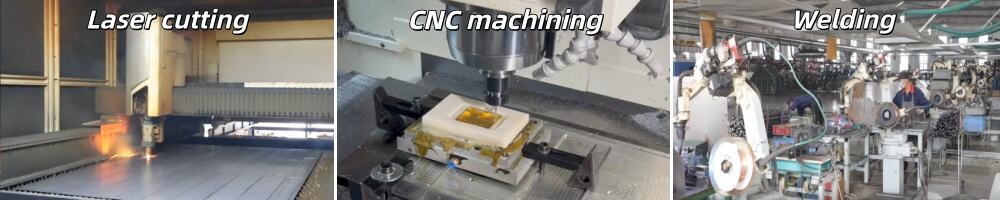
- Combination of laser cutting and CNC machining: For the machining of stainless steel plates, use high-power laser cutting technology to achieve precision cutting of complex shapes with a cutting accuracy of ±0.05mm and no work hardening problem; for porous and grooved structural parts, use CNC machining with special dies to achieve efficient and high-precision machining and reduce the amount of subsequent cutting processing.
- Welding process optimization and post-weld treatment: Adopt low heat input welding technologies such as laser welding and plasma welding to reduce the welding heat-affected zone and weld deformation; conduct solution treatment and passivation treatment after welding to eliminate residual stress and restore the corrosion resistance of stainless steel. We are equipped with professional post-weld treatment equipment to ensure that the weld quality is consistent with the base metal.
- Precise temperature control and cooling: Use high-pressure emulsion cooling during the machining process to not only reduce the temperature of the tool and workpiece, but also flush away chips in time to avoid scratches on the workpiece surface caused by friction between chips and the workpiece; adopt a constant temperature machining environment for precision part machining to reduce the impact of temperature changes on machining precision.
Full-Chain Machining Empowerment, Customized Solutions to Metal Machining Pain Points
The machining difficulties of aluminum alloy and stainless steel are essentially the matching problems between material characteristics and machining processes. Based on years of metal machining experience, Deep Link International Supply Chain Co., Ltd., Cangzhou, has established a full-process solution system of material characteristics - process selection - equipment matching - quality inspection. Aiming at the machining pain points of different metals, we realize one solution for one material and one customization for one part.
We have a complete set of machining equipment including laser cutting, CNC turning and milling, stamping, bending, welding and etching, which can handle all types of machining needs from plates to profiles and from simple structures to complex precision parts; we support small-batch customization with a minimum order of 1 piece and mass production of millions of pieces. Raw materials can be traced throughout the process, and finished products are delivered after authoritative SGS inspection with a 100% on-time delivery rate. At the same time, we provide full-chain services from product design and process optimization to surface treatment, packaging and transportation, truly realizing closed-loop delivery from raw materials to finished products, and providing cost-effective and highly adaptable metal machining solutions for customers in various industries.
Against the backdrop of the upgrading of high-end manufacturing, the machining precision and process requirements for metal materials are continuously improving. Deep Link of Cangzhou will always take technology as the core and service as the guarantee, continuously optimize the machining processes of different metal materials, solve machining pain points for customers, and help various industries achieve efficient and precise manufacturing of metal parts.
Table of Contents
- Aluminum Alloy: Lightweight and Easy to Machine, with Key Challenges in Thermal Deformation and Tool Adhesion
- Stainless Steel: High Strength and Corrosion Resistance, with Machining Difficulties Centered on Work Hardening and Cutting Resistance
- Full-Chain Machining Empowerment, Customized Solutions to Metal Machining Pain Points