
 EN
EN
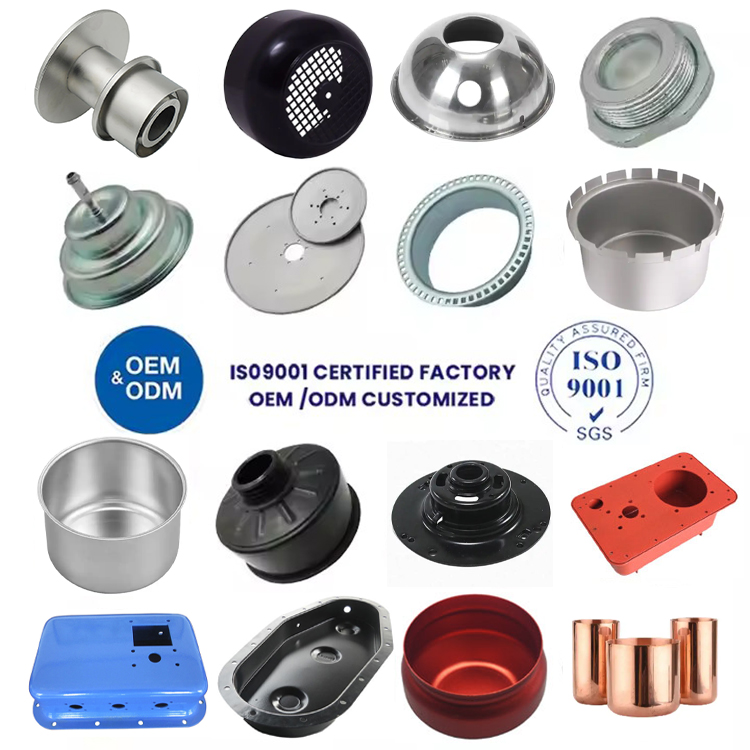
Superior Strength and Durability via Cold Work Hardening
How Work Hardening Enhances Structural Integrity in Deep Drawn Parts
When metals undergo cold work hardening during deep drawing processes, they experience significant changes at the atomic level. Plastic deformation causes dislocations within the crystal lattice structure that get tangled together, making it harder for the material to stretch under additional stress. The result? Yield strength can jump as much as 60 percent in some cases, particularly noticeable with austenitic steel which often hits around 65% of its maximum possible strength before breaking. This matters a lot in applications like aerospace housing parts or medical implants where both weight reduction and structural integrity are absolutely critical requirements. Engineers have found that such hardened materials let designers cut down on wall thickness by about 40% without compromising safety margins against bursting failures. Studies from materials science labs back this up showing how these specially treated microstructures actually perform better under real world conditions than traditional manufacturing methods ever could achieve.
Optimized Strength-to-Weight Ratio for Demanding Load Conditions
The deep drawing process gives parts remarkable strength relative to their weight because it spreads out the metal's grain structure evenly throughout complicated shapes, which gets rid of those weak spots we often see in welded pieces. Take aluminum enclosures made through deep drawing as an example they can handle about 27 percent more pressure before failing compared to similar weight CNC machined parts. When looking at automotive sensors that need to survive constant vibrations, these deep drawn components typically last well beyond 100,000 load cycles without needing extra support structures. What makes this possible is how the forming happens all in one go, maintaining that critical hardened outer layer responsible for roughly 30% of the part's overall strength. This approach cuts down on finishing work and prevents damage that might happen during heating processes or when moving parts around after initial manufacturing.
Unmatched Precision and Dimensional Consistency at Scale
Tight-Tolerance Repeatability Across High-Volume Production Runs
Deep drawn components maintain tight dimensional tolerances around ±0.005 inches throughout large production batches, sometimes going beyond 100k units without significant variation. The reason for this consistency lies in the progressive dies used during manufacturing. These systems manage how materials deform during shaping, taking advantage of work hardening effects to minimize unwanted springback while strengthening the final product's structure. Compared to traditional machining methods or casting techniques, deep drawing doesn't accumulate errors over time. In fact, manufacturers report about 99.5% dimensional accuracy when producing parts for things like car sensors or aircraft connectors. Fewer defective assemblies mean less downtime during quality checks, which becomes really important when even tiny measurement differences can cause major problems in safety critical equipment or high precision instruments.
Reduced Need for Secondary Operations Due to Excellent Surface Finish
Deep drawing dies that have been properly polished create components with surface roughness ranging from around 8 to 32 micro inches, which is actually about 60% better than what we get from cast finishes. The smoother surfaces mean less porosity and no visible tool marks either. For many manufacturers, this means they can skip the grinding and polishing steps altogether for roughly 70% of their parts. Certain products really stand out here. Take medical implants for instance. If these need extra finishing, it might affect how well they work inside the body. Same goes for optical components where reflections matter a lot. According to industry numbers, companies save approximately 30% on processing costs per part when using these techniques. Plus, getting products to market happens faster too. Fewer finishing steps translate directly into better profit margins, especially when making large quantities of items regularly.
Seamless Complex Geometries Enabling Critical Industry Applications
Aerospace: Pressure-Resistant Housings and Fuel System Components
The deep drawing process creates seamless pressure resistant parts for housing and fuel systems, even when dealing with walls as thin as half a millimeter up to 1.2 mm thick and complex internal channel designs all in one go. When there are no weld seams, it basically takes away those weak spots that tend to fail under intense heat changes and constant vibrations. Take Inconel turbine housings as an example. These can stay dimensionally stable within about a thousandth of an inch despite facing temperatures over 1600 degrees Fahrenheit. Looking at the FAA's latest 2023 report on material performance shows these drawn components cut down on service failures by around 37 percent compared to what we get with casting methods. This matters a lot especially for fuel valves where preventing leaks isn't just good practice but actually required under AS9100D standards.
Medical: Biocompatible Enclosures in Stainless Steel and Nickel Alloys
For medical device manufacturers, deep drawn 316L stainless steel and Hastelloy have become go to materials for creating implantable enclosures that meet those strict ISO 10993 biocompatibility requirements. What makes these materials so special? Well, the deep drawing process creates these incredibly smooth surfaces with a finish rating under 0.8 microns roughness average. These super smooth surfaces just don't let bacteria stick around as easily, which makes cleaning and sterilizing the devices much simpler after surgery. Some interesting research came out of Johns Hopkins back in 2023 showing that when they used deep drawn titanium alloys for insulin pump casings, patients had about 29% fewer inflammatory reactions compared to traditional machining methods. And let's talk about precision here folks. We're looking at tolerances within half a thousandth of an inch. This level of accuracy is absolutely critical for things like neurostimulators where the enclosure needs to be completely sealed against moisture. Manufacturers can maintain internal humidity levels down to less than 0.001%, ensuring these life saving devices keep working properly for over ten years inside the body.
Automotive: Lightweight Sensor and Actuator Shells
The automotive industry increasingly turns to deep drawn aluminum and copper alloys for making sensor housings that weigh about 40% less than traditional die cast options, yet still meet the required IP67 waterproof standards. When manufacturing these parts, integrated mounting flanges along with cable ports can be formed during a single production step, which means no need for additional machining processes down the line. For electric vehicle battery management systems, these deep drawn cases can offer excellent electromagnetic interference shielding at 1GHz frequency, reaching 85 dB effectiveness according to SAE 2023 standard tests. When production exceeds 50,000 units, using this technique can reduce cost per unit by $2.18 while still maintaining compliance with FMVSS 301 standards for impact resistance, enabling manufacturers to achieve significant savings without compromising product quality.
Material Versatility and Long-Term Cost Efficiency of Deep Drawn Parts
The deep drawing process works well with many different materials such as stainless steel, aluminum, brass and copper. This gives engineers real flexibility when matching metal characteristics like how resistant something is to rust or how well it conducts heat to what the product actually needs. One major advantage is maintaining even wall thickness throughout complicated shapes while using materials more efficiently. Industry data suggests this can be around 40% better than traditional CNC machining methods, which obviously cuts down on material expenses. When we look at overall costs over time, parts made through deep drawing typically save between 15% and 30% in long run expenses for things produced in large volumes, think automotive sensors or medical equipment components. Another benefit comes from eliminating those pesky weld seams that tend to fail eventually. Without these weak points, products last longer before needing repairs or replacements, ultimately reducing maintenance work and cutting down on total ownership costs throughout their useful life.
FAQ Section
What is cold work hardening?
Cold work hardening refers to the process of strengthening metals through plastic deformation at low temperatures, often resulting in increased material durability and yield strength.
What are deep drawn parts?
Deep drawn parts are components formed through a metalworking process that involves stretching a sheet metal blank around a die to create seamless, complex geometries.
How does deep drawing improve precision in manufacturing?
Deep drawing improves precision by maintaining tight dimensional tolerances and reducing variation through high-volume production runs, which minimizes defects and enhances dimensional consistency.