
 EN
EN
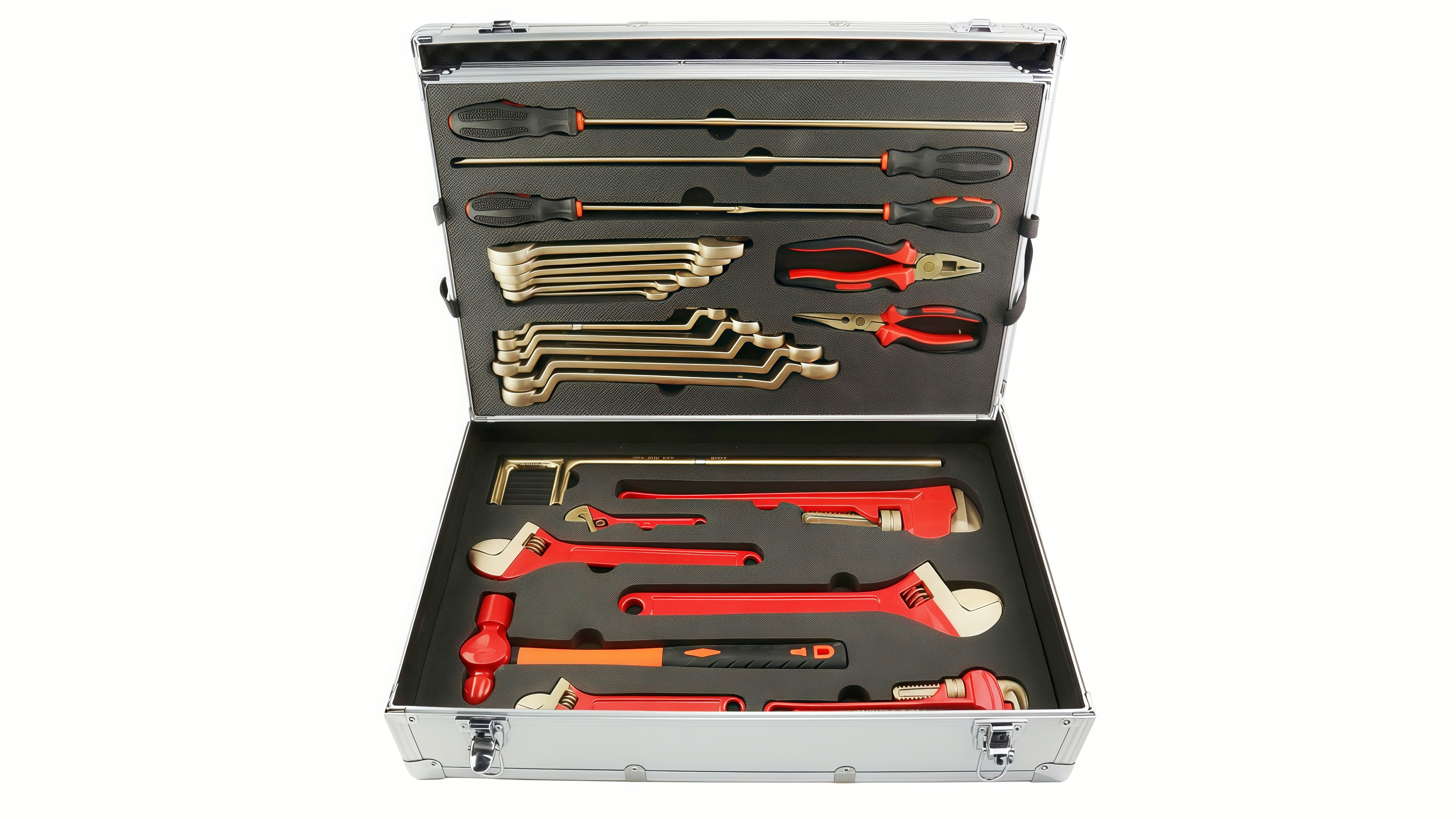
Why Non-Sparking Tool Sets Are Critical in Hazardous Industrial Environments
Defining non-sparking tools: Function, physics, and ignition risk mitigation
Special non sparking tools help stop big explosions from happening in places where gases or dust can catch fire easily because they don't create sparks. These tools are made from materials like copper beryllium or aluminum bronze alloys which produce very little heat when they hit something hard. Instead of making sparks, the material actually bends slightly under pressure, spreading out the energy without creating dangerous hot spots. The science behind it works so that the amount of energy released stays well below what's needed to ignite most flammable substances we deal with daily. Another important thing about these special alloys is their ability to conduct electricity across their surfaces. This means static electricity builds up less and gets safely conducted away, plus they won't corrode as quickly as regular metal tools would in harsh conditions. For workers dealing with potentially explosive situations every day, having equipment that inherently prevents accidents makes all the difference between safe operations and disastrous outcomes caused simply by striking something with ordinary tools.
High-risk sectors demanding certified non-sparking tool sets: Oil & gas, chemical processing, mining, and explosives handling
Four industries mandate certified non-sparking tool sets due to persistent, high-consequence ignition hazards:
- Oil & gas facilities, where methane concentrations can exceed 4.4% LEL in confined, poorly ventilated spaces
- Chemical plants, processing volatile substances such as acetone, hydrogen sulfide, or ethyl ether
- Mining operations, where suspended coal dust creates explosive atmospheres with low MIE
- Explosives manufacturing and handling, where trace nitroglycerin or ammonium nitrate vapors require zero-ignition protocols
The industries involved face similar dangers when it comes to safety: cramped working areas, poor air circulation, and lots of metal hitting metal during operations. Just one spark coming from a tool that hasn't been properly certified could start an explosion that releases as much power as 50 kilograms of TNT within fractions of a second. According to what regulators have found through their investigations, about 37 percent of all industrial blasts happen because workers used the wrong kind of equipment. This has led to strict rules requiring every tool brought into designated danger zones to be officially certified first.
Core Material Requirements for a Safe and Compliant Non-Sparking Tool Set
Copper-beryllium vs. aluminum-bronze: Safety, strength, and spark suppression trade-offs
What materials we pick really affects how things perform, last, and work safely in different situations. Take copper beryllium (CuBe) for instance. This stuff has amazing tensile strength around 140,000 psi and won't spark even when heated past 300 degrees Celsius. That makes it great for places where there's lots of torque needed in environments filled with hydrogen or extreme heat conditions. Aluminum bronze (Al-Br) isn't quite as strong but holds up better against corrosion in areas where chlorides are present, such as near saltwater operations or along coastlines where chemicals are processed regularly. Both these metals help prevent sparking because they don't generate much friction and aren't magnetic. Still, CuBe costs about 30 to 40 percent more than Al-Br. When picking between them though, cost shouldn't be the only factor considered. Getting the right material for the specific atmosphere matters most since using the wrong one can lead to serious safety issues and problems meeting regulations.
Material contamination risks and why ventilation and handling protocols matter for tool set integrity
Contamination is a silent failure mode: even trace iron particles from proximity to steel tools can increase ignition risk by up to 70%, per OSHA’s 2023 guidance on non-sparking tool integrity. To preserve metallurgical performance and certification validity, enforce strict handling and storage protocols:
- Store kits in segregated, climate-controlled cases—never alongside ferrous tools
- Clean exclusively with dedicated non-metallic brushes or lint-free cloths
- Conduct monthly magnetic particle inspections to detect embedded ferrous residue
- Require gloves during handling to prevent skin oils from accelerating surface oxidation
Equally critical is ambient control: in chemical plants, 43% of ignition events originate from airborne combustible dust—a risk sharply reduced by proper ventilation and housekeeping. These measures are not optional extras; they’re foundational to maintaining the tool set’s certified non-sparking properties across its operational life.
Mandatory Safety Standards and Certification for Industrial Non-Sparking Tool Sets
ATEX, ISO 8502-3, and ASTM F2643: How standards define non-sparking tool set compliance
Meeting international standards remains the best way to know for sure if tools actually meet those strict spark suppression needs. Take the ATEX Directive (2014/34/EU) for instance. This regulation applies throughout Europe where equipment operates in potentially explosive environments. It requires proper testing of materials, sets limits on how much sparking is acceptable, and demands detailed records that can be traced back. Then there's ISO 8502-3 which focuses specifically on friction tests against carbon steel surfaces. These tests check whether tools will create sparks when they come into contact with metal in normal working conditions. Over in North America, ASTM F2643 serves as the main standard. It covers several important aspects including how well tools withstand impacts, resist corrosion over time, and avoid creating sparks even in areas with higher oxygen levels. When manufacturers follow all these different guidelines, what we get are tools that have been thoroughly checked and proven safe for hazardous environments.
- Precise alloy composition (e.g., ‰¥97% copper in CuBe, ‰¤0.01% iron in Al-Br)
- Impact resistance under worst-case atmospheric simulations
- Surface interaction safety during repeated metal-on-metal contact
A 2022 industrial safety audit found that facilities using fully certified tools experienced 78% fewer ignition-related incidents compared to those relying on uncertified or self-declared “non-sparking” alternatives.
Labeling, traceability, and documentation requirements for certified non-sparking tool sets
Certification is meaningless without verifiable traceability. Every certified tool must feature permanent laser etching displaying:
- Recognized compliance marks (ATEX, ISO 8502-3, or ASTM F2643)
- Unique alphanumeric batch code linked to production records
- Alloy designation (e.g., “CuBe-25” or “AlBr-9”)
Manufacturers must supply test certificates tied to each batch, including:
- Spark test results conducted under controlled humidity (‰¤60%) and temperature (23°C ± 2°C)
- Third-party validation seals from EU Notified Bodies or ANSI-accredited labs
- Spectrometric material analysis confirming non-ferrous composition and absence of iron, nickel, or cobalt impurities
Documentation packages must include multilingual safety manuals covering inspection intervals, decontamination procedures, storage parameters, and contamination response protocols—ensuring auditors can validate ongoing compliance at any point in the tool’s lifecycle.
Essential Tool Types and Configurations in a Complete Non-Sparking Tool Set
Must-have tools by function: Wrenches, hammers, pliers, screwdrivers, and cutting tools
Non-sparking tool sets aren't just about preventing sparks they also need to work reliably in dangerous environments. Good wrenches should apply the right amount of torque without getting stuck on rusty bolts. Hammers need proper balance so workers don't strain themselves, plus special faces that won't scratch surfaces and accidentally start fires. For pliers, the jaws have to be ground just right to grab those tight spots around valves. Screwdrivers are another story altogether they need insulated grips and strong tips that won't slip out when turning screws. When it comes to cutting tools like bolt cutters and aviation shears, clean cuts matter most because friction heat can be deadly. Statistics from the field show something pretty alarming incomplete tool kits raise accident chances by more than 30% during risky operations. So while everyone focuses on no sparks, remember that good ergonomics and resistance to corrosion matter just as much for safety.
Optimizing configuration: Modular kits, task-specific sets, and petrochemical shutdown case example
How tools are set up makes a big difference in workplace safety and how well operations run. When teams have modular tool kits, they can grab just what they need for each specific job. This cuts down on clutter around work areas, lowers chances of mixing up different materials, and makes it easier to know who has what equipment. Specialized tool sets for things like fixing flare stacks or entering reactor vessels really speed up getting ready for work and help prevent mistakes when time is tight. We saw this happen during one major petrochemical plant overhaul where workers with custom made non sparking valve service kits finished their repair tasks about 25 percent quicker compared to others who had to search through regular tool boxes. Plus there were 41 fewer near miss incidents reported too. Simple things matter a lot here too standard labels on containers, colors showing where stuff goes, and computer systems tracking what's available all help people find what they need fast and pass inspections without hassle. The bottom line? Good tool organization should match exactly what risks exist at each location, what kind of work gets done regularly, and when maintenance needs to happen rather than just following old habits or whatever happens to be convenient.
FAQ
What are non-sparking tools made of?
Non-sparking tools are typically made from copper beryllium or aluminum bronze alloys, which are designed to minimize spark generation and heat production when struck.
Why are non-sparking tools crucial in certain industries?
Industries such as oil & gas, chemical processing, mining, and explosives handling require non-sparking tools to prevent ignition hazards in environments with flammable gases or dust.
How are non-sparking tools certified?
Non-sparking tools undergo certification standards such as ATEX, ISO 8502-3, and ASTM F2643, ensuring they meet safety requirements for use in hazardous environments.
Table of Contents
- Why Non-Sparking Tool Sets Are Critical in Hazardous Industrial Environments
- Core Material Requirements for a Safe and Compliant Non-Sparking Tool Set
- Mandatory Safety Standards and Certification for Industrial Non-Sparking Tool Sets
- Essential Tool Types and Configurations in a Complete Non-Sparking Tool Set
- FAQ