
 EN
EN
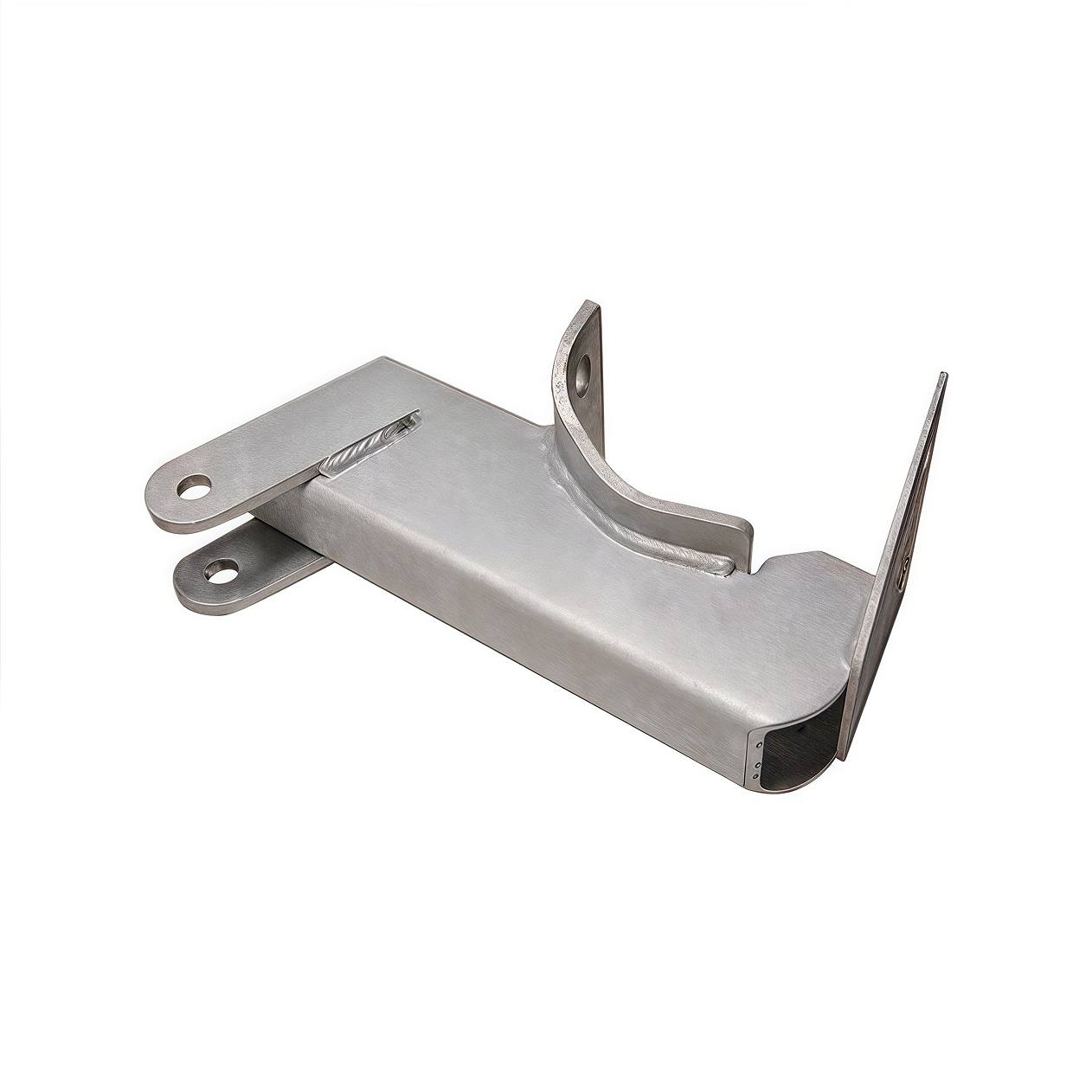
Core Welding Codes Governing Metal Welding Parts
ASME Section IX vs. AWS D1.1: Purpose, Scope, and Application to Metal Welding Parts
Section IX of the ASME code sets out the basic rules needed to qualify both welding processes and the people doing them. This helps maintain consistent quality in systems where safety matters most, like pipelines carrying gas or steam boilers. The AWS D1.1 standard takes a different approach, concentrating on making sure structures stay intact under stress. It covers things like how joints should be designed, what kind of inspection checks are necessary, and when defects in welds can still be considered okay for actual use in things like bridge supports or building frames. When it comes to metal components that need welding, Section IX tells us how to test if a weld meets standards, whereas D1.1 basically says what counts as good enough once those parts are put into service. These two standards work hand in hand really. One makes sure everyone follows proper procedure step by step, the other looks at whether those welds will actually hold up when subjected to real world forces and loads.
Sector-Specific Standards: API RP 2X (offshore), CSA W47.1 (Canada), and ISO 5817 (global fabrication)
Critical applications require tailored standards that address unique environmental and operational demands:
- API RP 2X: Mandates toughness testing–including drop-weight and Charpy V-notch evaluations–for offshore metal welding parts exposed to subsea pressures, cyclic loading, and low-temperature service.
- CSA W47.1: Requires formal company certification for Canadian structural projects, with emphasis on documented weld procedure audits and third-party surveillance of production welders.
- ISO 5817: Provides globally harmonized imperfection classifications–standardizing evaluation of porosity, undercut, misalignment, and incomplete fusion across international fabrication supply chains.
This layered standardization ensures metal welding parts perform reliably under stressors ranging from corrosive marine environments to seismic events and cryogenic conditions–without over-specifying for lower-risk applications.
Non-Destructive Testing (NDT) Methods for Metal Welding Parts
Non-destructive testing (NDT) enables critical flaw detection in metal welding parts without compromising structural integrity. These methods are indispensable for validating weld quality across aerospace, energy infrastructure, and heavy manufacturing–where failure consequences range from costly downtime to life-threatening incidents.
Radiographic (RT) and Ultrasonic (UT) Testing: Detection Capabilities and ASTM E94/E164 Requirements
Radiographic testing, or RT for short, works by shooting X-rays or gamma rays through materials to spot internal problems like tiny air pockets, bits of slag stuck inside, or areas where metal hasn't properly joined together. It's great at finding these kinds of issues but comes with some serious safety requirements around radiation exposure, plus it doesn't always give clear pictures of what's happening deeper within the material. On the other hand, ultrasonic testing (UT) sends out high frequency sound waves that can pick up on really small defects down to about half a millimeter deep, which makes it particularly useful when checking thick welded sections. Both techniques hit over 95 percent accuracy rates when following standards like ASTM E164 for UT work and ASTM E94 for RT procedures. What makes them work well together is their different strengths: RT creates lasting images that inspectors can look back on later, while UT gives immediate feedback about how thick parts are and exactly where flaws lie, which explains why many prefer UT for ongoing maintenance checks and automated inspection systems.
Surface Inspection: Visual (VT), Penetrant (PT), and Magnetic Particle (MT) Testing Protocols
Surface-focused NDT methods target externally accessible defects using distinct physical principles:
| Method | Defect Type Detected | Sensitivity | Material Compatibility |
|---|---|---|---|
| VT | Surface irregularities | ≈0.5mm | All metals |
| PT | Open-surface cracks | ≈0.01mm width | Non-porous materials |
| MT | Subsurface flaws (≈6mm depth) | ≈0.1mm length | Ferromagnetic metals only |
Visual testing or VT is still considered the primary method for quality checks across industries. Most facilities follow the standard of at least 500 lux lighting according to AWS B1.11 guidelines, and many include it as part of their regular production shifts. When it comes to finding those tiny surface cracks, liquid penetrant testing works pretty well. The process relies on capillary action where the liquid seeps into flaws, but everything needs thorough cleaning beforehand as specified in AMS 2647 standards. For magnetic materials, MT testing creates a magnetic field around components and then applies fluorescent particles that light up when there's a break in the magnetic flow. These three inspection techniques aren't just recommended they require certification from ASNT Level II inspectors who have the training to spot issues consistently and reduce mistakes in interpretation.
Destructive Testing and Mechanical Validation of Metal Welding Parts
Guided Bend and Nick-Break Tests: Assessing Fusion Zone Integrity per AWS B4.0
The guided bend test checks how well a material can stretch before breaking and confirms if the weld has good continuity throughout the fusion zone. According to AWS B4.0 standards, when we look at face bends, root bends, and side bends, any cracks, missing fusion areas, or bubbles in the heat affected zone become pretty obvious. This is really important stuff for carbon and low alloy steels where small flaws can cause big problems later on. If there's even one crack bigger than 3.2mm in a sample that's 19mm thick, that means the metal has become too brittle to be safe. Nick-break testing works hand in hand with this approach. By creating a notch in the center of the weld and then hitting it with a hammer, inspectors can see those hidden issues like slag trapped inside or tiny pockets of air that might have formed during welding. The AWS B4.0 code says total flaws on broken surfaces shouldn't exceed 1.6mm for parts that actually carry loads. These destructive tests cost about 40% less than fancy non-destructive techniques, yet they still confirm proper fusion for more than 90% of all structural welds out there. Despite newer technologies, these traditional methods continue to set the standard for qualifying welding procedures across the industry.
Tensile, Impact, and Hardness Testing: Linking Data to Service Performance and Safety Margins
Tensile tests tell us about the ultimate strength and yield point of materials, which is really important when checking if pipeline welds comply with API 1104 standards. According to these guidelines, the strength shouldn't drop by more than 20% compared to the base metal. Then there's the Charpy V-notch test that looks at how tough material is against cracks under different temperatures. For parts used offshore, they need to handle at least 27 joules of energy at minus 40 degrees Celsius so they don't break suddenly in those rough sea conditions. When we check hardness levels across weld areas using HV10 measurements, we're looking out for spots where the metal gets too hard locally. If martensite forms in regions above 350 HV value, that increases the chance of cracks forming especially in environments with sour gases as specified in NACE MR0175 requirements. Putting all these numbers together gives engineers a clearer picture of how well welded joints will actually perform in real world situations.
- Tensile strength matching or exceeding parent metal ensures overload protection
- Impact energy >40 J supports crack arrest in high-cycle fatigue scenarios
- Hardness gradients <100 HV/mm mitigate hydrogen-induced cracking in susceptible alloys
Validated mechanical properties establish measurable safety margins–reducing field failures by 63% in high-stress applications such as pressure vessels, lifting equipment, and rotating machinery supports.
Weld Defect Acceptance Criteria Across Key Standards for Metal Welding Parts
The international standards out there set specific rules about what counts as acceptable when it comes to defects in welded metal parts. Take ISO 5817 for instance, which sorts quality into three main categories. Level B is the top tier, followed by Level C which is moderate, and finally Level D that's the most lenient. Each level has different rules about things like tiny holes in the metal (porosity), those little grooves along the edge (undercut), and how much the pieces don't line up properly (misalignment). When we talk about Level B, this is reserved for really important stuff like pressure vessels or parts used in nuclear facilities. These applications can only tolerate very small pores, almost too tiny to see, and any undercut shouldn't go beyond half a millimeter deep where stress is highest. Level C allows bigger groups of pores, around one millimeter across, and a bit deeper undercut for regular structures. Then there's AWS D1.1, another standard that gets even more specific depending on what exactly needs to be built. For example, bridge supports need stricter rules about cracks compared to normal buildings not designed to withstand earthquakes. All these carefully thought out guidelines help stop disasters from happening while also making sure good parts aren't thrown away just because they have minor issues. Manufacturers can then match their quality checks to what actually matters for safety, what regulations require, and how long the product should last before needing replacement.
Weld Procedure Qualification (WPQ/PQR) as the Foundation of Consistent Metal Welding Parts Quality
From Qualification to Production: How Validated Procedures Prevent Field Failures
The Procedure Qualification Record (PQR) and Welding Procedure Specification (WPS) system is basically what keeps metal welding parts manufacturing from falling apart. When getting ready for production runs, welders have to run test plates under strict conditions while keeping track of all sorts of parameters like heat input levels, type of filler metal used, how hot things need to be before starting, and the actual shape of the joint being welded. All these details go into the PQR document. Then comes the destructive testing part where they bend, stretch, and etch samples according to AWS standards to check if everything meets what was promised in the design specs. Once approved, the WPS takes those successful settings and turns them into step-by-step instructions for regular production work. According to ASM International research from last year, following this process gets rid of around 72% of typical welding issues we see out there in the field. Think incomplete penetration spots, hydrogen cracks forming later on, or when parts warp too much during cooling. Fabrication shops that stick strictly to preheat temperatures and travel speeds confirmed during qualification cut down on porosity problems needing rework by almost 91%, which makes a huge difference in bottom line costs. Every single weld made should be able to point back to a specific tested setup somewhere in records. This creates complete traceability and stops people from just winging it. If companies skip over this whole foundation thing, then random thermal fluctuations or using wrong filler materials could lead to hidden weaknesses in the metal. These flaws might not show up until something breaks while in service, creating serious safety risks and potentially costing hundreds of thousands in recalls, as seen in recent Ponemon Institute findings. So let's get one thing straight: PQR/WPS isn't just paperwork bureaucracy. It's actually the first real defense line engineers put up to prevent failures once products hit the field.
FAQ
What is the main difference between ASME Section IX and AWS D1.1?
ASME Section IX focuses on qualifying welding processes and welders to maintain consistent quality in critical systems, whereas AWS D1.1 ensures structural integrity and addresses applications where structures must withstand stress.
What sectors require specific welding standards like API RP 2X, CSA W47.1, and ISO 5817?
API RP 2X is used for offshore welding under subsea pressures, CSA W47.1 for Canadian structural projects, and ISO 5817 provides a globally harmonized approach to welding imperfection classifications applicable across industries.
How do radiographic and ultrasonic tests differ in their applications?
Radiographic testing uses X-rays or gamma rays to detect internal defects, providing lasting images, whereas ultrasonic testing utilizes sound waves to detect small defects and gives immediate feedback, making it useful for ongoing maintenance.
What are the benefits of destructive testing methods in welding?
Destructive testing methods like guided bend and nick-break tests provide a clear assessment of fusion zone integrity and detect hidden defects, ensuring weld continuity and safety, crucial for maintaining standards in structural welding.
Table of Contents
- Core Welding Codes Governing Metal Welding Parts
- Non-Destructive Testing (NDT) Methods for Metal Welding Parts
- Destructive Testing and Mechanical Validation of Metal Welding Parts
- Weld Defect Acceptance Criteria Across Key Standards for Metal Welding Parts
- Weld Procedure Qualification (WPQ/PQR) as the Foundation of Consistent Metal Welding Parts Quality
- FAQ