
 EN
EN
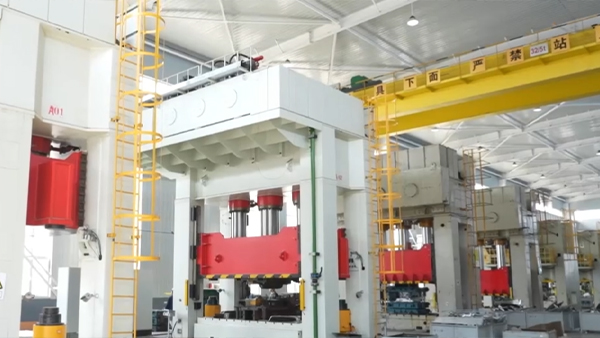
Unmatched Dimensional Accuracy and Tight Tolerances in Deep Drawn Parts
Precision tooling and closed-loop process control enable manufacturers to achieve remarkable dimensional consistency in deep drawn parts—routinely holding tolerances as tight as ±0.005". This level of accuracy stems from integrated hardware, software, and material science—not incremental improvements, but a coordinated system approach.
How Advanced Tooling and Process Control Achieve ±0.005" Consistency
Servo presses controlled by computers team up with laser guided measurement systems during the forming process itself, not just afterward, allowing for tiny adjustments as things happen. The whole system works like a feedback loop that stops those annoying tolerance issues from building up across different parts of the product. This means walls stay consistently thick, everything stays centered properly, and each part comes out pretty much identical to the last one. Looking at stats from actual aerospace manufacturing shows around 99.8 percent meet those tough AS9100 standards most of the time. Before cutting any tools, engineers model how strong the material will be and how it hardens when worked. This helps predict exactly how much it'll spring back after shaping, saving money on expensive trial runs where they have to physically test every change.
Material Flow Optimization and Its Impact on Repeatability Across Batches
FEA software models how metal flows when subjected to different blank holder pressures and draw ratios, helping engineers find the sweet spot where parts won't wrinkle, tear, or become too thin during forming. By running these virtual tests first, manufacturers can cut down on physical prototypes by roughly two thirds, plus they get better grain structure throughout the part which makes everything perform more consistently. Switching from one batch of material to another, even if coming from different suppliers, triggers automatic adjustments in lubricant application thanks to smart viscosity sensors. These systems keep friction levels right around +/- 0.02, something that used to require constant hands-on tweaking but now happens automatically between production batches.
Superior Structural Integrity: Strength, Durability, and Seamless Construction
Cold Work Hardening Benefits: Up to 30% Higher Yield Strength in Stainless Steel Deep Drawn Parts
When metals go through deep drawing processes, they experience what's called cold work hardening. This happens because the metal gets compressed at a microscopic level as it stretches into complicated shapes. For stainless steel specifically, all this stretching actually makes the material stronger without needing any kind of heat treatment that might weaken its ability to resist corrosion. Parts made this way tend to hold their shape better under stress and last longer before breaking down. That's why manufacturers often choose this method when creating components for things like airplane bolts or implantable medical equipment, where parts need to keep working properly for years without failing.
Weld-Free Design: Eliminating Failure Points and Enhancing Reliability
Deep drawn precision parts come as single piece, seamless components without any welds, joints or mechanical fasteners that create stress points and possible failure spots. The continuous material allows for even stress distribution when loaded, which has been shown to increase service life around 40% according to tests on pressure vessels following ASME BPVC Section VIII guidelines. For safety critical applications like hydraulic manifolds and electric vehicle battery enclosures, this solid construction matters a lot because weld problems might cause serious leaks or dangerous thermal events down the road.
Production Efficiency and Total Cost Advantage of High Precision Deep Drawn Parts
Reduction in Secondary Operations—Cutting Assembly Costs by 25–60%
When manufacturers use high precision deep drawing techniques, they can actually build multiple functional features right into the main forming process itself. Think about things like piercing holes, creating notches, adding beads, threading surfaces, or applying specific finishes all at once during the initial shaping stage. This approach basically removes the need for those extra steps we usually see after forming, such as welding parts together, doing CNC machining work, or applying plating treatments. As a result, overall production costs drop somewhere around 25 to maybe even 60 percent depending on the specifics of each project. There are several reasons why this happens: parts require less handling throughout manufacturing, there's less need for manual labor, equipment costs go down since fewer machines are needed, and quality checks become much simpler processes. Another big plus is that near net forming significantly reduces waste materials, sometimes cutting them back by nearly 30%. All these factors combine to make this technique particularly valuable when producing large quantities of components where accuracy matters most, especially in industries where component failure simply isn't an option.
Sustainability Gains Through Optimized Material Utilization
Precision deep drawing gets around 93 to 98 percent material usage, which is way better than traditional subtractive techniques such as CNC machining that only manage about half to three quarters efficiency. When manufacturers form sheet metal into intricate shapes with little waste, they save roughly 15 to 30 percent on raw materials for each individual part produced. The elimination of those extra cutting steps means less energy consumption overall and cuts down carbon dioxide emissions by approximately forty percent according to recent data from the Sustainable Manufacturing Institute in 2023. Components made through this method tend to last longer too because there are no seams and the cold working process makes them tougher. This longevity means fewer replacements needed throughout the life cycle of products. Plus, when combined with metals like stainless steel and aluminum that can be recycled completely, these precisely formed parts fit right into closed loop systems without compromising on either performance standards or reliability expectations.
FAQ
What is deep drawing?
Deep drawing is a manufacturing process used to shape sheet metal into complex forms by stretching it around a die. It's commonly used for creating high-precision parts such as those needed in aerospace or medical applications.
How does cold work hardening improve deep drawn parts?
Cold work hardening occurs during the deep drawing process, strengthening the metal at a microscopic level. This enhances the yield strength of materials like stainless steel, improving the part's durability and its resistance to corrosion without needing additional heat treatments.
Why are deep drawn parts weld-free?
Deep drawn parts are designed to be seamless and free from welds or joints, removing potential stress points or failure spots. This enhances reliability, especially in safety-critical applications where pressure might cause leaks or thermal events.
How does deep drawing contribute to sustainability?
Deep drawing utilizes materials with 93 to 98 percent efficiency, minimizing waste and energy consumption. Additionally, the longevity of precisely formed parts reduces the need for replacements, fitting well into closed loop recycling systems.