
 EN
EN
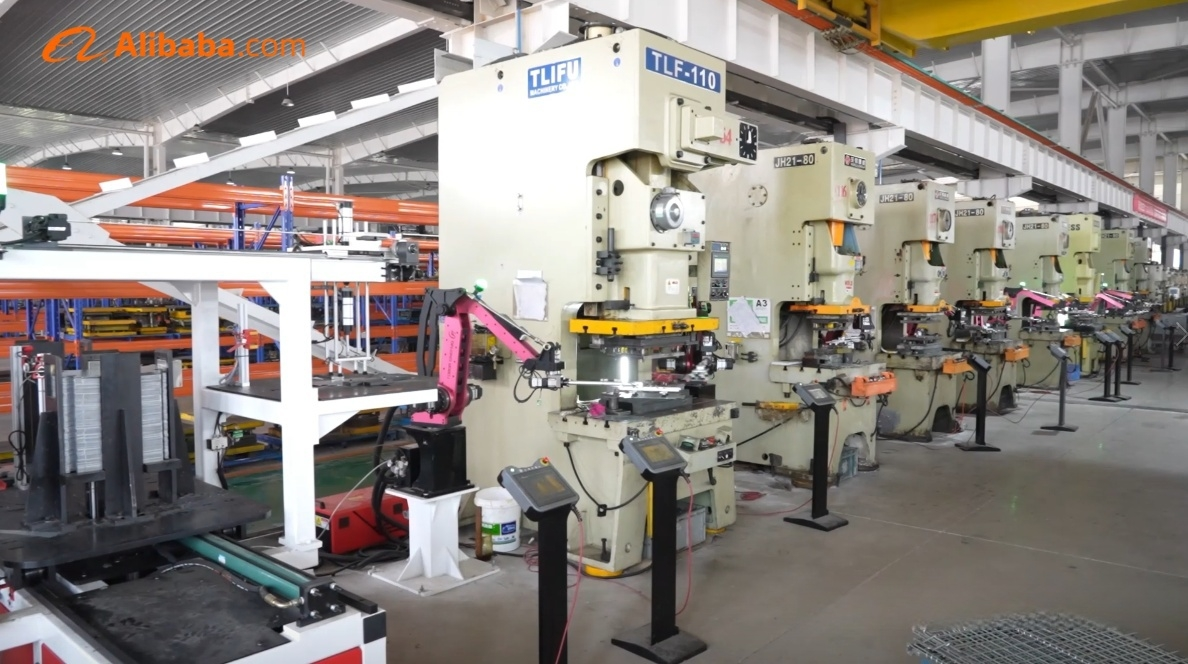
High-Volume Metal Stamping Capabilities for Reliable Production
Progressive Die Stamping: The Core Process for Consistent Metal Stamping Parts at Scale
Progressive die stamping has become standard practice when manufacturers need to produce large quantities of precision metal parts. The process works by feeding coiled metal through a series of workstations where each station does something different like cutting, bending or shaping the material without much manual intervention. These machines can crank out over 1,500 parts every single hour while keeping measurements accurate to within plus or minus .005 inches. When companies order more than half a million pieces annually, they often see their costs drop between 40 and 70 percent once the initial tooling investment gets spread out over production runs. This happens because there's less need for workers, materials fit together better on the sheet, and almost nothing needs fixing after the stamping completes. Manufacturers monitor everything from pressure levels to how straight each part comes out during these massive production runs. That's why this method remains so popular in making car parts and electronic housing components where having identical replacements matters a lot.
Transfer Die and Multi-Slide Alternatives for Complex, High-Volume Metal Stamping Parts
For parts where geometry goes beyond what progressive dies can handle, such as really deep draws, complicated multi-axis bends, or components with built-in fasteners, transfer dies and multi-slide systems offer the needed precision at scale. With transfer systems, robotic arms actually move the blank material through different stations, which allows for those tricky secondary operations like side piercing or threading without needing workers to step in manually. Then there are multi-slide presses that work differently altogether. These machines have four forming slides that all move together from various angles, making them capable of producing intricate brackets and connectors in less than three seconds per cycle. The upfront costs for tooling with these systems typically run about 15 to 30 percent more compared to standard progressive setups. But manufacturers find they pay off when production volumes hit around 300 thousand units because they eliminate expensive follow-up processes. Real world data shows that transfer lines keep their position accurate within plus or minus 0.002 inches even when working with stainless steel sheets as thick as quarter inch during continuous round-the-clock operations.
Precision and Consistency Across Large Batches of Metal Stamping Parts
Maintaining precision in high-volume metal stamping parts demands rigorous, integrated process controls. Dimensional or material deviations can trigger assembly failures or recalls—especially in safety- or function-critical applications—making consistency non-negotiable.
Statistical Process Control and In-Line Metrology Ensuring Part-to-Part Uniformity
Statistical Process Control or SPC systems keep an eye on important factors like press tonnage, how the metal strip lines up, and the speed at which material feeds into machines. These systems tweak settings automatically before things start going out of spec. When combined with fully automated measurement tools running alongside production such as those high speed cameras that check parts as they come off the line, manufacturers get what's called a closed loop system that keeps everything within specs. Car part makers who have adopted this whole package see around 99.8 percent of their parts meeting size requirements even when producing over quarter million units at a time. And best of all, waste stays really low too, typically under half a percent throughout entire production runs.
Tight Tolerance Performance: ±0.005" Repeatability at Volumes Exceeding 500K Units/Year
Servo driven presses today can maintain about 0.005 inch accuracy even when running at speeds up to 1,200 strokes per minute. When paired with tough tool steels, special surface treatments, and systems that manage heat buildup, these machines stay reliable for well over two million production cycles. Take connector pin manufacturing as an example. A facility making around half a million pins each year at this level of precision can skip secondary machining steps in roughly 78% of cases, which cuts down on both time spent waiting and overall costs. Industry reports back these claims too. The Ponemon Institute looked into scrap rates across various stamping operations last year and found similar results across different manufacturing settings.
Cost Efficiency Achieved Through Economies of Scale in Metal Stamping Parts
Tooling Investment Payback: How Volume Reduces Unit Cost by 40–70%
High volume metal stamping transforms tooling from just another expense into something that actually helps cut costs. Look at it this way: when companies make over half a million parts, those big upfront investments in dies can slash individual part costs by anywhere between 40% and 70%. Industry data from folks at the Precision Metalforming Association backs this up. Why does this happen? Well, it's not just about spreading out those fixed costs. There's also better material usage, less labor needed per piece, and getting rid of extra steps in production. Take automotive brackets as an example. Making a million of them through progressive stamping brings costs down to around $0.30 to $1.50 each. Compare that to CNC machining where prices jump all the way to $5-$50 per unit for smaller batches. These savings really stack up over time, giving manufacturers a solid financial edge when running large production volumes.
Sustained Reliability: Tooling Longevity and Stable Lead Times for Metal Stamping Parts
Predictive Maintenance and Tool Life Management for Uninterrupted High-Volume Output
How long tools last really matters when it comes to reliability in metal stamping operations that run at high volumes. When companies implement predictive maintenance strategies like checking vibrations, using heat sensors, and monitoring wear as it happens, they typically see tool life extended somewhere between 30 to 40 percent. Plus, unexpected breakdowns drop by about half compared to traditional methods. Regular scheduled maintenance work combined with surface treatments keeps those tools performing within tight tolerances over millions of production cycles, stopping them from drifting outside acceptable ranges of plus or minus 0.005 inches. Keeping spare sets of essential dies on hand creates what some call strategic redundancy, which means there's no halt in production while regular maintenance is being done. This methodical way of managing equipment results in around 23% less variation in lead times compared to waiting until something breaks down. Such predictability supports JIT delivery schedules and helps maintain uninterrupted supply chains for customers who depend on steady, large scale manufacturing outputs.
FAQs
What is progressive die stamping?
Progressive die stamping is a metal forming process involving feeding coiled metal through multiple workstations for operations like cutting, bending, and shaping without much manual intervention. It efficiently produces large quantities of precision parts.
How do transfer die and multi-slide systems differ from progressive die stamping?
Transfer die systems use robotic arms to handle complex secondary operations, while multi-slide machines utilize four forming slides for intricate bracket and connector production. Both are suitable for high-complexity geometries beyond the capability of progressive dies.
Why is consistency important in metal stamping?
Consistency is crucial to avoid assembly failures or recalls, especially in safety-critical applications. Rigorous process controls ensure precision and uniformity across large batches of stamped parts.
How does high volume reduce costs in metal stamping?
Producing over half a million parts allows companies to spread tooling costs, utilize material better, and decrease labor needs, resulting in up to 70% unit cost reduction compared to smaller batch processes.
What's the role of predictive maintenance in metal stamping?
Predictive maintenance helps extend tool life by 30 to 40 percent, reduces unexpected breakdowns, and maintains production consistency by implementing strategies like vibration checks and heat sensors.
Table of Contents
- High-Volume Metal Stamping Capabilities for Reliable Production
- Precision and Consistency Across Large Batches of Metal Stamping Parts
- Cost Efficiency Achieved Through Economies of Scale in Metal Stamping Parts
- Sustained Reliability: Tooling Longevity and Stable Lead Times for Metal Stamping Parts
- FAQs