
 EN
EN
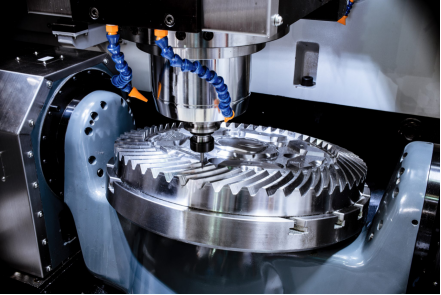
Precision Engineering: How Advanced CNC Machining Techniques Deliver Micro-Accuracy in CNC Machining Parts
5-Axis Simultaneous Machining for Complex Geometries and Reduced Setup Errors
Today's CNC machining can reach incredible levels of precision thanks to 5 axis simultaneous machining technology. With this method, cutting tools can access workpieces from almost any direction during one setup process. This basically gets rid of those pesky repositioning errors that used to create around plus or minus 0.05 mm inaccuracies. The continuous tool path makes all the difference for complicated shapes like turbine blades or medical implants. When it comes to keeping things dimensionally accurate down to about 0.001 mm, modern machines rely on thermal compensation systems. These fight against expansion caused by heat buildup, which becomes really important when working with tough materials like aerospace alloys where even small temperature changes might lead to 2 to 5 micrometer shifts per degree Celsius. For spindle alignment, manufacturers check tolerances down to roughly 0.0001 degrees using laser interferometry techniques. This kind of precision allows for consistent manufacturing of tiny features including microfluidic channels measuring less than 0.1 mm across.
Complementary High-Precision Processes: EDM, Precision Grinding, and Laser Cutting
Conventional CNC machining hits roadblocks when dealing with certain materials, which is where EDM comes into play. Electrical Discharge Machining achieves incredible precision, working on conductive materials with wire electrodes just 0.02 mm thick. Surface finishes can get as smooth as Ra 0.1 microns. For those tough jobs involving hardened steels, precision grinding with CBN abrasives becomes essential. These abrasive tools remove material in controlled layers ranging from 0.5 to 5 microns per pass. The results meet strict flatness requirements down to plus or minus 0.0005 mm tolerance. Laser cutting offers another solution for heat sensitive alloys, allowing manufacturers to cut without contact while producing clean edges with around 10 micron repeatability. All these techniques combined can produce surfaces smoother than Ra 0.2 microns, something absolutely necessary for medical implant manufacturing. After all, how smooth a surface is at this microscopic level makes a big difference in whether the body accepts the implant or rejects it. Modern production facilities now integrate metrology systems that check quality in real time. When issues arise, these systems provide feedback almost instantly, adjusting tool paths within milliseconds so tolerances stay consistent throughout entire production batches.
Tight Tolerance Control: Ensuring Consistent Accuracy in CNC Machining Parts
Achieving ±0.001 mm Dimensional Accuracy Through Thermal Compensation and Rigorous Calibration
Getting consistent results at the micrometer level when machining parts requires addressing both environmental factors and mechanical variations before they become problems. Thermal sensors built into modern CNC machines help compensate for how materials expand as temperatures change, sometimes by as much as 12 micrometers per degree Celsius. Regular maintenance is also crucial. Technicians typically run laser interferometer calibrations every week and check spindle alignments using reference artifacts, aiming for precision within just one arc second. Together these approaches consistently deliver parts with dimensional accuracy around plus or minus 0.001 millimeters. That kind of precision goes well beyond what's required by ISO 2768-f standards. For industries where component fit matters most, like aircraft engines or surgical implants, this level of control makes all the difference between successful operation and costly failures down the line.
Real-Time Metrology and Closed-Loop Feedback Systems in Modern CNC Machining
Modern machining centers now have built-in measurement tools right inside their production cycles. During actual cutting operations, special probes gather dimensional information and send this data to feedback systems which can adjust tool positions automatically within just over 10 milliseconds. What makes these systems stand out? They feature fast laser scans that detect surface irregularities down to half a micrometer, controllers that change how fast materials are fed depending on how worn the cutting tools get, plus cloud connected quality monitoring that spots when parts start going out of spec long before anything gets thrown away. According to recent research published in the Journal of Manufacturing Systems last year, factories using these integrated approaches cut down on wasted material by about 40 percent compared to traditional methods where measurements happen after everything is made. And when manufacturers combine these smart systems with regular checks from Coordinate Measuring Machines, they ensure all products meet strict standards while still keeping production speeds high enough to satisfy customer demands.
Digital Workflow Integration: CAD/CAM, G-Code Automation, and Part Reproducibility
CAD and CAM technologies are basically what makes precision CNC parts possible these days. With CAD, engineers can create detailed 3D models showing exactly how parts should look and what tolerances they need. Then CAM takes over, converting those designs into smart toolpaths that avoid collisions and generate solid G-code automatically. The whole digital process cuts down on mistakes from manual programming and saves tons of time during setup, sometimes as much as 70%. Plus it allows manufacturers to run simulations before actual cutting begins, so there's less chance of wasting materials. When G-code gets automated with good feedback systems, parts come out consistently accurate, usually staying within about 0.005 mm across different batches. Industry reports from 2024 show that when companies combine CAD and CAM properly, their first attempt at making parts works successfully around 99.8% of the time. This level of reliability is why so many aerospace and medical device makers rely on these integrated systems for their high precision needs.
Surface Excellence: Post-Processing Strategies That Elevate CNC Machining Parts Finish Quality
Anodizing, Mechanical Polishing, Electrochemical Deburring, and Lapping for Ra < 0.2 µm Surfaces
Getting those mirror-like finishes on CNC machined parts isn't something that happens by accident. It takes specific post processing steps tailored for the job. Take anodizing for instance. This process creates tough oxide layers that resist corrosion while making sure everything looks consistent across the board, which matters a lot for parts used in aircraft where appearance counts as much as function. When it comes to smoothing out surfaces, mechanical polishing works wonders using abrasives that get finer and finer until those tiny peaks disappear from view. Most shops aim for around Ra 0.10 to 0.15 microns after this step. For areas inside parts or hard to reach spots, electrochemical deburring becomes the go to solution. Instead of physically touching the part, it actually dissolves away any unwanted material, keeping all dimensions exactly where they need to be. Then there's lapping, where parts are sandwiched between rotating plates coated with abrasive slurry. This technique delivers some of the flattest surfaces possible, typically hitting Ra values between 0.05 and 0.15 microns. All these different approaches work together to turn basic machine parts into real performers. Studies show that properly finished surfaces can last up to 40 percent longer before showing signs of fatigue compared to just plain machined ones. And even better, these treated surfaces stay stable at temperatures well above 200 degrees Celsius during normal operation conditions.
| Technique | Primary Function | Surface Roughness (Ra) |
|---|---|---|
| Mechanical Polishing | Peak removal through abrasives | 0.10–0.15 µm |
| Electrochemical Deburring | Non-contact burr dissolution | < 0.20 µm |
| Lapping | Flatness perfection via abrasive slurry | 0.05–0.15 µm |
FAQ
What is 5-axis simultaneous machining?
5-axis simultaneous machining is a CNC process where cutting tools approach the workpiece from almost any direction, enabling complex geometries without the need for multiple setups.
How does EDM differ from traditional CNC machining?
EDM, or Electrical Discharge Machining, works on conductive materials using thin wires or electrodes, achieving high precision in materials that conventional machining struggles with.
Why is surface finish important in CNC machining parts?
A good surface finish improves the performance and longevity of parts, and is essential for applications such as medical implants where tissue compatibility is crucial.
How do CNC machines maintain tolerance levels?
CNC machines use systems like thermal compensation and real-time metrology feedback to maintain exacting tolerance levels throughout production.
What role do CAD and CAM play in CNC machining?
CAD and CAM technologies design detailed 3D models and convert them into precise toolpaths, reducing errors and ensuring consistent manufacturing quality.