
 EN
EN
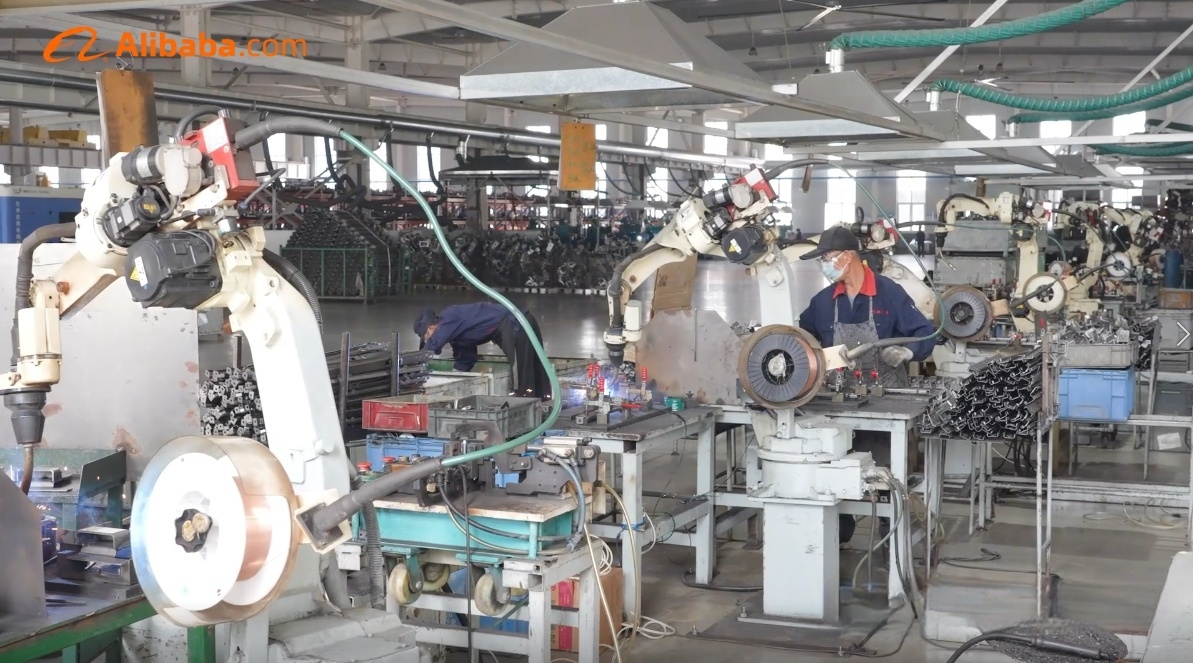
Aerospace and Defense: Mission-Critical Demand for Precision Metal Welding Parts
Why weld integrity directly determines flight safety and system reliability
Welds in aerospace and defense applications need to handle some serious stressors like intense mechanical loads, sudden temperature changes, and repeated stress cycles over time. When a joint fails somewhere critical - think turbine blades spinning at thousands of RPM, engine mount connections under constant vibration, or flight control surfaces exposed to atmospheric extremes - the consequences can be disastrous mid-flight. Today's planes are built with materials that push engineering limits: thin sections of nickel-based superalloys, titanium components, and aluminum-lithium structures featuring intricate shapes. The problem? Even tiny bubbles trapped during welding or hairline cracks at the molecular level can cause fatigue failures much faster than expected. Because of this risk profile, all critical welds go through rigorous non-destructive testing protocols. Shops run X-ray scans and ultrasonic checks regularly to spot any hidden flaws before they become safety issues. Some manufacturers have started implementing real-time monitoring systems during production runs too.
Key standards governing metal welding parts: AWS D17.1, ASME BPVC Section VIII, NAVSEA S9074-AR-GLB-248/010
Three authoritative frameworks define the baseline for weld integrity across platforms:
- AWS D17.1: The definitive standard for aerospace welding, requiring documented procedure and performance qualifications, full traceability of welders and materials, and fracture-mechanics-based acceptance criteria for critical joints.
- ASME BPVC Section VIII: Governs pressure-retaining components—including life-support oxygen tanks and hydraulic accumulators—with requirements for hydrostatic testing, material certification, and design-by-analysis validation.
-
NAVSEA S9074-AR-GLB-248/010: Establishes naval-specific weld inspection rigor, mandating magnetic particle testing (MT) for surface-breaking flaws and stringent repair protocols for submarine hulls and propulsion systems.
Collectively, these standards enforce 100% inspection coverage for critical welds, validated through third-party audits and real-time process monitoring.
Oil & Gas and Pipeline Infrastructure: High-Pressure Environments Requiring Certified Metal Welding Parts
How API 1104 certification ensures structural integrity of pipeline metal welding parts
API 1104 stands as the gold standard for ensuring pipeline welding quality across the industry. The standard sets out clear guidelines for qualifying welders, their methods, and the tools they use when working in conditions that mimic actual field environments. What really matters here is getting consistent results in penetration and fusion, along with good mechanical properties, even when dealing with awkward angles or unpredictable weather conditions. This helps protect against serious issues like sulfide stress cracking and hydrogen-induced cracking in those tough high-strength steel applications. Temperature control during preheating and between passes becomes critical for preventing materials from becoming brittle over time. Welders also need to pass visual inspections and guided bend tests to prove their work can handle stress without defects. Looking at recent data from the Ponemon Institute's 2023 report on infrastructure risks, pipelines built following API 1104 standards see a drop of more than 65% in major leaks. And remember, each such leak typically costs around $740,000 just for cleaning up environmental damage alone.
Non-destructive testing (NDT), hydrostatic validation, and traceability in ASME B31.4/B31.8 applications
Ultrasonic testing (UT) along with radiographic imaging (RT) are key non-destructive testing techniques used to find problems like poor fusion, slag trapped inside, and tiny air pockets in the welds where pipelines connect, all without weakening the joint itself. Construction specs call for these checks at several different points throughout building processes according to standards such as ASME B31.4 for liquid lines and B31.8 when dealing with gas systems. After everything looks good on paper, there's still the hydrostatic test to perform. This involves pumping water into finished sections until they reach 1.5 times what they normally handle, which helps reveal any hidden issues that might cause trouble once the system goes live. Modern digital tracking systems then record three critical pieces of information throughout the entire life of each weld segment.
| Traceability Element | Purpose | Compliance Impact |
|---|---|---|
| Heat Numbers | Verify alloy composition and heat treatment history | Ensures conformance with ASME material specifications |
| Welder ID | Assigns accountability for each weld pass | Required for API 1104 audits and incident root-cause analysis |
| NDT Reports | Document real-time flaw detection and resolution status | Mandatory for B31.8 recertification and regulatory reporting |
This integrated quality framework reduces integrity-related failures in high-pressure transmission systems by up to 92%, per data compiled by the Pipeline and Hazardous Materials Safety Administration (PHMSA).
Renewable Energy Systems: Scaling Clean Tech with ASME-Compliant Metal Welding Parts
Offshore wind towers and hydrogen storage vessels—evolving use cases for high-integrity metal welding parts
The massive structures used in offshore wind farms face serious challenges from saltwater corrosion, constant stress from waves, and extreme forces during storms that can reach over 10 million Newtons. Hydrogen storage tanks present another set of problems as they need to withstand incredible pressure levels around 700 bar. At these pressures, tiny cracks in welds caused by hydrogen embrittlement can silently grow until they cause catastrophic failures without warning. For both applications, engineers depend on high quality welded components that come with complete documentation of materials used. Advanced testing methods like phased array ultrasonic testing are essential to detect even the smallest flaws. These rigorous standards help maintain leak-free systems and keep structures standing strong through years of harsh conditions.
ASME Section VIII Div. 1 vs. Div. 3: Matching metal welding parts to pressure, material, and fatigue requirements
The ASME Boiler and Pressure Vessel Code differentiates weld requirements based on operational severity:
| Standard | Pressure Range | Fatigue Cycles | Typical Applications |
|---|---|---|---|
| Section VIII Div. 1 | ≤ 3,000 psi | Low-cycle | Solar thermal collectors, biogas digesters |
| Section VIII Div. 3 | > 3,000 psi | High-cycle (>10⁶) | Hydrogen storage, offshore compressor vessels, wind turbine hubs |
Division 3 mandates fracture mechanics evaluation, proof testing, and enhanced NDT sensitivity—critical for hydrogen service, where subcritical cracks grow rapidly in high-pressure, low-temperature environments. Wind turbine hubs subjected to variable torque and bending moments also require Div. 3—level weld design to prevent fatigue-driven fractures at geometric stress concentrators.
Medical Device Manufacturing: Micro-Scale Metal Welding Parts Meeting Biocompatibility and Regulatory Standards
The medical device industry requires extremely precise metal welding for parts used in implants, surgical tools, and diagnostic equipment. When we talk about biocompatible materials that can withstand sterilization and maintain their function over time, these factors directly impact patient safety. Take pacemaker casings, orthopedic plates, or those intricate laser cut stents - they need welds within 1 to 3 microns tolerance and absolutely no oxide buildup. Regulatory bodies like ISO 13485:2016 and the FDA's Quality System Regulation (21 CFR Part 820) have strict requirements throughout production. Manufacturers must validate materials first, often looking at certifications like ASTM F136 for titanium alloys. They also need to log all welding parameters and perform complete non-destructive testing, sometimes using advanced methods like micro CT scans on implant welds. Traceability isn't just something nice to have anymore. From the initial mill test reports on raw materials right down to final device records, this level of documentation becomes essential for tracking products after market release, preparing for recalls if needed, and ultimately understanding how devices perform in real world clinical situations.
FAQ
What are the primary standards for aerospace welding?
The primary standards for aerospace welding include AWS D17.1, ASME BPVC Section VIII, and NAVSEA S9074-AR-GLB-248/010.
Why is API 1104 certification important in pipeline welding?
API 1104 certification ensures structural integrity and quality of pipeline welding, helping prevent issues like sulfide stress cracking and hydrogen-induced cracking.
Which tools are involved in non-destructive testing in pipeline applications?
Ultrasonic testing (UT) and radiographic imaging (RT) are commonly used tools in non-destructive testing for pipeline applications.
What challenges do offshore wind farms and hydrogen storage vessels face?
Offshore wind farms face challenges from saltwater corrosion and extreme forces from waves and storms, while hydrogen storage vessels must withstand high pressure levels and prevent hydrogen embrittlement.
How do medical device manufacturers ensure weld quality?
Medical device manufacturers ensure weld quality through precise tolerances, non-destructive testing, and adherence to regulatory standards like ISO 13485:2016 and FDA's Quality System Regulation.
Table of Contents
- Aerospace and Defense: Mission-Critical Demand for Precision Metal Welding Parts
- Oil & Gas and Pipeline Infrastructure: High-Pressure Environments Requiring Certified Metal Welding Parts
- Renewable Energy Systems: Scaling Clean Tech with ASME-Compliant Metal Welding Parts
-
Medical Device Manufacturing: Micro-Scale Metal Welding Parts Meeting Biocompatibility and Regulatory Standards
- FAQ
- What are the primary standards for aerospace welding?
- Why is API 1104 certification important in pipeline welding?
- Which tools are involved in non-destructive testing in pipeline applications?
- What challenges do offshore wind farms and hydrogen storage vessels face?
- How do medical device manufacturers ensure weld quality?