
 EN
EN
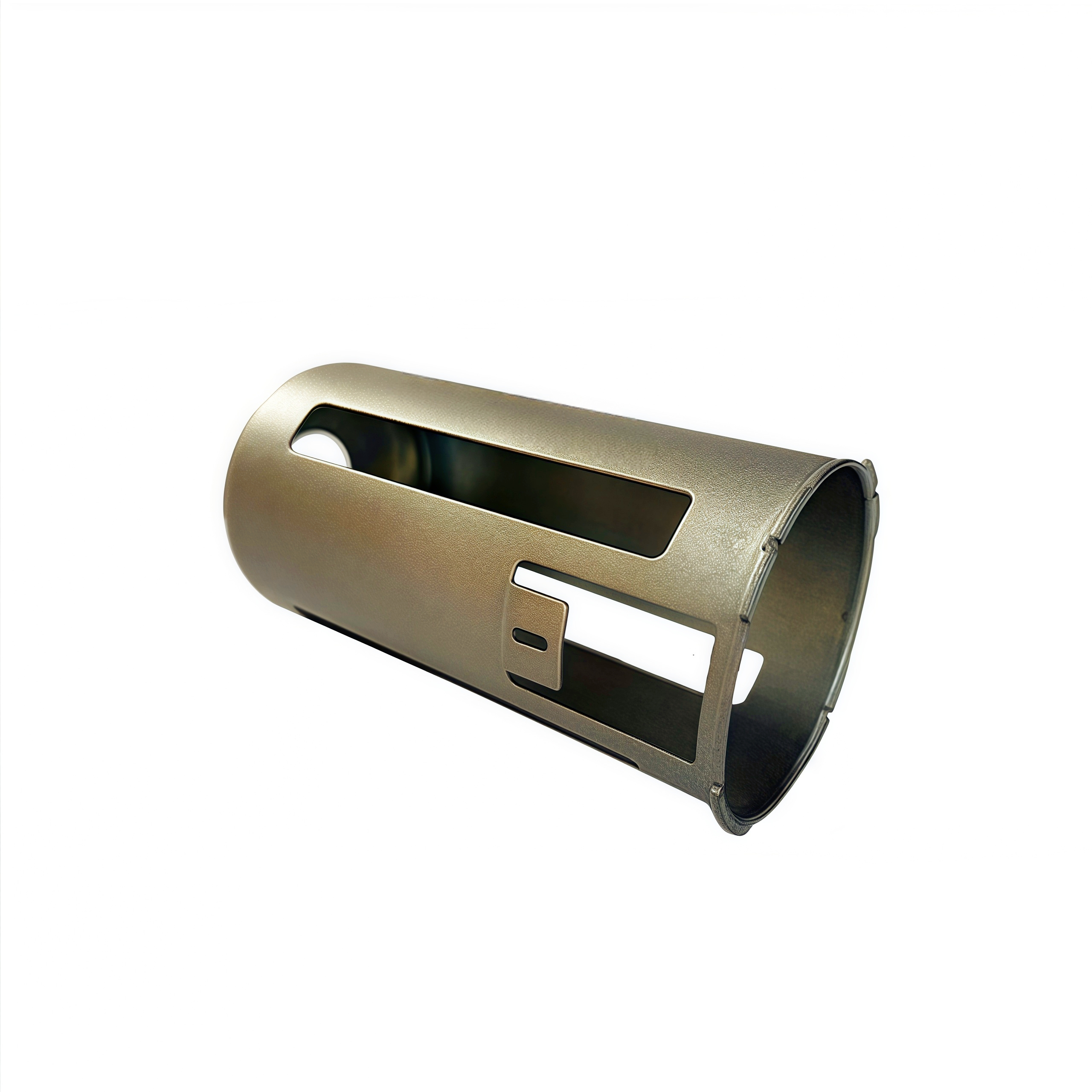
Precision Engineering: How Deep Drawn Parts Achieve Tight Tolerances and Complex Geometries
Achieving ±0.001³ Tolerances via Advanced Tooling, Real-Time Process Control, and Statistical Compensation
Getting deep drawn parts to meet those tight micron tolerances requires a pretty sophisticated engineering setup. We're talking about advanced carbide tools coated at the nanoscale level to reduce any bending when things get really pressured during forming. And there's this real-time laser scanning system constantly checking for anything off by more than half a thousandth of an inch. When it spots something off, it automatically adjusts the press force right away. Then we throw in statistical process control, which basically watches how dimensions change from batch to batch and tweaks the tool paths algorithmically before problems start creeping in. All these layers working together cut down on dimensional variations by around 70-75% compared to older techniques. This makes all the difference when manufacturing those super tight seals and tiny fluid channels where even the tiniest leak rate above one times ten to the negative nine mbar liters per second can ruin everything.
Maintaining Dimensional Accuracy Across Multi-Stage Deep Drawn Parts — From Shallow Cups to High-Aspect-Ratio Enclosures
Dimensional stability in deep drawn parts demands stage-specific strategies. Shallow draws (<1:1 depth-to-diameter ratio) rely on radial pressure control to prevent flange wrinkling; high-aspect-ratio enclosures (≥5:1) require sequenced annealing and progressive die sets. Critical enablers include:
- Material flow optimization: Controlled blank holder forces limit thickness variation to <8% in critical zones
- Springback mitigation: AI-driven simulations predict elastic recovery, embedding precise overbend angles into tool designs
- Thermal management: Inter-stage cooling preserves uniform grain structure in alloys like 304 stainless steel
These protocols ensure cylindrical housings maintain concentricity within 0.003³ total indicator reading (TIR) after eight drawing stages—even at production volumes exceeding 50,000 units per month.
Material Intelligence: Selecting Optimal Alloys for High-Performance Deep Drawn Parts
Stainless Steel, Aluminum, and Brass in Critical Applications: Balancing Formability, Strength, and Corrosion Resistance
The choice of material really affects how well deep drawn parts perform under tough conditions. Take stainless steel from the 300 series family for instance. It resists corrosion extremely well and has yield strengths over 205 MPa, which makes it great for things like surgical tools and equipment used in chemical plants. Then there's aluminum alloy 6061 that bends much better than steel with elongation rates around 12%, plus it weighs about half as much. This combination works wonders when creating intricate but lightweight housings. Brass C26000 brings something different to the table too. Not only does it have natural antimicrobial qualities and conducts electricity very efficiently, important for connector applications but also holds impressive tensile strength close to 500 MPa. Smart manufacturers weigh all these factors against each other, often relying on what they call the Limiting Drawing Ratio or LDR as their main guide when deciding if a particular material will work for forming operations.
| Material | Formability (LDR*) | Typical Strength | Corrosion Resistance |
|---|---|---|---|
| Stainless Steel | 1.8–2.1 | 205–515 MPa | ✓✓✓✓✓ |
| Aluminum Alloys | 2.2–2.5 | 110–310 MPa | ✓✓✓✓ |
| Brass | 2.0–2.3 | 340–580 MPa | ✓✓✓ |
| *LDR: Limiting Drawing Ratio |
Titanium and HSLA Steels: Enabling Lightweight, High-Strength Deep Drawn Parts for Aerospace and Medical Devices
When it comes to materials that need to perform under extreme conditions while keeping weight down, High-Strength Low-Alloy (HSLA) steels and titanium stand out. Take ASTM A607 HSLA for example—it hits tensile strengths over 550 MPa with about 15% elongation, which makes them great for car parts that need to soak up impacts without breaking apart during collisions. Then there's Titanium Grade 5, which actually has around 40% better strength per pound compared to regular steel. Plus, this grade ticks all the boxes for medical devices thanks to meeting those ISO 13485 standards, so we see it used in things like bone screws and airplane bolts. Manufacturers are getting smarter too—recent improvements in forming methods mean these tough materials can now take on complicated shapes without losing their ability to handle millions of stress cycles even when loaded at three quarters of their maximum strength. Some newer versions of HSLA have managed to cut down component weights by roughly 25%, something that matters a lot in industries where every gram counts but safety still needs to be rock solid.
Design Integration: Functional Features Built-In to Deep Drawn Parts
Eliminating Secondary Operations with Rolled Threads, Side Wall Piercings, Beads, and Flanges
Integrating functional features directly into the deep drawing process eliminates costly secondary operations and associated alignment errors. Precision tooling enables:
- Rolled threads, ensuring full thread engagement and eliminating post-draw tapping
- Side wall piercings, providing clean, burr-free access points for sensors or wiring in sealed enclosures
- Radial beads, increasing stiffness by 40% over flat surfaces without adding mass
- Integrated flanges, delivering ready-to-seal or mounting interfaces in a single operation
This approach cuts production time by 30% and reduces material waste by 22%, while maintaining ±0.005³ tolerances across high-volume runs. By forming features in the initial draw, dimensional consistency is preserved—and part handling, re-fixturing, and cumulative error are removed from the process chain.
Zero-Defect Assurance: Quality Systems Tailored for Precision Deep Drawn Parts
AI-Powered In-Process Metrology and Closed-Loop Feedback for Consistent High-Volume Production
Modern metrology systems powered by artificial intelligence can achieve incredible precision during the manufacturing of deep drawn parts, going way beyond what human inspectors could ever manage. These advanced systems use vision technology along with laser scanning equipment to gather dimensional information from over 500 different points every single second. They then compare these measurements directly to CAD designs with remarkable consistency, typically within just one thousandth of an inch either way. When something goes off track, the system automatically makes necessary changes to things like press pressure, how much lubricant gets applied, and even the speed at which materials feed into the machine. This proactive approach catches problems early so bad parts never actually get made. As a result, factories using this technology often see their waste levels drop below half of one percent when running at full capacity for extended periods.
- Pattern recognition identifying incipient micro-folds in sidewalls before they propagate
- Thermal compensation algorithms that adjust for tooling expansion during extended runs
- Predictive wear modeling that forecasts tool degradation and schedules maintenance proactively
By sustaining critical tolerances across millions of cycles, these systems ensure reliability in applications where failure is unacceptable—including aerospace fasteners certified to AS9100 Rev D and implant casings meeting FDA Class II design controls.
FAQ Section
What is the main advantage of using deep drawn parts?
Deep drawn parts allow for achieving complex geometries and tight tolerances, resulting in components that are dimensionally precise and durable.
How are tight tolerances achieved in deep drawn parts?
Tight tolerances are achieved through advanced tooling, real-time process control, laser scanning systems, and statistical process control.
What role does material choice play in deep drawn parts?
Material choice affects formability, strength, and corrosion resistance—all critical factors in determining the performance and viability of deep drawn parts under various conditions.
How do AI-powered systems enhance the production of deep drawn parts?
AI-powered systems use vision technology and laser scanning for in-process metrology, offering closed-loop feedback that ensures consistent high-volume production and drastically reduces waste.
Can functional features be integrated during the deep drawing process?
Yes, functional features such as rolled threads, side wall piercings, beads, and flanges can be integrated into the deep drawing process, eliminating the need for additional post-draw operations.
Table of Contents
- Precision Engineering: How Deep Drawn Parts Achieve Tight Tolerances and Complex Geometries
- Material Intelligence: Selecting Optimal Alloys for High-Performance Deep Drawn Parts
- Design Integration: Functional Features Built-In to Deep Drawn Parts
- Zero-Defect Assurance: Quality Systems Tailored for Precision Deep Drawn Parts
-
FAQ Section
- What is the main advantage of using deep drawn parts?
- How are tight tolerances achieved in deep drawn parts?
- What role does material choice play in deep drawn parts?
- How do AI-powered systems enhance the production of deep drawn parts?
- Can functional features be integrated during the deep drawing process?