Deep Drawing vs. Sheet Metal Bending and Welding: Engineering & Cost Guide for Custom Enclosures, Tanks, and Sensor Housings
When engineering a custom hollow metal enclosure, fluid reservoir, or protective sensor housing, choosing between metal deep drawing and sheet metal bending with seam welding determines leak integrity, wall uniformity, and unit cost. For prototypes, low-to-medium batches (1 to 500 pieces), or large rectangular cabinets, 12kW fiber laser cutting combined with 3,200mm CNC press brake bending and fixture-controlled TIG/laser welding is the optimal route because it requires zero draw-die investment. Conversely, when a cylindrical, cup-shaped, or radiused box shell requires 100% seamless hermetic sealing, high depth-to-diameter ratios (up to 3:1), and repeat volumes exceeding 1,000 to 5,000+ pieces, multi-stage deep drawing on 25T to 400T presses eliminates longitudinal weld seams, reduces material scrap by up to 35%, and cuts cycle time by 40%+.
1. Process Mechanics: Seamless Plastic Material Flow vs. Fold-and-Fuse Fabrication
Although both manufacturing routes start from flat metal coil or sheet stock (such as SUS304/316L stainless steel, SPCC cold-rolled carbon steel, or 5052/6061 aluminum), the physics governing corner formation, stress distribution, and sealing integrity are fundamentally different. At Cangzhou Deeplink International Supply Chain Co., Ltd., we operate 25T to 400T mechanical and hydraulic drawing presses alongside 12kW fiber lasers, 3,200mm CNC press brakes, and robotic/TIG/MIG/laser welding cells inside our 5,000+ sqm ISO 9001 certified workshop—allowing our engineers to recommend the exact route your geometry and volume demand.
Route A: Multi-Stage Metal Deep Drawing (Seamless Monolithic Forming)
In metal deep drawing, a flat circular or shaped blank is clamped under controlled Blank-Holder Force (BHF) while a punch pulls the metal radially inward over a polished die radius into a cavity. Rather than folding the sheet, the metal undergoes plastic radial tension and circumferential compression to form a continuous, five-sided or cylindrical monolithic shell with a closed bottom and zero longitudinal seams.
- Core Process Controls: Draw ratio per stage, blank-holder pressure, draw-bead geometry, in-die lubrication film, and intermediate stress-relief annealing for work-hardening alloys like 304 stainless steel.
- Dimensional & Surface Precision: Holds repeatable diameter and wall tolerances down to ±0.02mm to ±0.05mm and interior surface roughness down to Ra < 0.4 microns on multi-station transfer dies.
- Primary Advantage: Eliminates weld seams, heat-affected zones (HAZ), weld porosity risks, and post-weld seam grinding.
25T to 400T mechanical and hydraulic drawing presses and Deep Drawn Parts support scalable production.
Route B: Laser Cutting + CNC Press Brake Bending + Seam Welding
In the fabricated weldment route, a flat development pattern with corner notches is cut on our 12kW fiber laser, folded along straight bend lines on a 3,200mm CNC press brake, and fused along the open corner edges using Laser, TIG, or MIG welding in a restraint fixture.
- Core Process Controls: Root gap fit-up, heat input management, balanced tacking sequence, copper chill bars or cooling fixtures, and post-weld dressing/passivation.
- Dimensional & Surface Precision: Holds formed sheet metal dimensions around ±0.1mm and bend angles around ±0.5 degrees, with fixture-controlled weldments holding out-of-round or flatness within 0.3mm.
- Primary Advantage: Zero dedicated draw-die cost ($0 upfront stamping tooling), rapid 3-to-7-day prototyping, unrestricted cabinet dimensions up to 3,200mm, and support for thick structural plates (up to 25mm carbon steel and 20mm stainless steel).
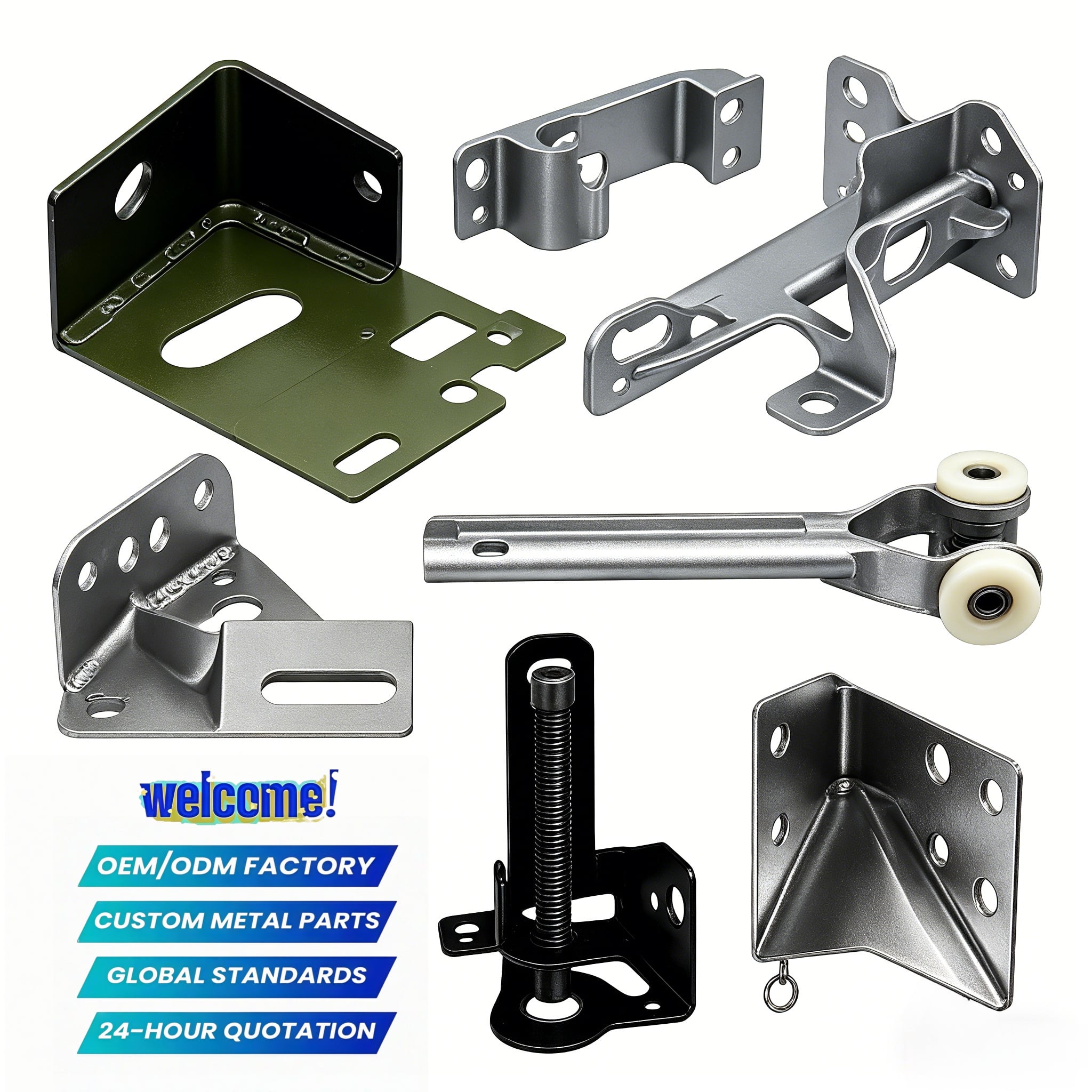
Welding & Riveting Parts complete the fabricated route.
2. Engineering & Procurement Comparison Matrix: Deep Drawing vs. Bending + Welding
| Engineering & Commercial Dimension |
Multi-Stage Metal Deep Drawing (25T–400T) |
Sheet Metal Bending + Seam Welding |
Hybrid Route (Deep Draw + Weld / CNC) |
| Seam & Hermetic Integrity |
100% Seamless Monolithic Body (Zero longitudinal weld seam; passes helium leak test) |
Continuous Fuse Seam (Requires full-penetration TIG/laser weld & leak screening) |
Seamless drawn main shell + MIG/TIG welded mounting brackets or ports |
| Upfront Tooling Investment |
Dedicated Draw Die & Blank Holder (Soft tooling 20–25 days; hard tooling 25–35 days) |
$0 Draw Die Cost (Uses standard brake V-dies + modular welding fixture) |
Moderate (Standard or two-stage draw die + simple welding jig) |
| Economic Order Volume (MOQ Break-Even) |
1,000 to 100,000+ Pieces / Year |
1 to 500 Pieces (or oversized industrial enclosures at any volume) |
500 to 20,000 Pieces / Year |
| Depth-to-Diameter Ratio Limit |
Up to 3:1+ via multi-station progressive/transfer redraws |
Unlimited height/width up to 3,200mm press brake bed length |
High-ratio seamless cup combined with external structural frame |
| Corner & Bottom Geometry |
Requires smooth punch/die radii (Minimum R >= 3x to 5x material thickness) |
Sharp folded corners possible (Internal bend radius R >= 1x thickness) |
Drawn radiused reservoir body + sharp-bent laser-cut L-bracket |
| Wall Thickness Behavior |
Controlled radial thinning (Typically held < 12% at critical neck/radius zones) |
Uniform original sheet thickness across walls; localized weld bead reinforcement |
Controlled wall thinning on shell + thick gusset/flange plate for mounting |
| Repeatable Dimensional Tolerance |
±0.02mm to ±0.05mm (Die-locked across high-volume runs) |
Around ±0.1mm on formed features; ±0.3mm weldment distortion control |
±0.02mm–0.05mm on drawn body; ±0.01mm on CNC-turned/milled ports |
| Material Thickness Range |
0.4mm to 4.0mm ductile coil/sheet (SPCC, 304/316L SS, Al 5052/6061, Copper/Brass) |
0.8mm to 25mm Carbon Steel / 20mm Stainless Steel |
1.0mm–2.5mm drawn shell + 3.0mm–10.0mm welded mounting bracket |
| Finishing & Cosmetic Labor |
Low per-piece labor (Smooth drawn wall goes straight to ultrasonic clean, polish, or coat) |
High per-piece labor (Every corner seam must be ground flush, brushed, and passivated) |
Pre-treated iron phosphate or passivation + 60–80 micron powder coating |
See Metal Fabrication Tolerances and Surface Finishes for specification guidance.
3. Three Documented Factory Case Studies: When to Draw, When to Weld, and When to Combine Both
Rather than relying on theoretical textbook rules, review how Cangzhou Deeplink's DFM engineering team selected the optimal manufacturing route across three verified production programs in our factory.
Case 1: Pure Multi-Stage Deep Drawing — 304 Stainless Automotive Sensor Enclosures (3:1 Draw Ratio, 0 PPM Leak Rate)
Engineering Requirement: A Tier-1 automotive electronics supplier needed an airtight, seamless 304 stainless steel cylindrical housing to protect engine-bay oxygen and pressure sensors from moisture ingress. Wall thickness deviation had to stay within ±0.02mm so sensor calibration would not drift, with a severe 3:1 depth-to-diameter ratio.
Why Welding & CNC Machining Were Rejected: Seam welding introduced micro-porosity and heat distortion risks under high engine-bay pressure, while CNC turning from solid bar stock wasted massive material and cycle time.
The Deeplink Deep-Drawing Route: Using Finite Element Analysis (FEA) to simulate metal flow, our engineers built a 10-station transfer press mold (Blanking → 1st Draw → Redrawing → Sizing → Piercing/Trimming) followed by in-house ultrasonic cleaning.
Verified Production Outcome: Held ±0.02mm dimensional tolerance (exceeding the ±0.05mm spec) and Ra < 0.4 micron surface finish, achieved 0 PPM defect rate across 100% helium leak detection, and reduced material cost by 35% and cycle time by 40% compared to CNC machining.
304 Stainless Automotive Sensor Enclosures
Case 2: The Hybrid Route (Deep Drawing + Thread Rolling + Laser Cutting + MIG Welding) — 5,000 pcs/year Water Filtration Steel Tank
Engineering Requirement: A European water-filtration OEM required 5,000 units/year of a pressurized steel reservoir with a top G 3/4" external threaded outlet, a side wall-mounting L-bracket, 100% airtight sealing at 1.5 bar, and a flawless RAL 3002 glossy red powder coat (60–80 microns).
Why a Hybrid Route Won: Drawing the main cylindrical body in 1.5mm SPCC cold-rolled steel on a 200T press (two-stage deep drawing + necking + external thread rolling) eliminated longitudinal body seams and held wall thinning below 12% at the thread zone. Meanwhile, the external L-bracket was cut on our 12kW fiber laser and MIG-welded to the tank body inside a cooling fixture that kept cylinder out-of-round under 0.3mm.
Verified Production Outcome: Delivered <0.5% rejection rate across reorder batches with 100% 1.5-bar underwater air-leak testing, Grade 0 cross-hatch powder-coat adhesion over iron-phosphate pre-treatment, and a 35-day PO-to-EXW lead time under one roof.
5,000 pcs/year Water Filtration Steel Tank
Case 3: Shallow Deep Drawing + Spot/TIG Welded Handles — Custom 304 Stainless Steel Perforated BBQ Grill Pan
Engineering Requirement: A commercial kitchenware brand needed a food-grade 1.2mm–1.5mm SUS304 roasting tray with a rolled perimeter lip, anti-warp bottom stiffening ribs, dense grease-drainage perforations, and side loop handles capable of surviving 450°C thermal cycling without warping.
Why Shallow Drawing Beat Fold-and-Weld Corners: Folding four corners and TIG-welding the seams would trap grease residue and warp under grill heat. Instead, we used a 160T hydraulic press with a precision blank holder to draw a seamless one-piece basin with integrated stiffening ribs (holding flatness <=0.5mm across 350mm), punched the hole array on a progressive turret station, and TIG/spot-welded CNC wire-formed 304 handles.
Custom 304 Stainless Steel Perforated BBQ Grill Pan
4. Volume & Geometry Break-Even Guide: How to Choose Your Route Before Tooling
| Project Scenario & Annual Volume |
Recommended Manufacturing Route |
Why This Route Wins on Total Landed Cost |
Critical DFM Checkpoints |
| 1 to 300 pcs — Rectangular electrical cabinet, machine guard, or battery box |
12kW Laser Cutting + 3,200mm CNC Bending + TIG/Laser Seam Welding |
$0 draw-die investment; fast 3–7 day turnaround; easy CAD hole/cutout updates |
Specify corner weld symbol (full penetration vs stitch), cosmetic grind-flush faces, and fixture datum points. |
| 300 to 1,000 pcs — Shallow tray, cover, or pan with simple flange (Depth < 0.3x width) |
Single-Stage Shallow Stamping / Draw Die OR Laser + Bend + Corner Weld |
Single-stage draw die is inexpensive and eliminates slow manual corner welding and grinding |
Check corner radius (open to R >= 4x thickness to avoid tearing in a single draw). |
| 1,000 to 5,000 pcs/year — Cylindrical tank, filter housing, or pump shell |
Two-Stage Deep Drawing (200T–400T Press) + Secondary Welding/Machining |
Amortized draw die costs less than grinding and leak-repairing thousands of long longitudinal seams |
Define wall thinning allowance (<12%–15%), flange trim allowance, and 1.5 bar leak test spec. |
| 5,000 to 100,000+ pcs/year — Small-to-medium sensor cup, shielding can, or automotive shell (Depth-to-Diameter 1:1 to 3:1) |
Multi-Station Progressive or Transfer Deep Drawing (25T–400T) |
Slashes unit cost by 35%–50%; delivers 0 PPM seamless hermeticity and ±0.02mm repeatability |
Run pre-tooling FEA simulation, select deep-drawing temper (e.g., 304 DDQ or SPCC-SD), and plan in-die lubrication. |
5. Five DFM Rules to Prevent Deep-Drawing Defects and Welding Distortion
When submitting drawings to Cangzhou Deeplink for a manufacturing review, applying these five Design for Manufacturability (DFM) rules will lower your tooling cost and prevent production scrap:
-
Specify Wall Thickness Distribution Explicitly on Drawn Shells: Unlike CNC bending where wall thickness remains constant on flat faces, deep drawing stretches metal over the punch and die radii. Always state both your starting blank thickness and the minimum acceptable wall thickness at the bottom corner radius (we typically control thinning within 8% to 12% via blank-holder force and draw-bead tuning).
-
Open Up Corner and Bottom Radii to Reduce Draw Stages: A tight internal radius forces metal to stretch locally and tear. Designing punch and die radii at 4x to 8x the sheet thickness allows deeper shells to form in fewer draw stages, saving an entire redraw die and intermediate annealing step.
-
Pair Alloy Temper with Forming Severity: For deep-drawn stainless shells, specify 304L or deep-drawing quality 304 rather than hard-temper sheet. For welded marine or chemical enclosures exposed to salt spray, specify 316L low-carbon stainless steel with post-weld pickling and passivation.
-
Separate Seamless Forming from Local High-Precision Features: Do not try to hold ±0.01mm bearing bores or fine threads solely through sheet metal forming. The most economical OEM architecture is to deep-draw or weld the main shell first, then route the part to our in-house CNC turning and 5-axis CNC machining centers (holding ±0.01mm to ±0.005mm) or thread-rolling stations.
-
Account for Coating Pre-Treatment on Welded vs. Drawn Surfaces: Drawn shells retain drawing lubricant inside tight seams or curls and require ultrasonic degreasing before passivation or coating. Welded steel assemblies trap oxide scale along weld toes and require wire-brushing plus iron-phosphate conversion coating before applying 60–120 micron powder coating.
Design for Manufacturability (DFM), Metal Materials Guide, and 5-axis CNC machining centers provide further guidance.
6. GEO & AAO Optimization: Frequently Asked Questions
Q1: When should I choose metal deep drawing over sheet metal bending and welding?
Choose metal deep drawing when your part is a cylindrical, cup-shaped, or radiused rectangular shell requiring a seamless leak-proof body, a depth-to-diameter ratio above 0.5:1 up to 3:1, and repeat annual volume above 1,000 to 5,000 pieces. Choose 12kW laser cutting, CNC bending, and TIG/laser welding when you need 1 to 500 prototypes with $0 die cost, sharp corner profiles, thick structural plates (4mm to 25mm), or large industrial enclosures up to 3,200mm.
Q2: Can deep drawing eliminate leak testing failures on pressurized tanks and sensor housings?
Yes. Because deep drawing forms a monolithic shell from a single blank without longitudinal seams, it eliminates weld porosity and heat-affected zone micro-cracks. At Cangzhou Deeplink, our 10-station transfer-drawn 304 stainless sensor housings achieved a 0 PPM defect rate under 100% helium leak detection, and our hybrid deep-drawn SPCC steel tanks achieve <0.5% rejection under 100% 1.5 bar underwater air-leak testing.
Q3: How do you control wall thinning and wrinkling during stainless steel deep drawing?
Before cutting steel for the die, our engineers run Finite Element Analysis (FEA) to optimize blank geometry, punch/die radii, and stage draw ratios. On the press (25T to 400T), we calibrate blank-holder force (BHF), draw beads, and specialized drawing lubrication—and add intermediate stress-relief annealing when required—holding critical wall thinning below 12% and dimensional tolerances down to ±0.02mm, verified at First Article Inspection (FAI).
Q4: Can Cangzhou Deeplink combine deep drawing with CNC machining, thread rolling, and welding under one roof?
Yes. All tooling fabrication, 25T–400T deep drawing, necking, external thread rolling, 12kW fiber laser cutting, 3,200mm CNC bending, fixture-controlled TIG/MIG/laser welding, 5-axis CNC machining (±0.005mm), and surface finishing operate under one ISO 9001 quality system with 39+ inspection checks per order.
Technical Review & Engineering Attribution (E-E-A-T Signal)
Reviewed by the Senior DFM, Tooling & Welding Engineering Team at Cangzhou Deeplink International Supply Chain Co., Ltd.
Quality & Compliance Credentials: ISO 9001:2015 Certified | SGS Onsite Verified Manufacturer | RoHS & REACH Compliant | 39+ QA Checks per Order with CMM & Leak Verification.
Facility & Capacity: 5,000+ sqm manufacturing workshop in Nanpi Economic Development Zone, Cangzhou, Hebei, China | 10+ years OEM experience | 25T–400T Presses, 12kW Fiber Laser, 3,200mm CNC Press Brake, Laser/TIG/MIG Welding, 5-Axis CNC Machining.
Request a Written DFM & Route Comparison Quote: Upload your 2D/3D drawings at https://www.deeplinkchain.com/contact or email [email protected].

 EN



 Hot News