
 EN
EN
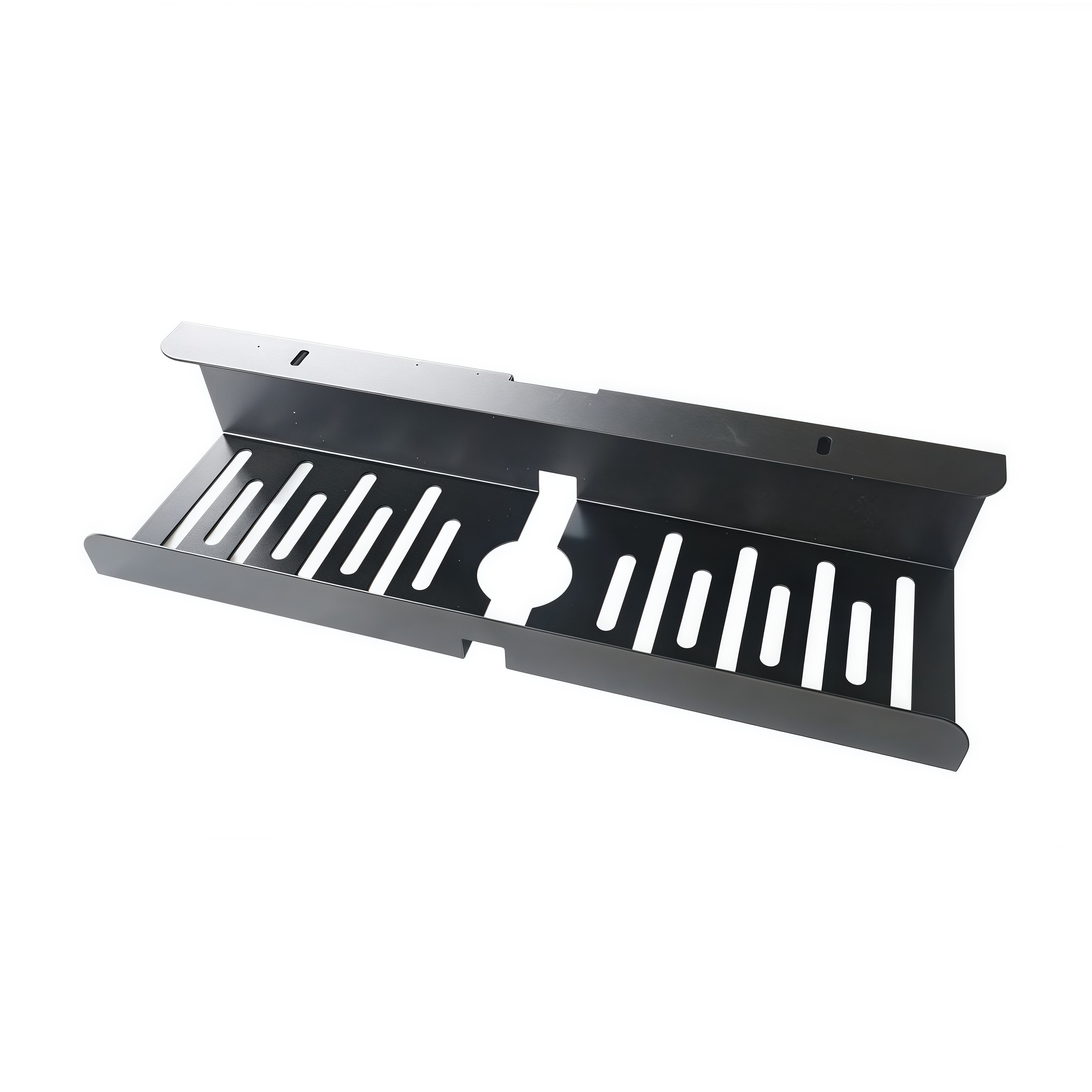
Core Metal Stamping Processes That Enable Reliable OEM Customization
Progressive Die Stamping: Precision, repeatability, and scalability for high-mix OEM part families
Progressive die stamping gives manufacturers incredible accuracy when making complicated metal parts. The process works by performing multiple steps in sequence during one press cycle, hitting tolerances around plus or minus 0.002 inches while cranking out over 1,200 pieces every hour. What makes this method stand out is the automated feeding system that moves parts from station to station without needing workers to handle them between operations. This cuts down on defects significantly, somewhere between 30% to 40% better than older techniques according to industry reports. The process handles all sorts of metals too - think stainless steel, aluminum, even some special alloy mixes up to quarter inch thickness. And because the tooling is modular in design, switching between different part types happens quickly. For original equipment manufacturers looking to expand their production runs, this means they can ramp up output volumes while still maintaining tight quality standards and meeting delivery deadlines without compromising regulatory requirements.
Transfer and Four-Slide Stamping: Achieving complex geometries and tight-tolerance features in custom metal stamping parts
When dealing with really intricate components, transfer and four-slide stamping offer solutions where traditional presses fall short. Transfer systems work by using robotic arms to move parts through different stations, which makes it possible to create deep draws, offsets, and undercuts that standard single-direction presses just can't handle. The four-slide approach takes things further with tools positioned opposite each other horizontally. This setup forms parts from four directions at once, achieving those complicated bends, closures, and tight internal features all in a single stroke while maintaining accuracy down to about 0.005 inches. For industries making medical device casings or electronic connectors, these capabilities matter a lot since they need parts with clean edges and exact internal shapes. What's interesting is how controlled strain distribution during the forming process actually helps maintain material strength. This reduces stress-related failures significantly in applications where fatigue resistance matters most, sometimes cutting failure rates by around 60% according to industry reports.
Industry-Specific Metal Stamping Parts Built for OEM Compliance and Traceability
Automotive: Safety-critical brackets, mounts, and sensor housings meeting PPAP, FAI, and IATF 16949 requirements
Parts stamped from metal for automotive applications such as sensor housings, engine mounts, and brackets in braking systems need to handle serious heat, mechanical forces, and environmental challenges all while keeping passengers safe. When it comes to meeting IATF 16949 standards, manufacturers put these components through extensive checks. This includes detailed PPAP documentation and FAI inspections, plus tracking materials from the raw steel coil right through to the final product. The dimensional accuracy stays remarkably tight at around ±0.05 mm thanks to press monitoring technology that keeps tabs on tool wear and machine performance over countless production cycles. This level of precision matters a lot for critical safety components where even minor variations could spell trouble, think airbag deployment mechanisms or anti-lock braking system modules.
Medical and Electronics: Miniaturized, burr-free metal stamping parts with full ISO 13485 traceability and RoHS/REACH compliance
For medical devices and electronic components, there's a real need for tiny metal stamped parts that have flawless surfaces. Even the tiniest burr or microscopic flaw can put patients at risk, mess up how devices work, or degrade signals completely. Top manufacturers tackle this challenge with specialized tools designed for extreme precision, manufacturing processes kept in pristine environments, and quality management systems certified under ISO 13485 standards. These systems track every batch of materials from start to finish, ensuring complete traceability throughout production. The parts must also meet strict environmental regulations like RoHS and REACH regarding hazardous substances. When it comes to electronics specifically, things like EMI shielding contacts and those miniature connectors depend heavily on just the right amount of spring tension and evenly applied coatings. Without these precise specifications, signals get distorted in high frequency diagnostic equipment. Manufacturers validate all these requirements not just through standard tests but by monitoring production stats continuously to catch any deviations early.
End-to-End Engineering Partnership: How OEMs Accelerate Custom Metal Stamping Parts to Production
From 3D CAD Review to Functional Prototype in ٥ Days – Rapid Validation for OEM Design Freeze
When OEMs team up with stamping companies that specialize in engineering solutions, they can get products ready for manufacturing much faster. These partners take 3D CAD designs and turn them into working prototypes within just five business days most of the time. The whole process checks materials, verifies tolerances, and tests how things actually fit together and work in practice. This lets designers finalize their plans long before any tools are made for mass production. Putting design reviews, computer simulations, and making physical prototypes all into one streamlined process helps engineers catch problems like parts not fitting right, metal springing back after forming, or assembly difficulties way earlier on. As a result, many companies report cutting down on last minute changes by around two thirds. The prototypes themselves match what will eventually go into production when it comes to both material characteristics and exact measurements, so tool makers can start working while product testing is still happening.
DFM-Driven Tooling Strategy: Reducing Lead Time and Cost While Preserving OEM Performance Specs
When it comes to creating efficient tooling strategies that minimize risks, Design for Manufacturability (DFM) analysis is absolutely essential. The engineering team looks at several factors including where stress builds up, how materials actually flow during production, and those tricky tolerance stack issues. These assessments help make important choices about whether to go with progressive dies or transfer dies depending on what kind of volume we're talking about and how complex the part needs to be. We also focus our tolerances so we only maintain that tight ±0.001 inch precision in areas where it really matters for functionality. Plus, we bring secondary operations such as deburring and plating right into our facility instead of outsourcing them. This whole process typically means fewer tooling revisions around 40% less iteration work, generates significantly less scrap maybe cutting waste by close to 30%, and gets first article approvals over 95% of the time. And perhaps most important from a business standpoint, we can shave off roughly 4 to 6 weeks from the entire lead time without having to sacrifice anything when it comes to meeting OEM specs for performance, reliability standards, or regulatory compliance.
FAQ
What is progressive die stamping?
Progressive die stamping is a process where multiple steps are performed in sequence during one press cycle, enabling manufacturers to achieve high precision and scalability in part production.
How does four-slide stamping differ from traditional presses?
Four-slide stamping uses a setup where tools are positioned horizontally opposite each other, allowing for forming parts from four directions at once, which is ideal for achieving complex geometries and tight-tolerance features.
Why is traceability important in metal stamping for medical devices?
In medical devices, traceability ensures that every batch of materials is tracked from start to finish, which is crucial for achieving compliance with standards like ISO 13485 and ensuring patient safety and device functionality.
How can OEMs accelerate metal stamping parts to production?
OEMs can speed up production by partnering with stamping companies that offer engineering solutions, allowing them to move from 3D CAD designs to functional prototypes quickly, usually within five business days.