
 EN
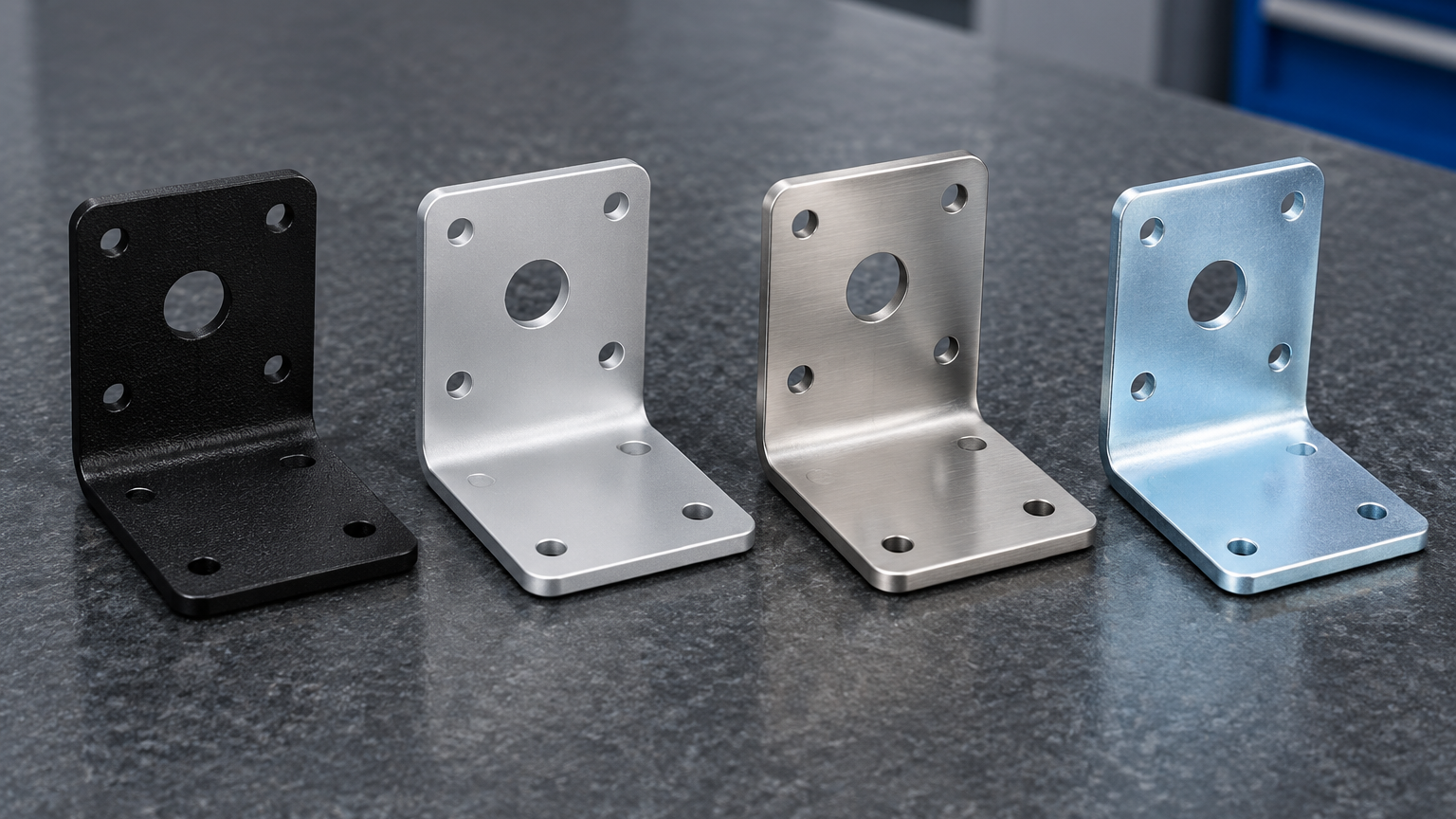
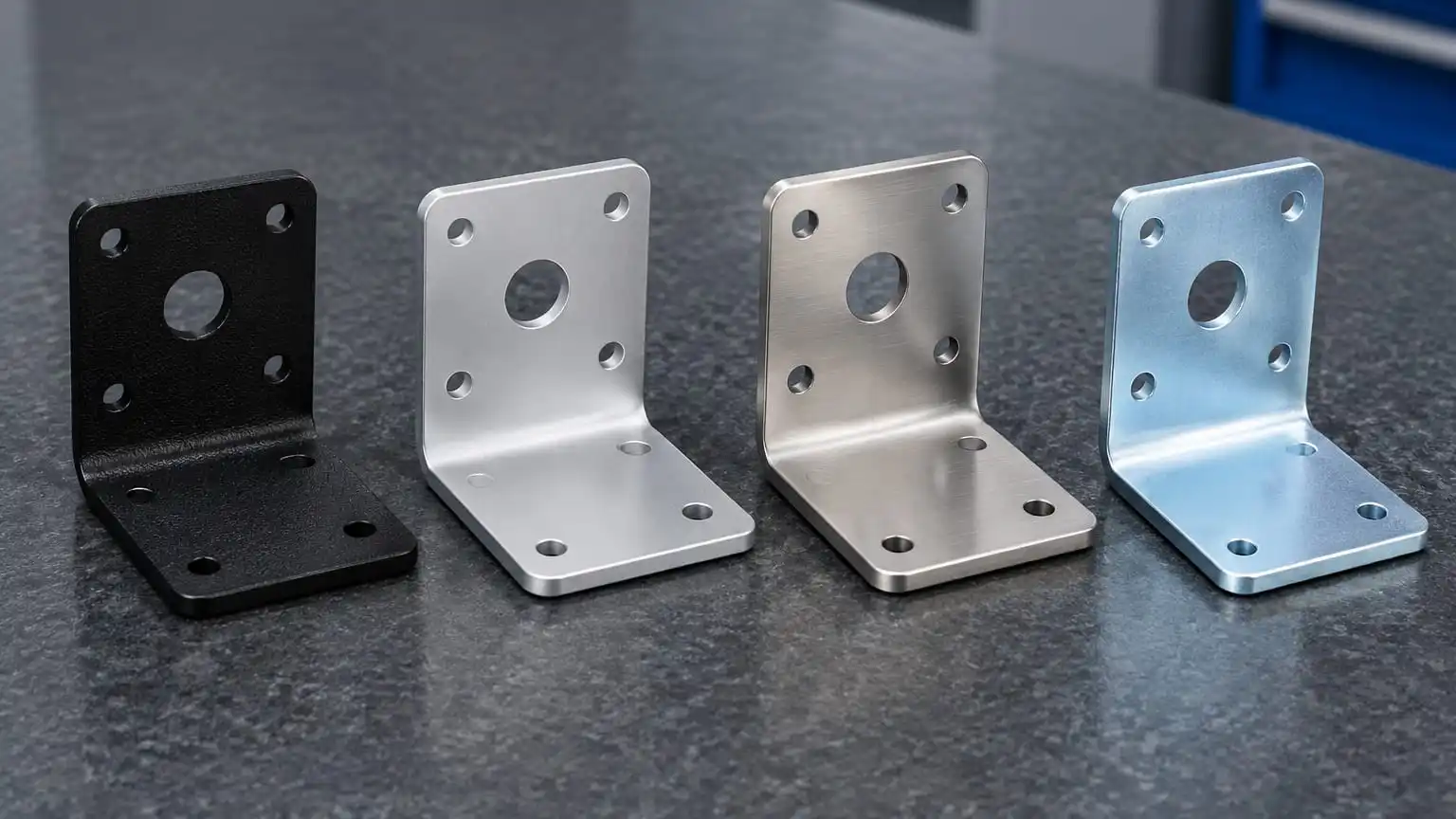
Four common industrial finishes on identical bent L-brackets: textured black powder coating, clear silver anodizing, brushed and passivated stainless steel, and blue-white zinc electroplating.
Quick answer: how do you choose the right surface finish for custom sheet metal and stamped parts?
Choose a metal surface finish by matching base alloy chemistry, operating environment, film build-up (coating thickness), and electrical or mechanical contact requirements before releasing drawings for production:
- Choose powder coating when carbon steel, galvanized steel, or aluminum enclosures and brackets need durable color, UV weatherability, or impact resistance—and account for relatively thick film build-up on mating holes and specify masking for threads and grounding studs.
- Choose anodizing exclusively for aluminum alloys such as 5052 and 6061 when you want an integral, non-peeling oxide layer with tight dimensional control and corrosion resistance; steel and stainless steel cannot be anodized in standard industrial lines.
- Choose brushing, electropolishing, or chemical passivation for 304 and 316 stainless steel parts—including seamless deep-drawn shells and sanitary housings—where removing free surface iron restores the natural chromium-oxide passive film without adding measurable coating thickness.
- Choose zinc or nickel electroplating for carbon-steel stamped brackets, clips, and hardware that require thin, uniform sacrificial corrosion protection, electrical conductivity, and predictable thread fit at production volume.
If you are still selecting the forming route or base alloy before specifying the finish, start with our deep drawing vs progressive stamping vs sheet metal fabrication guide and our metal materials guide.
Why surface finishing decisions cause late-stage RFQ delays and assembly failures
In OEM custom metal manufacturing, surface finishing changes part dimensions, alters electrical grounding paths, exposes weld or forming marks, and dictates which raw material grade is economical.
- Coating build-up closes up precision holes and slots: A heavy polymer coating over laser-cut holes or PEM-nut bosses can prevent fasteners or mating shafts from assembling.
- Incompatible substrate-to-finish callouts stall quoting: Calling out anodize on steel or unmasked powder coating across an EMI grounding flange forces an engineering query.
- Over-specifying cosmetic appearance inflates unit cost: Treating hidden internal brackets like exterior Class-A panels adds manual polishing labor.
Side-by-side comparison: powder coating vs anodizing vs passivation vs electroplating
Use this matrix to compare substrate compatibility, typical film build-up, electrical conductivity, and best-fit applications.
| Evaluation criterion | Powder coating | Anodizing (Type II / Type III) | Chemical passivation / brushing | Zinc / nickel electroplating |
|---|---|---|---|---|
| Compatible base metals | Carbon steel, galvanized steel, aluminum, stainless steel | Aluminum alloys only (e.g., 5052, 6061) | Stainless steels (e.g., 304, 316) | Carbon steel, low-alloy steel, copper/brass |
| Typical single-side film build | High (typically 50–120 µm / 0.002–0.005 in) | Low to moderate (Type II: ~5–25 µm; Type III: ~25–50+ µm) | Near zero (0–2 µm conversion) | Low (typically 5–15 µm / 0.0002–0.0006 in) |
| Impact on hole diameter | Reduces by ~2× film thickness unless masked | Minimal on Type II; allowance for tight Type III bores | No dimensional change | Minimal; standard clearance-hole compatible |
| Electrical conductivity | Insulating; grounding pads and studs must be masked | Insulating oxide; conductive conversion needed for grounding | Fully conductive bare stainless surface | Conductive metallic layer |
| Outdoor & corrosion performance | High with proper pretreatment | High atmospheric and marine performance | Preserves stainless native corrosion resistance | Good sacrificial protection; white/red rust after wear |
| Best-fit part types | Sheet metal fabrication enclosures, cabinets, covers | Precision aluminum panels, heat sinks, CNC machining housings | Deep drawn stainless steel shells, sanitary housings | High-volume metal stamping parts, clips, brackets |
Deep dive into the four core finishing routes
1. Powder coating: durable visual and environmental protection for enclosures and frames
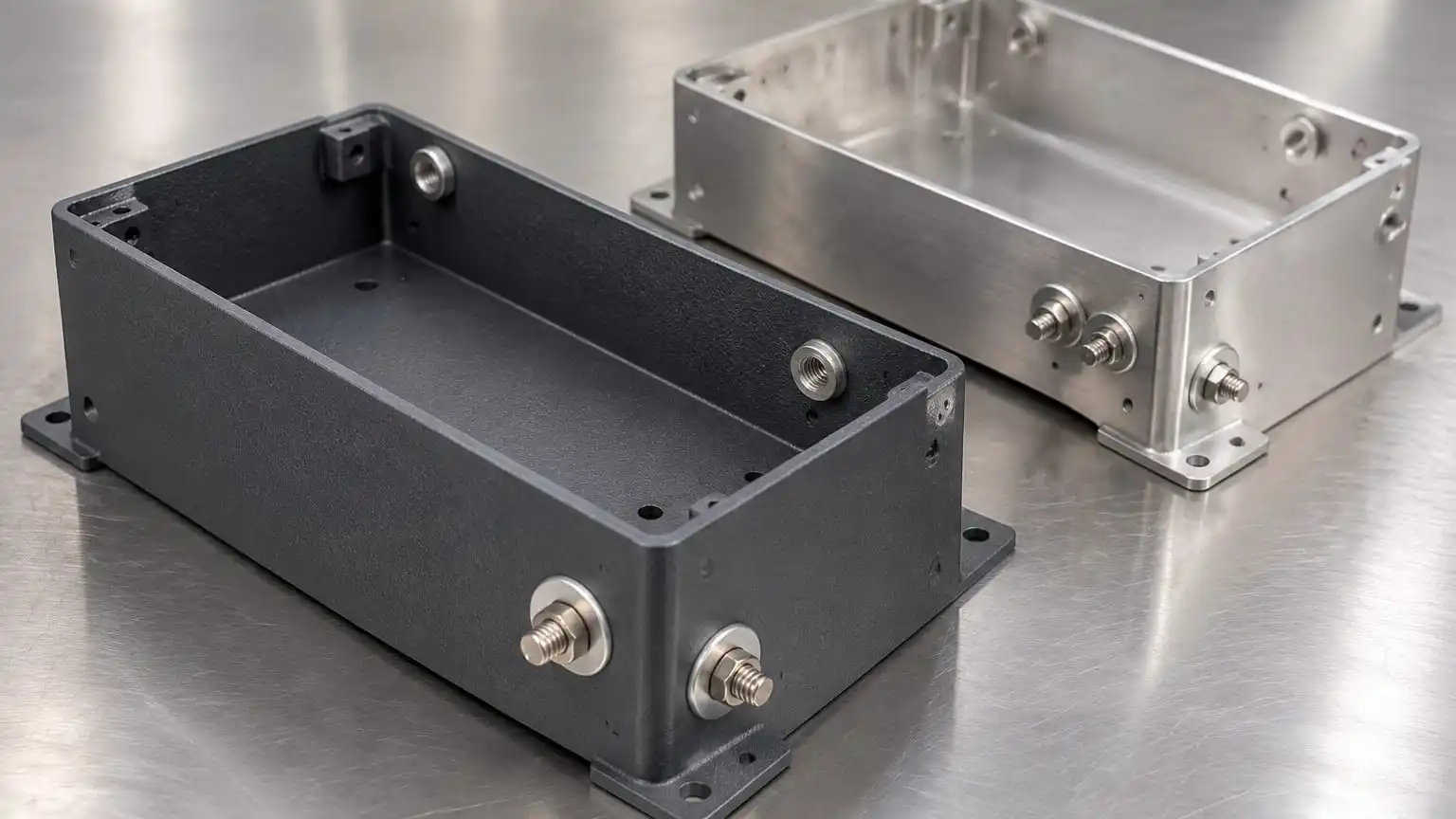
A powder-coated sheet-metal housing requires intentional bare-metal masking around grounding studs and threaded inserts to maintain electrical continuity and fastener fit.
Powder coating electrostatic-sprays dry thermoset polymer powder onto a pre-treated metal substrate and cures it into a continuous cross-linked film. Because it contains no solvents and builds a thicker layer than wet paint, it hides minor forming marks and weld heat tint better than thin plating.
Engineering rules for powder-coated sheet metal
- Match resin chemistry to the environment: Specify UV-stable super-durable polyester for outdoor enclosures; reserve epoxy for indoor chemical-resistant racks where UV chalking is not a concern.
- Specify texture to lower cosmetic scrap: Fine sand or wrinkle finishes conceal minor grain variations and welding marks.
- Call out masking zones explicitly: Cured powder is an insulator and adds 0.05–0.12 mm per face, so use silicone plugs or high-temperature tape on PEM nuts, weld studs, EMI gasket tracks, and safety-ground rings.
2. Anodizing vs stainless steel passivation: integral protection without peeling
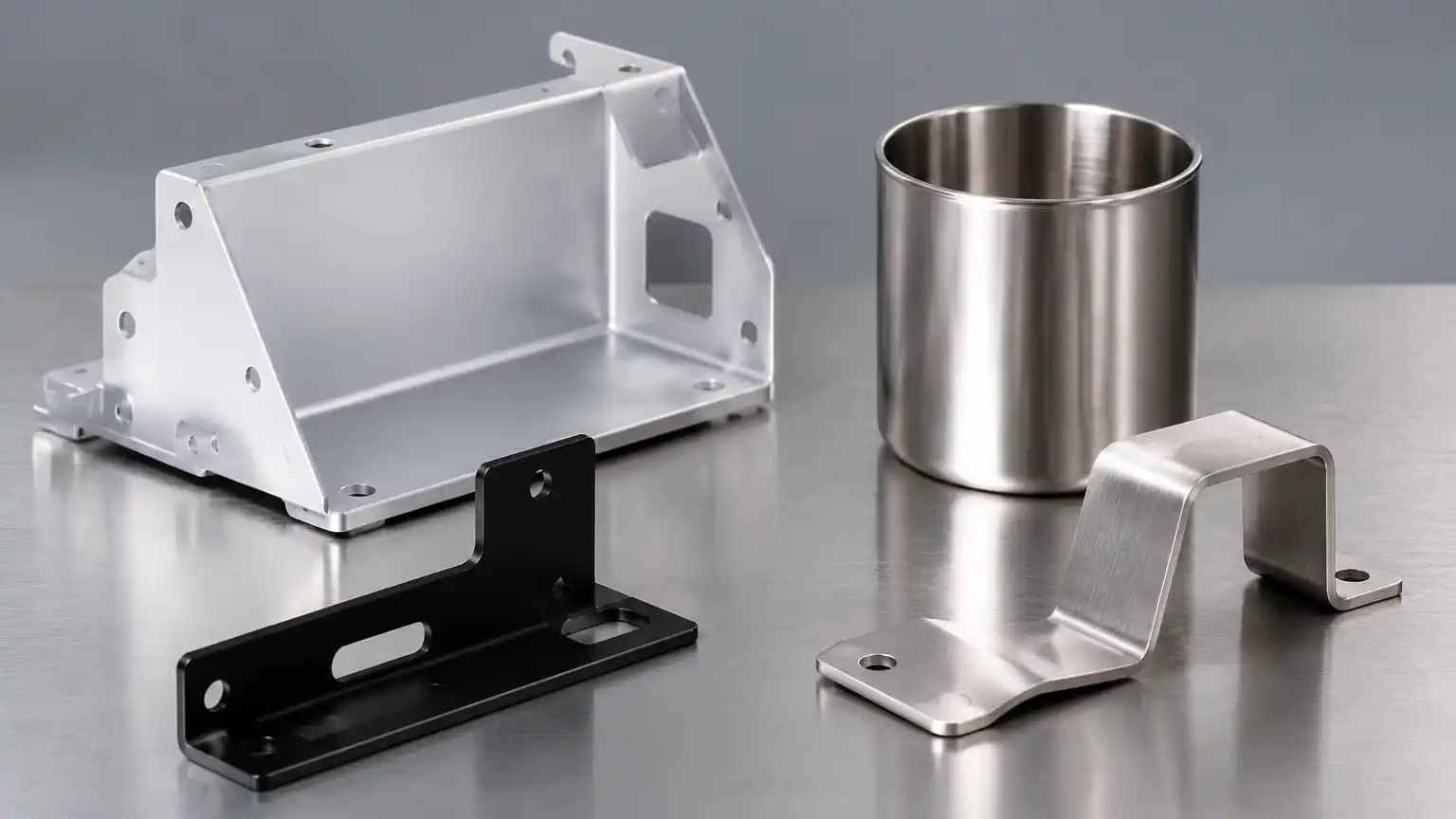
Anodizing converts an aluminum surface into a hard integral oxide layer, while brushing and passivation keep formed and deep-drawn stainless steel clean and corrosion-resistant without adding coating thickness.
Aluminum anodizing and stainless steel passivation apply to different alloy families. Aluminum anodizing grows an Al₂O₃ layer directly from the base metal; approximately half grows inward and half outward.
- Type II: Minimal dimensional build-up, accepts dyes, and protects electronic panels and lightweight brackets.
- Type III hardcoat: Denser, thicker ceramic-like surface for sliding wear and abrasion.
- Stainless passivation and brushing: Passivation dissolves free iron transferred by tooling or cutting; directional #4 brushing can establish a uniform industrial appearance before passivation.
3. Zinc, nickel, and tin electroplating: cost-effective protection for stamped and conductive parts
For high-volume progressive die stamping, barrel or rack electroplating can cost less than powder coating individual clips. Zinc provides sacrificial protection; nickel provides uniform wear-resistant deposits; tin or silver plating protects copper and brass electrical parts. Specify hydrogen-relief baking for high-strength steel after plating.
Controlling coating thickness, hole tolerances, and DFM allowances
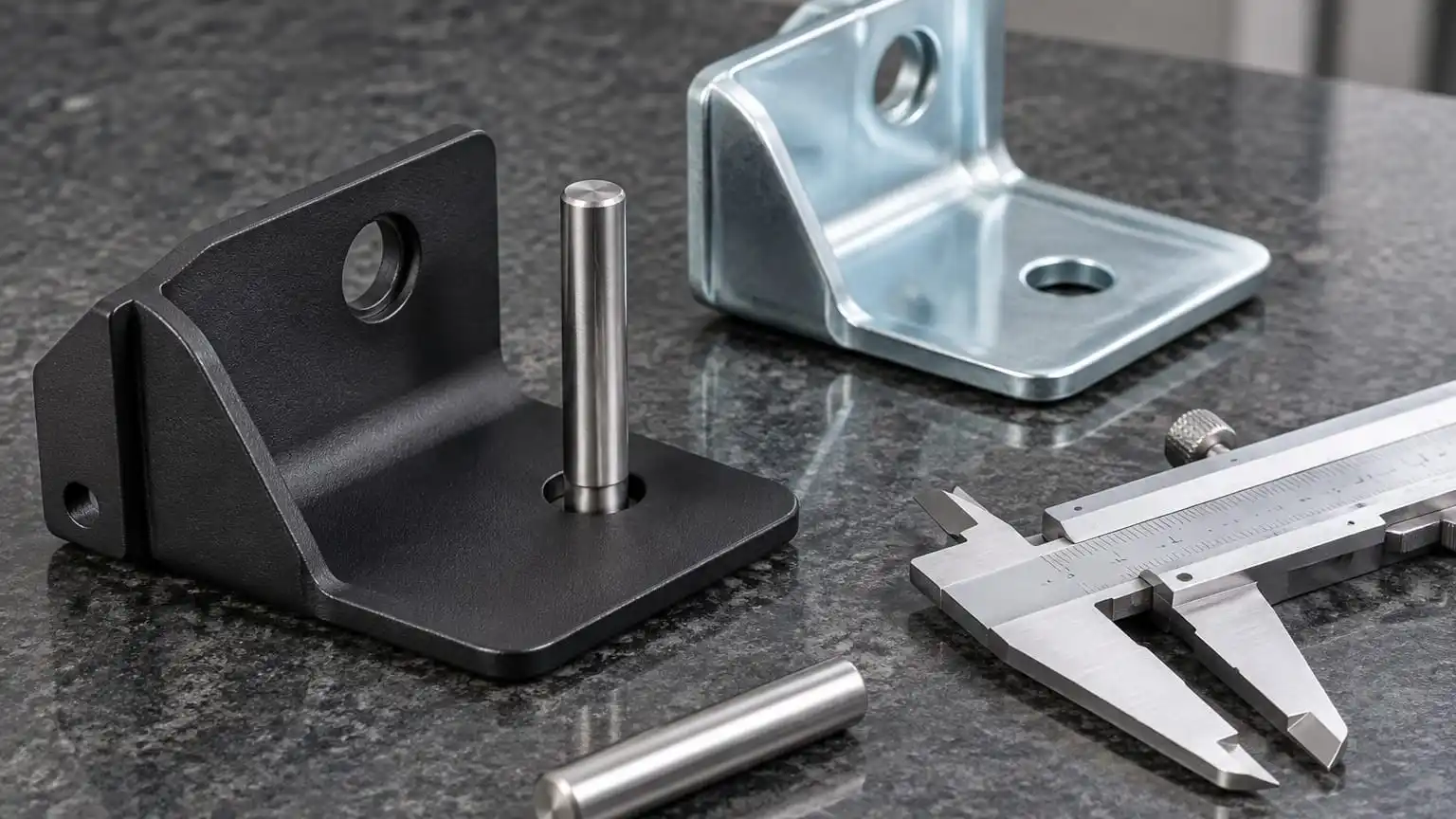
Verifying coated and plated holes with steel pin gauges and a mechanical caliper ensures that film build-up does not block fastener or dowel-pin assembly.
Align dimensional callouts with the chosen finish and clarify whether dimensions apply before or after coating.
- State the measurement condition in the title block: For an M5 clearance hole laser-cut at Ø5.5 mm, powder coating build-up of 0.08 mm per side reduces the finished hole to roughly Ø5.34 mm. For press-fit dowel holes or ±0.05 mm sliding slots, mask the bore, ream after coating, or choose a thin conversion finish.
- Protect threads and self-clinching hardware: Install hardware before coating only when internal threads are plugged; otherwise install hardware after plating or coating if the design allows.
- Avoid sharp laser-cut edges: Deburr or remove oxide before finishing to improve edge adhesion and salt-spray life.
Surface finishing RFQ checklist: 7 items to specify on your engineering drawing
When submitting STEP files and 2D drawings, include these seven details and evaluate suppliers using our custom metal parts supplier vetting checklist.
- Exact finish type and standard: Specify outdoor polyester powder coat, Type II anodize, citric passivation, or RoHS trivalent zinc plating.
- Color code, gloss level, and texture: Provide RAL/Pantone or a master sample, gloss, and texture.
- Target film thickness range: State acceptable dry-film thickness where critical.
- Cosmetic Class-A vs Class-B/C surfaces: Mark visible faces and interior surfaces separately.
- Masking zones and thread protection: Identify grounding pads, EMI gasket tracks, datum surfaces, and threaded inserts.
- Pre-treatment and edge preparation: Note oxide removal, brush direction, or bead blasting.
- Inspection and adhesion/corrosion verification: Align with quality assurance on thickness readings, cross-hatch adhesion, and salt-spray coupons using our quality assurance process.
Frequently asked questions about custom metal surface finishing
Can you anodize carbon steel or stainless steel sheet metal?
No—standard industrial anodizing only works on aluminum alloys. For carbon steel, specify zinc electroplating, e-coating, or powder coating. For stainless steel, specify passivation, electropolishing, brushing, or PVD/powder coating when a black or colored finish is required.
How much thickness does powder coating add to a sheet metal hole?
Standard industrial powder coating typically adds 50 to 120 µm (0.05 to 0.12 mm) per coated surface. The effective hole diameter decreases by roughly twice the single-side film thickness, 0.10 to 0.24 mm, so mask tight-tolerance holes or oversize clearance holes.
Do 304 and 316 stainless steel parts still need passivation after laser cutting or deep drawing?
Yes, when corrosion appearance or hygiene matters. Cleaning and passivating removes embedded free iron and restores the passive chromium-oxide barrier without changing dimensions.
When should I choose pre-galvanized steel vs post-fabrication zinc plating or powder coating?
Pre-galvanized sheet is economical for indoor chassis and brackets, but cutting and welding expose bare steel. For outdoor rain, humidity, salt fog, or cosmetic color, choose post-fabrication powder coating or electroplate stamped parts.
How do I maintain electrical grounding on a powder-coated sheet metal enclosure?
Specify silicone masking patches around grounding studs, mask EMI gasket flanges, or use toothed grounding washers. A dedicated bare-metal ring around each ground stud is reliable for earth-continuity testing.
Final recommendation
Treat surface finishing as a core engineering specification. Match passivation or brushing to stainless steel, anodizing to aluminum, electroplating to high-volume conductive stamped steel, and powder coating to enclosures and frames that need durable color and weather protection—while calling out masking zones and cosmetic A-surfaces clearly.
If you have a custom bracket, deep-drawn shell, or enclosure ready for review, contact our engineering team with your 3D STEP file, 2D tolerance drawing, and target finish.
Related engineering resources: forming process guide, quality assurance, request engineering review, metal fabrication tolerances, and custom sheet metal DFM guide.
Table of Contents
- Quick answer: how do you choose the right surface finish for custom sheet metal and stamped parts?
- Why surface finishing decisions cause late-stage RFQ delays and assembly failures
- Side-by-side comparison: powder coating vs anodizing vs passivation vs electroplating
- Deep dive into the four core finishing routes
- Controlling coating thickness, hole tolerances, and DFM allowances
- Surface finishing RFQ checklist: 7 items to specify on your engineering drawing
-
Frequently asked questions about custom metal surface finishing
- Can you anodize carbon steel or stainless steel sheet metal?
- How much thickness does powder coating add to a sheet metal hole?
- Do 304 and 316 stainless steel parts still need passivation after laser cutting or deep drawing?
- When should I choose pre-galvanized steel vs post-fabrication zinc plating or powder coating?
- How do I maintain electrical grounding on a powder-coated sheet metal enclosure?
- Final recommendation