high volume production service-0

\n\n

,需要通过父级DOM结构来判断 */ var trackActionPhone = function (node) { var nodeInnerText = node.innerText || ''; if (!limitRegLength(nodeInnerText)) return; var nodeText = trimText(nodeInnerText); if (nodeText.length < 5 || nodeText.length > 20) return false; var type = arguments.length > 1 && arguments[1] !== undefined ? arguments[1] : 'click'; var str = trimText(node.href || nodeText || ''); if (phoneReg.test(str) && numUseReg.test(str)) { window.postMessage({ type: 'SHOPS_CONTACT_TRACK', data: { phone: nodeText, }, }, '*'); _paq.push(['trackEvent', type, 'phone', nodeText]); return true; } /** 排查父级嵌套非标签场景,并且对dom的正则校验做一个性能兜底,通过控制innerText的长度,来确保正则的性能 */ var fatherText = trimText(node.parentNode.innerText || ''); if (fatherText.length < 5 || fatherText.length > 20) return false; if (phoneReg.test(fatherText) && numUseReg.test(fatherText)) { window.postMessage({ type: 'SHOPS_CONTACT_TRACK', data: { phone: nodeText, }, }, '*'); _paq.push(['trackEvent', type, 'phone', nodeText]); return true; } return false; }; window.addEventListener('click', function (e) { var node = e.target; /** 社媒点击 */ var appName = ''; var getAppAriaLabel = node.ariaLabel || node.parentNode.ariaLabel || ''; if (mediaList.includes(getAppAriaLabel.toLowerCase())) { appName = getAppAriaLabel; } if ( !appName && node.nodeName && node.nodeName.toLowerCase() === 'a' ) { appName = getMediaName(node.href) || getMediaName(node.alt); } if ( !appName && node.nodeName && node.nodeName.toLowerCase() === 'img' ) { appName = getMediaName(node.alt) || getMediaName(node.src); } if ( !appName && node.nodeName && node.nodeName.toLowerCase() === 'i' ) { appName = getMediaName(node.className); } if (appName) { _paq.push(['trackEvent', 'click', 'contactApp', appName]); return; } /** 联系方式点击 */ if (trackActionPhone(node, 'click')) return; if (node.nodeName && node.nodeName.toLowerCase() === 'a') { var val = node.href; if (!limitRegLength(val)) return; if (emailReg.test(val)) { window.postMessage({ type: 'SHOPS_CONTACT_TRACK', data: { email: val, }, }, '*'); _paq.push(['trackEvent', 'click', 'email', val]); return; } } if (node.nodeName && node.nodeName.toLowerCase() === 'i') { var val = node.className; var content = node.parentNode.href || ''; if (val.includes('email')) { window.postMessage({ type: 'SHOPS_CONTACT_TRACK', data: { email: content, }, }, '*'); _paq.push(['trackEvent', 'click', 'email', content]); return; } } var nodeChildList = node.childNodes; for (var i = 0; i < nodeChildList.length; i++) { if (nodeChildList[i].nodeType !== 3) continue; var val = nodeChildList[i].textContent.replace(/\s?:?/g, ''); if (!limitRegLength(val)) continue; if (emailReg.test(val)) { window.postMessage({ type: 'SHOPS_CONTACT_TRACK', data: { email: val, }, }, '*'); _paq.push(['trackEvent', 'click', 'email', val]); return; } } trackNumberData(node); }); window.addEventListener('copy', function (e) { if (trackActionPhone(e.target, 'copy')) return; var text = e.target.textContent; if (!text) return; var val = text.replace(/\s:?/g, ''); if (!limitRegLength(val)) return; if (emailReg.test(val)) { window.postMessage({ type: 'SHOPS_CONTACT_TRACK', data: { email: val, }, }, '*'); _paq.push(['trackEvent', 'copy', 'email', val]); return; } trackNumberData(e.target); }); } trackContactInit(); /** * 基于custom_inquiry_form.js 以及 form.js 对于询盘表单提交的实现,来反推询盘表单的input标签触发,用来收集意向客户 * 1. 缓存的KEY:TRACK_INPUT_ID_MTM_00; * 2. 缓存策略 - lockTrackInput:单个页面内,10分钟内,不重复上报 */ function trackActionInput() { const CACHE_KEY = 'TRACK_INPUT_ID_MTM_00'; const pathName = window.location.hostname + window.location.pathname; var lockTrackInput = function () { try { const lastCacheData = localStorage.getItem(CACHE_KEY); if (!lastCacheData) return false; const cacheData = JSON.parse(lastCacheData); const cacheTime = cacheData[pathName]; if (!cacheTime) return false; return Date.now() - cacheTime < 1000 * 60 * 10; // 10分钟内,不重复上报 } catch (error) { console.error('lockTrackInput Error', error); return false; } }; var setInputTrackId = function () { try { const curCacheData = localStorage.getItem(CACHE_KEY); if (curCacheData) { const cacheData = JSON.parse(curCacheData); cacheData[pathName] = Date.now(); localStorage.setItem(CACHE_KEY, JSON.stringify(cacheData)); return; } const cacheData = { [pathName]: Date.now(), }; localStorage.setItem(CACHE_KEY, JSON.stringify(cacheData)); } catch (error) { console.error('setInputTrackId Error', error); } }; var getInputDom = function (initDom) { var ele = initDom; while (ele) { /** * isWebSiteForm 是站点的表单 * isChatWindowForm 是聊天窗口的表单 */ /** 旧模板表单 */ var isWebSiteForm = !!( /crm-form/i.test(ele.className) && ele.querySelector('form') ); /** 1:新模板自定义表单、2:Get a Quote 弹框表单 */ var isWebSiteFormNew = !!( /inquiry/i.test(ele.className) && ele.querySelector('form') ); if (isWebSiteForm || isWebSiteFormNew) { _paq.push(['trackEvent', 'formInquiry', 'formInput', 'page']); setInputTrackId(); return; } /** Mkt会话触达-聊天弹框的表单输入: MKT由于是iframe嵌入,所以MKT的上报,会单独写到MKT-form代码上 */ var isInquiryChatForm = !!( /comp-form/i.test(ele.className) && ele.querySelector('form') ); if (isInquiryChatForm) { _paq.push(['trackEvent', 'formInquiry', 'formInput', 'chat']); setInputTrackId(); return; } /** 向上查找父节点 */ ele = ele.parentNode; } }; function initInputListener() { var inputUseDebounce = function (fn, delay) { var timer = null; var that = this; return function () { var args = Array.prototype.slice.call(arguments); if (timer) clearTimeout(timer); timer = setTimeout(function () { fn.apply(that, args); }, delay); }; }; var optimizeGetInputDom = inputUseDebounce(getInputDom, 300); window.addEventListener('input', function (e) { /** 如果已经上报过,则不再上报 */ if (lockTrackInput()) return; optimizeGetInputDom(e.target); }); } try { initInputListener(); } catch (error) { console.log('initInputListener Error', error); } } trackActionInput(); } /** 第三方消息上报:目前主要是针对全点托管会话;在msgCollect/index.js中调试,访问test.html */ function thirdMsgCollect() { /** 先检测是否是stayReal托管:如果stayReal脚本都没有,那么说明当前站点未开启stayReal会话托管 */ const scriptList = Array.prototype.slice.call( document.querySelectorAll('script'), ); const checkStayReal = () => !!scriptList.find((s) => s.src.includes('stayreal.xiaoman.cn')); if (!checkStayReal()) return; /** 缓存当前消息队列的最后一条消息id */ const CACHE_KEY = 'CACHE_KEY_MONITOR'; const setCache = (msgIndex) => { /** 对缓存KEY进行base64转码处理 */ const cacheMsgIndex = btoa(msgIndex); localStorage.setItem(CACHE_KEY, cacheMsgIndex); }; const getCache = () => { const cacheMsgIndex = localStorage.getItem(CACHE_KEY); if (cacheMsgIndex) return Number(atob(cacheMsgIndex)); return -1; }; /** 拉取最新msg列表 */ const pullMsgList = () => { const msgEleList = Array.prototype.slice.call( document.querySelectorAll('#chat-list li'), ); const msgIds = []; const msgMap = msgEleList.reduce((acc, item) => { const sendTime = item .querySelector('.message-data-time') .textContent.trim(); const sendContent = item.querySelector('.message').textContent.trim(); /** msg带有class:other-message的是访客消息,my-message的是客服消息 */ const isOtherMessage = item .querySelector('.message') .classList.contains('other-message'); const msgId = item.querySelector('.message').getAttribute('id'); const msgItemData = { msgId, user: isOtherMessage ? 'visitor' : 'official', time: sendTime, content: sendContent, }; msgIds.push(msgId); acc[msgId] = msgItemData; return acc; }, {}); return { ids: msgIds, dataMap: msgMap, }; }; /** 加密并上传消息数据 */ let ENCRYPT_KEY = 'de29f1aab63ab033'; let ENCRYPT_IV = 'b8d2badf875e76ac'; const baseUrl = 'https://cms.xiaoman.cn'; // var getEncryptConfig = function () { // const url = baseUrl + '/shop-api/innerApi/getKeyIv' // $.get( // url, // function (result) { // console.log('result', result) // if (Number(result.code) === 0 && result.data.key && result.data.iv) { // ENCRYPT_KEY = result.data.key // ENCRYPT_IV = result.data.iv // uploadMsgData() // } else { // /** 如果获取失败,则重试 */ // setTimeout(() => { // getEncryptConfig() // }, 1000) // } // }, // 'json' // ) // } // getEncryptConfig() const encryptMsg = function (msgData) { const enc = new TextEncoder(); // 转字节 const keyBytes = enc.encode(ENCRYPT_KEY); const ivBytes = enc.encode(ENCRYPT_IV); const plainBytes = enc.encode(msgData); // 导入密钥并加密 return crypto.subtle .importKey('raw', keyBytes, { name: 'AES-CBC' }, false, ['encrypt']) .then(function (cryptoKey) { return crypto.subtle.encrypt( { name: 'AES-CBC', iv: ivBytes }, cryptoKey, plainBytes, ); }) .then(function (encryptedBuffer) { // 转 base64 返回 return btoa( String.fromCharCode(...new Uint8Array(encryptedBuffer)), ); }) .catch((err) => { return Promise.reject(err); }); }; let uploadFlag = false; const uploadMsgData = function () { if (uploadFlag) return; uploadFlag = true; const { ids, dataMap } = pullMsgList(); let cacheMsgIndex = getCache(); const msgLen = ids.length; if (!msgLen) { // 消息DOM未挂载 || 消息DOM已挂载,但是消息列表为空 uploadFlag = false; return; } if (msgLen - 1 < cacheMsgIndex) { /** 针对站点挂后台一段时间,消息列表会自动塞入重复消息,导致消息有重复,刷新后又重置回正常消息列表,所以这里需要更新锚点下标 */ cacheMsgIndex = msgLen - 1; setCache(cacheMsgIndex); uploadFlag = false; return; } if (msgLen - 1 === cacheMsgIndex) { // 缓存的最后一次发送的消息ID是最后一条(说明当前消息均已经上报),则不跳过本地上报 uploadFlag = false; return; } const currentMsgIds = ids.slice(cacheMsgIndex + 1, msgLen); const currentMsgData = currentMsgIds.map((id) => dataMap[id]); const mtmId = window.matomo_site_id_cookie_key || ''; // 获取mtm会话id const msgBody = { mtmId, curl: window.location.href, msgList: currentMsgData, }; const msgBodyStr = JSON.stringify(msgBody); encryptMsg(msgBodyStr) .then(function (encryptedMsg) { console.log('encryptedMsg:', encryptedMsg, msgBodyStr); const url = baseUrl + '/shop-api/External/ListenSiteActiveStatus'; $.ajax({ type: 'POST', url, data: JSON.stringify({ d_v: encryptedMsg }), contentType: 'application/json', success: function (result) { if (Number(result.code) === 0) { // 更新消息队列 setCache(msgLen - 1); } uploadFlag = false; }, error: function (err) { console.error(err, '请求异常'); uploadFlag = false; }, }); }) .catch((err) => { console.error(err, '数据加密失败'); uploadFlag = false; }); }; /** 监控chat-list的DOM变更 */ const initChatListObserver = () => { // 需要监听的 DOM 节点 const target = document.getElementById('chat-list'); if (!target) return; // 回调函数 const callback = function (mutationsList, observer) { for (const mutation of mutationsList) { console.log('mutation', mutation); if (mutation.type === 'childList') { uploadMsgData(); } } }; // 配置 const config = { childList: true, // 监听子节点的增删 subtree: true, // 是否也监听后代节点 }; // 创建 observer const observer = new MutationObserver(callback); // 开始监听 observer.observe(target, config); }; let testCount = 30; let itv = null; const checkChatDom = () => !!document.querySelector('#vc-model'); const initTalkCheck = () => { itv = setTimeout(() => { console.log('checkChatDom', checkChatDom(), testCount); if (!checkChatDom() && testCount > 0) { testCount--; initTalkCheck(); return; } clearTimeout(itv); uploadMsgData(); initChatListObserver(); }, 1500); }; initTalkCheck(); } try { gtmTrack(); thirdMsgCollect(); console.log('inserted gtm code'); } catch (error) { console.error('gtmTrack Error', error); } }); })();
All Categories
high volume production service-1

Service

Home >  Service

High-Volume Production Service

Oct 19, 2026
High-Volume Production Service High-volume custom metal parts production service
Cangzhou Deeplink International Supply Chain Co., Ltd.

Repeat manufacturing with tooling and inspection control

Repeat production with controlled tooling, inspection and traceability

Select stamping, laser-cut production, deep drawing or an integrated route according to stable demand, tooling economics and part requirements.

Send Your Drawing for Review View Equipment & Capacity

A high-volume metal production service manages repeatability, tooling, process control and production records after the design is approved for release.

What Is High-Volume Metal Production?

High-volume metal production is a manufacturing mode in which a released design is made repeatedly on tooling and processes controlled for consistency rather than for one-off flexibility. The work moves from proving the process to holding it: tooling is dedicated, capacity is planned around the run, key characteristics are monitored with statistical process control, and any change is reviewed so the approved process stays the process. It suits parts whose design is stable and whose demand justifies tooling and setup investment. Prototyping and low-volume routes stay flexible by design; at volume, repeatability and change discipline replace that flexibility.

How High-Volume Metal Production Works

Once the process is approved, the work is to keep it in the approved state and to detect drift before a part leaves the tolerance.

  1. Tooling and process are approved before the run. The die, fixture or program is proven on a run-off, first parts are measured against the drawing, and the approved setup becomes the reference for every later lot.
  2. A control plan states what is monitored. Critical characteristics, the measurement method, the check frequency and the reaction to an out-of-control result are agreed, so monitoring is a defined activity rather than an opinion.
  3. Statistical process control tracks the process rather than individual parts. Measured values are plotted against limits derived from the process itself, and capability expresses how much of the tolerance the process spread consumes; it is a way to judge stability rather than a promised value for this service.
  4. Tool wear and change control keep the approved state. Wear is tracked against output so refurbishment happens before dimensions drift, and any change to material, tool, program or supplier is reviewed and re-approved instead of being introduced quietly.

High-Volume Production Defects and How They Are Prevented

Potential issue Typical cause Prevention or control
Gradual dimensional drift over the run Tool wear on cutting edges and forming radii as output accumulates Wear is tracked against output, refurbishment is scheduled before the limit is reached, and key dimensions are plotted rather than compared with a single sample
Part mix-up between similar parts or revisions Two part numbers share a line, or a revision change is introduced without clearing the line Changeover is a controlled step with line clearance, revisions are marked on the part or its packaging, and bins and kits are labelled by part number
Setup-to-setup variation Each setup is adjusted by judgement, so the process restarts in a different condition Setup values are recorded from the approved run, the same values are used on restart, and the first parts after each setup are measured
Batch-to-batch cosmetic variation Coating, lubricant or material lot changes that shift appearance without breaching a dimension Appearance limits are agreed against samples, material and coating lots are recorded, and cosmetic checks are part of the control plan
An unapproved process change A tool, program or material substitution made to solve a short-term problem Change control covers tool, program, material and subcontracted steps, and no change is released without review against the approved process

Recommended when

  • A released design with stable demand that justifies dedicated tooling.
  • A part whose key characteristics can be measured and monitored during the run.
  • A program where change discipline and traceability are part of the requirement.

Review another process when

  • A design still under revision, where tooling would be scrapped by the next change.
  • A quantity where setup and tooling cannot be recovered across the order.
  • A part with a feature that the approved process cannot hold even under control.

Choosing High-Volume Production vs Alternative Routes

Project condition Route to review Why
Stable design with repeat demand Dedicated tooling Tooling is justified once the design stops moving.
Manual handling caps the output rate Automation and transfer Feeding and transfer remove the handling step that limits the rate.
Several operations at one location A manufacturing cell Grouping operations shortens the route and the queue between them.
Secondary work outside the core process A qualified external operation A specialist step is bought where the equipment is not held in-house.

Material, Finish and Secondary-Operation Decisions

At volume the work moves from making the part to keeping the process where it was approved. Material supply is arranged as a controlled schedule with consistent grade and gauge, because a change of heat or coil width becomes a process change at this scale. Tool wear is managed by counting strokes and inspecting the wear land rather than by waiting for a defect. Finish and inspection are planned as part of the route, with sampling frequency, the characteristic being watched and the reaction to a nonconforming part written down before the first production run. Incoming material consistency should be defined before the control plan is released.

Specify before quotation
  • Approved process, tooling and control plan
  • Material grade, gauge and supply schedule
  • Sampling frequency and reaction plan
Typical downstream work
  • Tool maintenance and replacement interval
  • In-process and final inspection
  • Packaging and lot identification

What Drives Cost and Lead Time?

At volume the quoted unit price is mostly a function of tooling amortisation, material supply and cycle time. Tooling cost is spread across the expected run, so a shorter programme carries a higher share per part. Cycle time follows the slowest station, not the fastest machine. Inspection frequency, packaging and change control are quoted as part of the route, and any engineering change after approval carries a tooling and validation cost of its own. Lead time also follows material call-off, tooling readiness, inspection planning and the release of stable production information.

  • Tooling amortisation and run length
  • Material supply and gauge consistency
  • Cycle time of the slowest station
  • Tool wear and replacement interval
  • Inspection and sampling frequency
  • Change control after approval
Ways buyers can reduce uncertainty
  • Release one drawing revision and freeze it before tooling.
  • State the annual volume band the tooling must carry.
  • Agree the sampling plan and the reaction to a defect.
Industry and buying scenarios
Repeat stamped parts
Components produced on dedicated dies for a released design.
Volume assemblies
Units built on a controlled line with fixed work content.
Enclosures in series
Housings produced to a stable drawing over a long programme.
Machined production parts
Parts cut on proven programs with monitored tool life.

Production routes

  • Progressive die stamping on 25T to 400T presses, with tooling built and maintained in house
  • Repeat runs of laser cut and formed parts where a die is not justified
  • Deep drawn parts produced to confirmed wall thickness, diameter and depth
  • Welded and assembled units supplied as finished items

Technical Capability Summary

Item Capability
Press range 25T to 400T
Stamping Progressive die stamping, blanking, piercing, forming
Tooling Designed, built and maintained in house
Repeat runs Laser cutting and forming where a die is not justified
Deep drawing Wall thickness, diameter and depth confirmed at first article
Traceability Records retained for traceability under our ISO 9001 quality system

What keeps a long run consistent

  • An approved first article that defines the part, kept as the reference for the life of the order
  • Tooling maintained in house, so wear is managed rather than discovered
  • In-process inspection that catches drift before it becomes a batch problem
  • Records kept so a repeat order can be measured against the original, not against a fresh interpretation

Volume and process are matched

Stamping is normally the cheaper route once a part runs long enough to amortise die cost. For shorter runs, or where a design may still change, laser cutting and forming carry no die cost and stay flexible. We quote the route that fits your volume and expected run length, and say which is cheaper and why.

Inspection and Process Control

Inspection follows the released drawing through incoming material verification, first-article approval, in-process checks and final inspection before packing. Where a machined feature requires dimensional verification, the inspection method and report format are confirmed during quotation review.

Manufacturing Examples
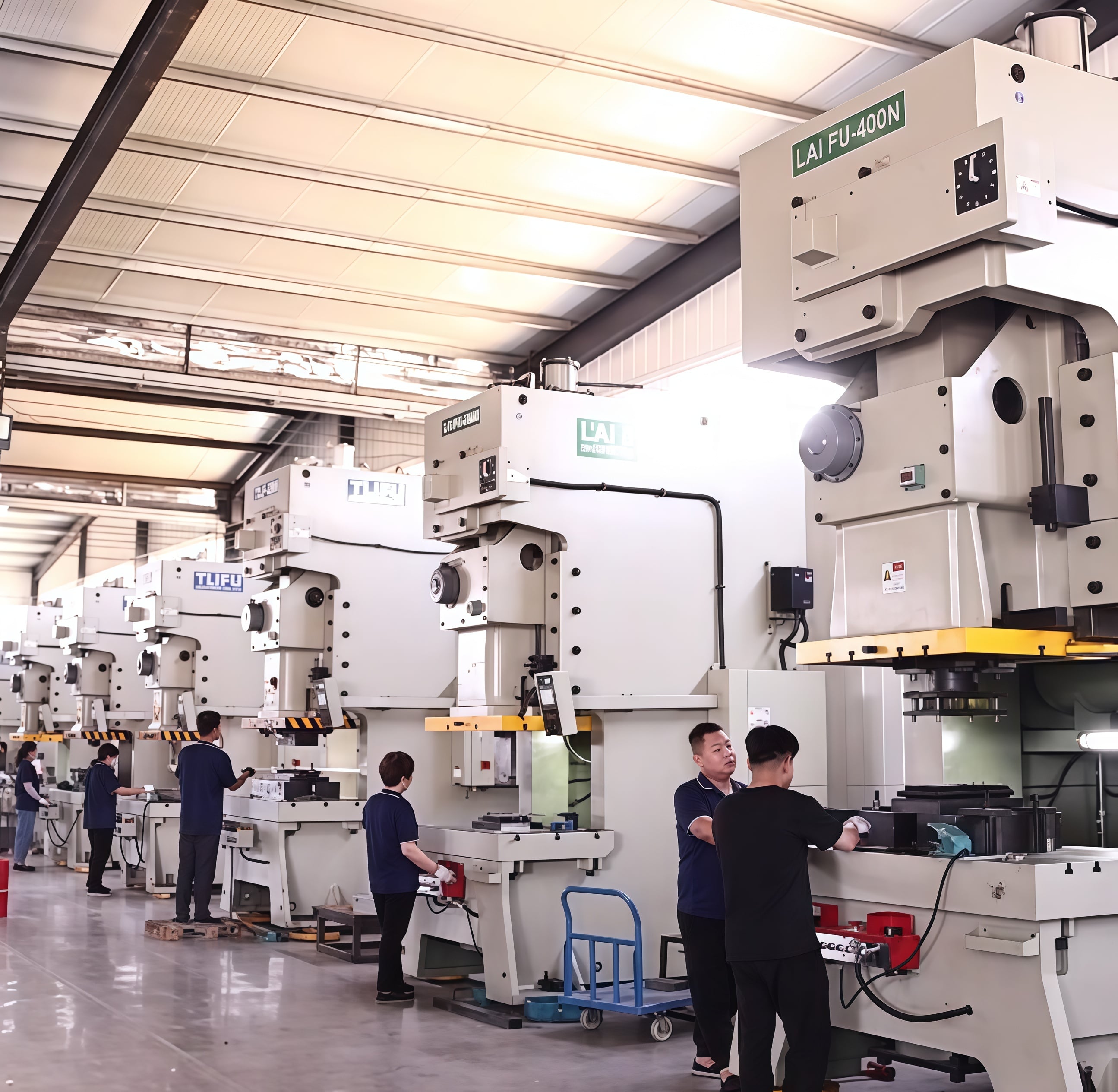
High volume manufacturing for repeat stamped machined and fabricated metal parts
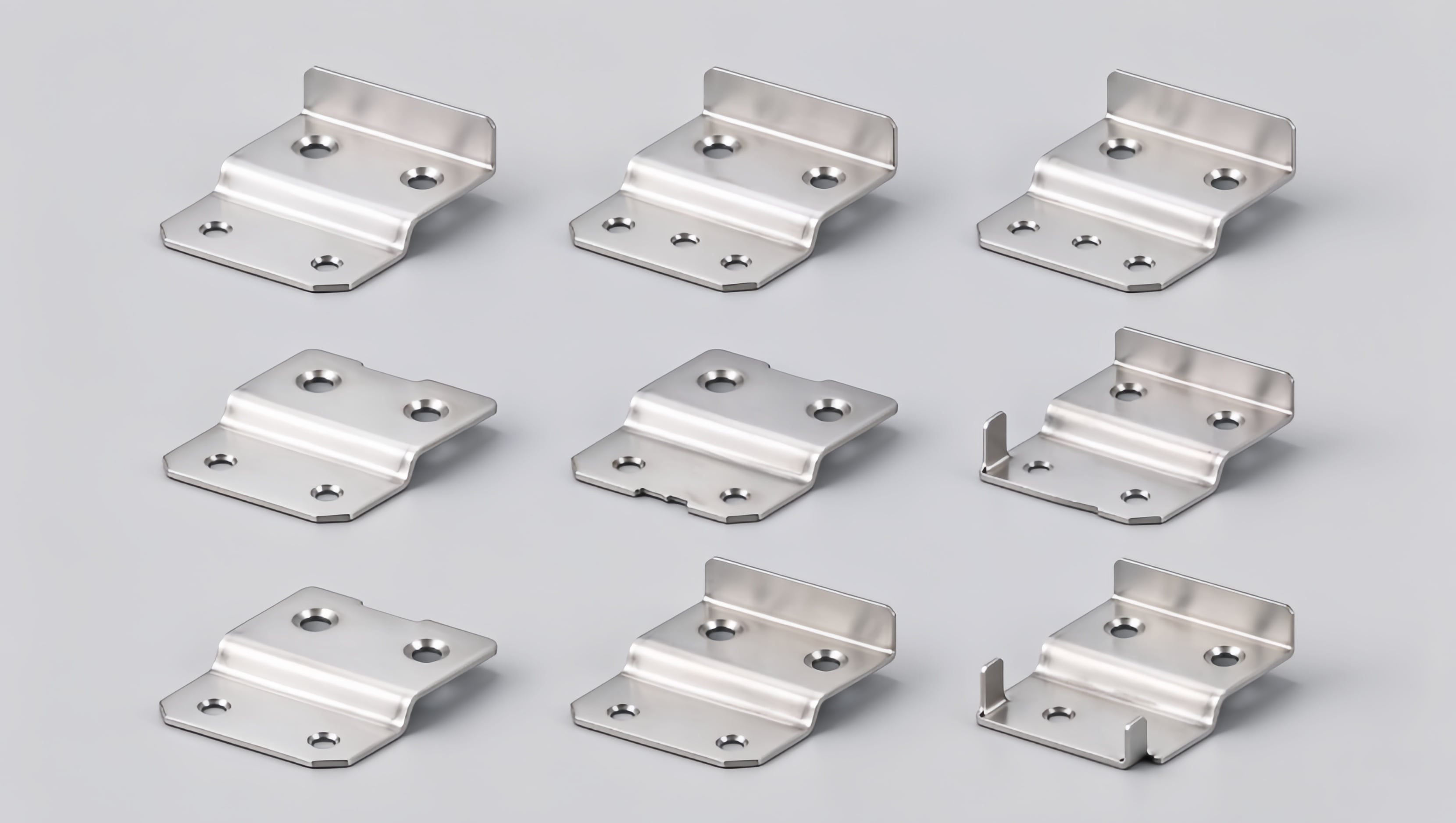
High-volume stamped parts in serial production
SUS304 progressive die stamped brackets in repeat production
Metal fabrication workshop for repeat production

Workflow From RFQ to Shipment

  1. 1. Review drawing maturity, order quantity, annual demand and programme life
  2. 2. Compare production routes and define the tooling decision
  3. 3. Approve the first article and inspection reference
  4. 4. Run repeat production with in-process checks and tooling maintenance
  5. 5. Complete final inspection, records, packaging and repeat-order control

Typical Parts and Use Cases

Progressive-die stamped parts
Repeat fabricated brackets and panels
Deep-drawn production components
Welded and assembled units
Industrial hardware programmes
Long-running OEM metal components

What to Include in Your RFQ

  • Released drawing with revision level
  • Annual volume and delivery pattern
  • Material grade, gauge and supply preference
  • Tooling ownership and maintenance terms
  • Inspection plan and sampling frequency
  • Packaging, labelling and lot identification

Lead time and commercial terms are confirmed only after tooling, material supply and inspection scope are reviewed against the released drawing, not from a generic capability statement.

High-Volume Metal Production Service: Design Rules That Affect Cost and Quality

For buyers comparing high-volume metal production service, manufacturability depends on more than the nominal part size. The drawing should make the following decisions visible before quotation:

  • Stable drawings and approved first articles are required before repeat-volume economics can be evaluated.
  • Tooling, fixtures and gauges should be maintained against defined wear and revision controls.
  • Control frequency should reflect critical features and known process risks.
  • Capacity, batch structure, packaging and replenishment expectations must be confirmed for the specific program.

Choose the Manufacturing Route by Quantity and Revision Risk

Project condition Route to review Procurement reason
Stable formed part Review stamping or dedicated tooling Tooling can spread setup effort across repeat demand.
Repeat part without justified die Laser cut, form or machine in batches Flexible processes may suit lower or changing demand.
Long-running precision part Dedicated fixtures and inspection plan Repeatability depends on controlled setup and gauges.
Multi-process assembly Scheduled subcomponents and assembly controls BOM, traceability and packaging must remain synchronized.

Quotation drivers: For high volume manufacturing, tooling amortization, material yield, cycle time, batch size, inspection frequency, secondary work, packaging and forecast stability influence production economics.

No fixed unit price, MOQ or lead time is published without reviewing the drawing, quantity and required documentation. This prevents a generic promise from overriding the actual manufacturing route.

Related Processes and Engineering Resources

Published Manufacturing Cases

These first-party manufacturing records show the part, process route and engineering concern documented on the full case page. They are provided as process evidence, not as third-party endorsements or customer ratings.

EV Battery Bracket Stamping: DFM and Progressive Die Engineering manufacturing case EV Battery Bracket Stamping: DFM and Progressive Die EngineeringDFM strip layout · Progressive die stamping · Precision bending · In-process gaugingA sheet steel EV battery bracket moved from single-stage stamping to a progressive die, with the flat pattern and bend sequence reworked at DFM stage. The engineering concerns are tolerance drift on the mounting bends during long runs, scrap generated by the original nesting, and dimensional consistency between brackets that must locate a battery module. Tooling, strip layout and in-process gauging are reviewed together before release.Read the full manufacturing case → 304 Stainless Steel Stamping Connectors for Food Packaging Equipment manufacturing case 304 Stainless Steel Stamping Connectors for Food Packaging Equipment9-station progressive die stamping · Burr control · In-line laser measurement · Surface cleanlinessPrecision SUS304 connectors for high-speed food sealing and filling machines, stamped in a multi-station progressive die. The engineering concerns are work-hardening of 304 across successive stations, burr height on surfaces near indirect food contact, and holding mating-face tolerance through a long production run. Die clearance, strip tension and in-line measurement are specified to keep the locating holes and bend geometry stable.Read the full manufacturing case → Copper Battery Connectors by Progressive Die Stamping manufacturing case Copper Battery Connectors by Progressive Die StampingDFM re-nesting · Progressive die stamping · Punching and bending · Scrap reductionCopper battery connectors for a new energy vehicle battery pack, stamped on a progressive die that combines punching, bending and forming in a single press stroke. The engineering concerns are material cost on copper strip, scrap left by the original nest, and keeping contact faces flat and burr-free so joints stay reliable. The flat pattern is re-nested at DFM stage and die clearance is set for copper's ductility.Read the full manufacturing case →

Buyer Verification Checklist

Before you release repeat production, review tooling, process control and traceability evidence.

Each link opens first-party documentation you can read before contacting us. This checklist is not a third-party endorsement, customer review or supplier rating.

Last reviewed: October 22, 2026. Capabilities and commercial terms remain subject to drawing review.

Alibaba.com platform snapshot

5.0 out of 5 on Alibaba.com

Based on 6 reviews listed on our Alibaba.com storefront, as displayed on 22 Oct 2026.

Supplier Service5.0 / 5
On-time Shipment rating5.0 / 5
Product Quality5.0 / 5

Star distribution: 100% five-star (6 of 6 listed).

Ratings are published by Alibaba.com and are not edited by us. Counts do not fully reconcile: Alibaba.com lists 6 reviews, while the feedback page displayed 5 individual review cards when checked on 22 Oct 2026; an earlier check the same day displayed 8. We quote only the platform-listed total and do not reproduce individual buyer reviews.

On-time shipment rate: 84.6%. This fulfilment indicator is separate from the 5.0/5 On-time Shipment buyer rating shown above.

Verified Supplier · SGS Group onsite verification, 20 Apr 2026. Snapshot taken 22 Oct 2026; ratings can change after this date.

View the source on Alibaba.com → Storefront

Upload Drawings for an RFQ

Use the existing inquiry form to send your drawing, material, quantity and critical requirements for manufacturing review. The form accepts up to 3 files, with a maximum of 30 MB per file.

Accepted formats: JPG, JPEG, PNG, PDF, DOC, DOCX, XLS, XLSX, CSV and TXT. If confidentiality terms must be agreed before file review, state this in your inquiry before uploading files.

This button opens the site's existing inquiry form. It does not promise instant pricing or a fixed response time.

Frequently Asked Questions

At what volume does stamping become cheaper?

It depends on part complexity and how long the part will run, because die cost is amortised across the order. Send your order quantity and expected annual volume and we will quote both routes so you can compare the numbers.

How do you keep part ten thousand identical to part one?

The approved first article defines the part and is kept as the reference for the life of the order. Tooling is maintained in house, in-process inspection catches drift before it becomes a batch problem, and records are retained so a repeat order is measured against the original.

Can you support repeat orders over several years?

Yes. Tooling is kept and maintained in house, and the approved first article and inspection records are retained, so a repeat order is produced against the original reference rather than a fresh interpretation.

Can volume production use laser cutting instead of stamping?

Yes, where a die is not justified or flexibility remains important. The route is compared against demand and expected programme life.

How are repeat-order revisions controlled?

Provide the released drawing revision with each order. Production and inspection must follow the approved revision and first-article reference.

Can tooling be maintained between repeat orders?

Tooling is maintained in house so wear and changes can be managed before the next production run.

Can a volume programme include welding and assembly?

Yes. Stamped, cut, formed, welded and assembled parts can be supplied under one coordinated programme.

What information is needed to compare production routes?

Order quantity, annual demand, expected programme life, design stability, material and critical features are needed to compare tooling and non-tooling routes.

Send Your Drawing for a Manufacturing Review

For high volume manufacturing, Send the drawing with material, thickness, order quantity, expected annual volume and how long the part is expected to run. That determines the process route and the tooling decision.

Request a Manufacturing Review